How to Plan an Oregon Mule Deer Hunt: Deer Hunt Areas, Draws and Access
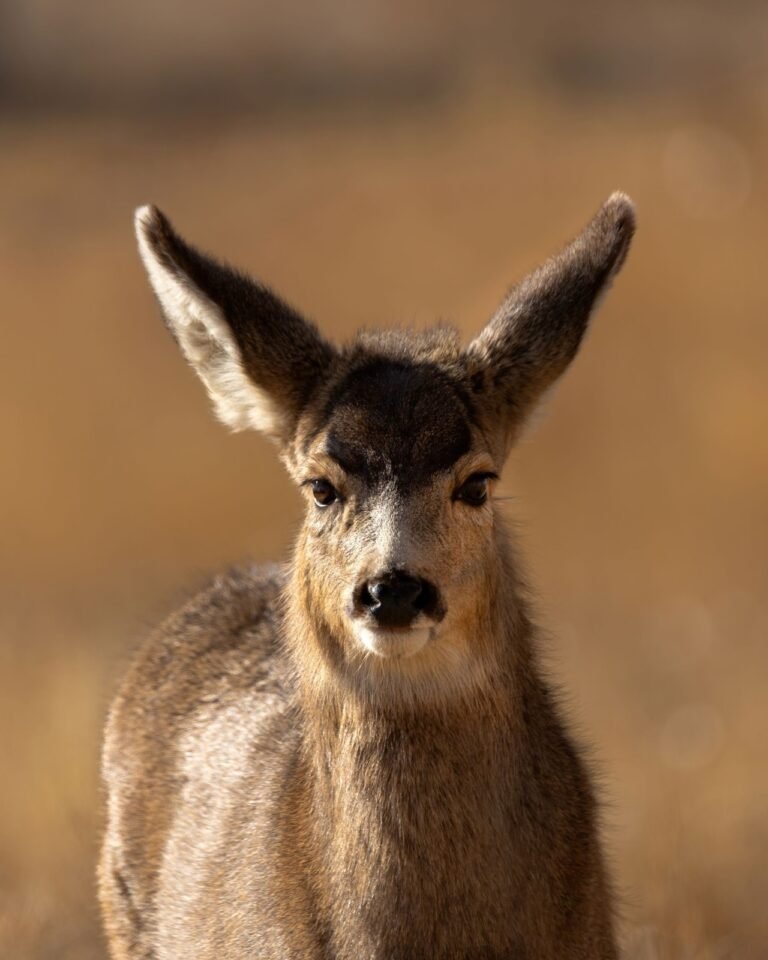
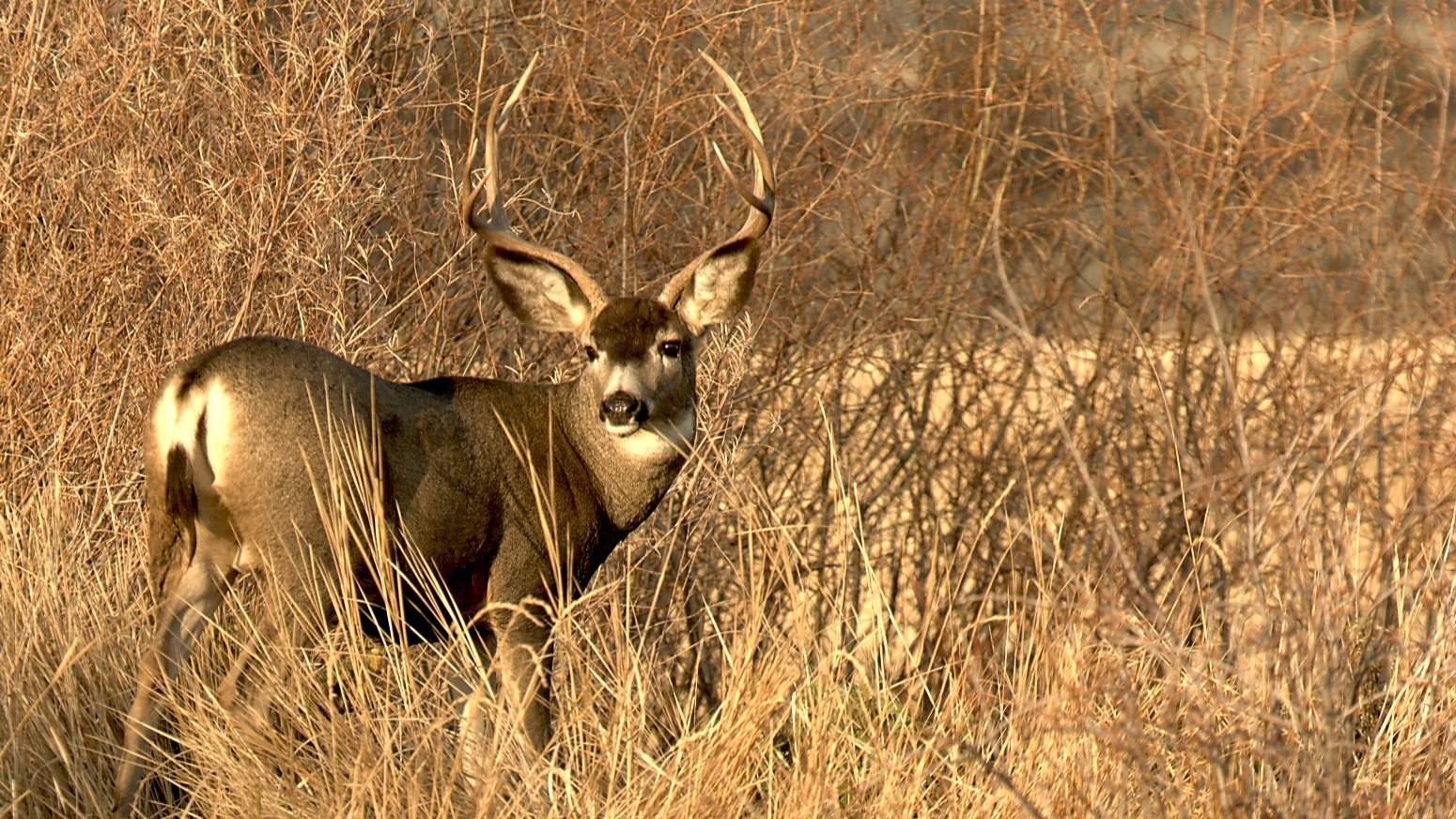
Mule deer buck at Malheur National Wildlife Refuge, Oregon. Photo by Barbara Wheeler/U.S. Fish and Wildlife Service; public domain.
Review record: August 17, 2026 season review; September 11, 2026 targeted update to hunt-code examples, application purchases, fees and reporting. Hunt areas, tag numbers, access, closures, fees and field rules can change. Confirm the exact hunt in the current Oregon Big Game Regulations before applying, buying a tag or traveling.
Oregon mule deer country stretches from the Columbia Plateau and Blue Mountains to central Oregon’s high desert, the Owyhee breaks and the open basins of the southeast. That variety is the attraction—and the reason a useful plan must begin with the exact hunt area, legal animal, season, weapon and access route rather than a statewide reputation.
Research disclosure: Big Game Ledger has not hunted Oregon. This guide is assembled from current Oregon Department of Fish and Wildlife regulations, maps, application material and access resources. Official rules control whenever they differ from this article.
Oregon mule deer planning at a glance
- Starting in 2026, Eastern Oregon deer hunts are organized around new Deer Hunt Areas aligned with mule deer herd ranges instead of the former wildlife management unit structure.
- The controlled-hunt application deadline for most big-game species was May 15 in 2026.
- For standard controlled buck-deer hunts, ODFW generally awards 75 percent of tags by preference points, with the remainder randomly allocated among remaining first-choice applicants. This is not an individual applicant’s success percentage.
- Eastern Oregon deer opportunities are limited-entry controlled hunts. Western Oregon’s general deer framework is different and includes black-tailed deer country, so do not treat every Oregon deer hunt as a mule deer hunt.
- The 2026 fee schedule linked from ODFW lists a $39 resident hunting license, $193 nonresident hunting license, $33 resident deer tag, $500 nonresident deer tag and $10 controlled-hunt application. Verify your current eligible fees before purchase.
The 2026 Deer Hunt Area change matters
Separate the herd-range abbreviation, the hunt-area identifier and the full hunt number. For example, NE means Northeast, while ODFW uses NE-01 as an area-identifier example. An abbreviation alone is not a complete application choice.
A concrete example from ODFW’s official 2026 transition table: the former 152R hunt corresponds to EH102R for mule deer and EH102R1 for a new whitetail-only hunt. The similar numbers do not authorize the same species. Check the current area boundary and full hunt listing; overlap percentages do not establish land-access rights.
The transition did not erase existing buck-deer preference points. However, an old WMU hunt’s drawing history is not a like-for-like forecast for the new hunt: boundaries, tag allocations and applicant choices may differ. Keep old results as context, not as a guaranteed new point threshold.
Choose a hunt before comparing draw odds
Start by writing one line for each realistic choice: hunt number, Deer Hunt Area, legal deer, season dates, weapon, tag allocation and major access constraint. Then compare draw history for that exact hunt and choice position. A point total is not a statewide pass; demand and tag numbers differ by hunt.
| Planning layer | Question to answer |
|---|---|
| Hunt identity | What is the current hunt number and Deer Hunt Area code? |
| Species | Is the hunt mule deer only, white-tailed deer only or valid for more than one deer species? |
| Season | What weapon, dates and legal-animal restriction apply? |
| Access | Can you legally reach the intended public parcel under current road and closure rules? |
| Recovery | Can the party remove and cool meat from the farthest realistic location? |
Use ODFW’s Big Game Statistics and current point reports as historical evidence, not a guarantee. Quotas, applicant behavior, wildfire, winter survival and management decisions can change the next draw.
Terrain, scouting and the character of the hunt
Eastern Oregon can deliver the classic western mule deer experience: long glassing sessions over sagebrush basins, rimrock, juniper breaks, timbered ridges and steep canyon systems. The scale is exciting, but it punishes vague plans. Water can be sparse, roads can become slow or impassable, and a buck visible across a canyon may still require a long, technical approach and pack-out.
Build scouting around vantage points, bedding cover, water, migration timing, road density and hunting pressure. Use several years of harvest and population information to frame expectations. Oregon does not have one defensible “average buck size,” and a well-known area is not a promise of a mature buck.
Maps and legal access
Begin with ODFW’s official map directory, which includes the new Eastern Oregon Deer Hunt Areas, Access & Habitat properties and Travel Management Areas. Then cross-check federal land maps, county road status, private parcels, gates and seasonal motor-vehicle restrictions. A public parcel is not useful if the route crosses private land without permission.
ODFW’s Access & Habitat Program can open enrolled private lands, but every property has its own dates and conditions. Download offline maps and the legal boundary description before leaving service. During fire season, recheck ODFW’s fire and closure information and the responsible land manager.
Licenses, costs and application steps
Keep three transactions separate: obtain the valid hunting license, complete and pay for the controlled-hunt application, and—if selected—purchase the awarded tag. “Selected” in your account is not proof that the tag purchase is finished. ODFW’s normal controlled-tag purchase deadline is the day before the earliest hunt period begins. Confirm the tag is in your account and check its paper or electronic format before departure. Follow the official application and post-draw instructions; do not leave purchase or app setup until you are beyond service.
A realistic budget includes more than the license, application and tag. Add travel, fuel, lodging or camp, mapping, food, optics, vehicle preparation, meat cooling, pack-out help, taxidermy if desired and an emergency margin. Record source dates and payment timing in a separate application budget and travel budget. For a standard adult nonresident buying only a hunting license and one controlled-deer application, the listed 2026 amounts total $203 before the $500 deer tag if drawn. That is an arithmetic planning example, not a complete trip price or a quote for every applicant.
CWD, tagging and field compliance
Before traveling, review Oregon’s current chronic wasting disease guidance, carcass-transport rules, testing options, evidence-of-sex requirements and tagging instructions. Also check the rules for every state through which meat, skulls or other cervid parts will travel. Regulations can distinguish residents, nonresidents and animals entering Oregon from another jurisdiction.
Carry the current regulation booklet, your hunt confirmation, offline boundary maps and the correct tag format. Recheck emergency closures and fire restrictions immediately before departure.
Reporting is separate from tagging
ODFW requires a report for a purchased deer tag even when you did not hunt or did not harvest. Validating an electronic tag does not replace that report. The usual deadline is January 31 following the hunt year; qualifying late seasons ending March 31 use April 15. For a normal 2026 fall hunt, plan to report by January 31, 2027, and confirm the deadline attached to your hunt. Save the completion record from ODFW’s reporting process.
A practical Oregon planning sequence
- Choose hunt style, weapon, travel window and total budget.
- Identify current Deer Hunt Area codes and exact hunt numbers.
- Confirm legal species, dates and weapon restrictions.
- Compare current quotas, point reports and multi-year results.
- Prove legal access from the public road to the intended hunting ground.
- Plan glassing, water, camp, pack-out and meat cooling.
- Apply through MyODFW by the published deadline and save confirmation.
- Purchase the awarded tag by its deadline; verify it appears in your account.
- Recheck fire, closures, CWD, tagging and transport rules before travel.
- Complete mandatory reporting even if you did not hunt or harvest.
Official Oregon mule deer planning links
- 2026 Oregon Big Game Regulations
- Big-game seasons and deadlines
- Controlled-hunt application guide
- Eastern Oregon Deer Hunt Area changes
- 2026 Deer Hunt Area maps and descriptions
- Oregon licensing information
- Official maps and access resources
- Oregon CWD information
Return to the Mule Deer Hunting hub, read the beginner’s mule deer guide, browse Hunt Planning, or compare supporting Maps & Apps.
Featured image: Mule deer buck at Malheur National Wildlife Refuge, Oregon. Photo by Barbara Wheeler/U.S. Fish and Wildlife Service; public domain. Cropped and optimized for web use. The photograph illustrates Oregon mule deer; it does not establish that its location is open for your hunt.