How to Plan an Idaho Mule Deer Hunt: Units, Tags, Controlled Hunts and Access
General-tag pathway and species examples checked September 11, 2026. The 2026 draw periods below have closed. A separately labeled 2027 application window is included only because Idaho Fish and Game has published it. Recheck the current agency notice before applying.
For a nonresident planning an Idaho mule deer hunt, the first decision is now which draw or returned-tag route applies—not which day to join the old online sales queue. The second is whether the exact tag and season authorize mule deer. A “deer” listing can be white-tailed-only during part of the season.
Research disclosure: Big Game Ledger has not hunted Idaho. This guide is assembled from current agency regulations, application materials, maps and access resources. Official rules control whenever they differ from this article.
Idaho mule deer planning at a glance
- Idaho’s 2026 controlled-hunt application period for deer ran May 1–June 5.
- Controlled-hunt deer tags can be valid for mule deer or white-tailed deer unless the hunt table states otherwise.
- General and controlled opportunities must be read by exact unit, hunt number, season and legal animal.
- Species accuracy: verify that the hunt is explicitly valid for mule deer rather than assuming every deer license covers the same species.
The nonresident general draw is separate from controlled hunts
Idaho introduced a drawing for nonresident general deer and elk tags for the 2026 season, replacing the previous first-come sale. A valid hunting license was required to apply and that license was nonrefundable. Entering the general-tag draw did not itself remove eligibility for spring controlled hunts. See IDFG’s announcement of the 2026 process.
The current nonresident FAQ says the 2026 draw process ended March 20; later 2026 opportunities use returned-tag sales, subject to availability. It also publishes December 5–15, 2026 as the first application period for 2027 nonresident/DAV tags, with results expected in early January 2027. The first claim deadline is January 20, 2027, except DAV tags. These are application dates, not hunting-season dates. Junior-mentored and lifetime-license exceptions require their own eligibility check.
Our planning sequence: choose the tag route, confirm the legal species, then compare dates and terrain. A returned white-tailed tag is not a fallback mule-deer tag merely because it is available. Do not book a hunt from a generic “tags available” headline.
Species check: a real Unit 5/6 example
The 2026 Idaho Hunt Planner listing for Units 5 and 6 illustrates the distinction. For a regular deer tag in the general any-weapon season, it lists antlered white-tailed deer for October 10–31, antlered mule and white-tailed deer for November 1–14, and antlered white-tailed deer again for November 15–December 1. The white-tailed deer tag remains species-specific. Other antlerless and archery lines have separate conditions.
That does not make every listed tag available to a nonresident. Cross-reference the quota supplement and the actual tag you hold. The example shows why “Unit 5 in October” is not sufficient planning information for someone specifically seeking a mule deer. Use the year, tag type, species, sex, weapon and date line together.
Start with the exact hunt, not a reputation
Write down the official hunt code or license name before comparing units. Record the legal deer, dates, weapon, boundary, quota and access notes on one line. A famous unit with the wrong season or unreachable land is not a usable plan.
| Planning layer | Question to answer |
|---|---|
| License | Is it general, limited, controlled, guided, landowner or leftover? |
| Species | Does the hunt cover mule deer, another deer species or either? |
| Season | What are the legal dates, weapon and animal restrictions? |
| Access | Can the intended public land be reached legally under current road rules? |
| Recovery | Can meat be cooled and removed from the hardest realistic location? |
Idaho does not use preference or bonus points
IDFG does not use a point system. For the nonresident general draw, all first choices are evaluated before second choices, then the later choice rounds. Do not import a Nevada or New Mexico choice-order strategy. Consult the current draw FAQ and linked odds, and distinguish general-draw reports from controlled-hunt reports.
Terrain, maps and legal access
Idaho units can include steep backcountry, motorized restrictions, checkerboard ownership and limited road access. Read the Motorized Hunting Rule guidance alongside the current regulation booklet and land-manager travel map. A trail open to an ATV for recreation is not automatically available for hunting use. If relying on a retrieval exception, confirm both that the hunting rule permits the activity and that the land manager permits that vehicle on that route.
Start with the official hunt-planning or mapping resource, then cross-check federal travel maps, county road status and current fire or emergency closures. Offline maps help in the field but do not replace legal boundary descriptions.
Costs and field logistics
Build the budget from the current agency fee table rather than an old article. Separate the required hunting license, any applicable application charge and deer tag from travel, camp, mapping, fuel, food, meat cooling, processing and an emergency margin. Idaho does not have a preference-point purchase to budget for. Do not treat the tag price as the trip price.
Buck expectations and hunt quality
Big country and mature bucks create the appeal, but there is no defensible statewide “average buck size.” Age structure, winter survival, precipitation, migration, pressure and season timing vary sharply. Compare several years of unit-level harvest and age data without turning them into a promise.
Hunter education, CWD and field compliance
Before travel, verify hunter-education eligibility, tagging or E-Tag procedures, evidence-of-sex rules, mandatory reporting, chronic wasting disease sampling and carcass-transport restrictions. Check every state through which meat or parts will travel.
A practical Idaho planning sequence
- Choose hunt style, weapon and total budget.
- Record exact hunt codes and legal species.
- Compare current rules, draw history and quotas.
- Prove legal access and road continuity.
- Plan glassing, water, camp, recovery and meat care.
- Apply through the current agency system and save confirmation.
- Recheck closures, weather, CWD and tagging before travel.
Official Idaho mule deer planning links
Return to the Mule Deer Hunting hub, browse Hunt Planning, or compare supporting Maps & Apps.
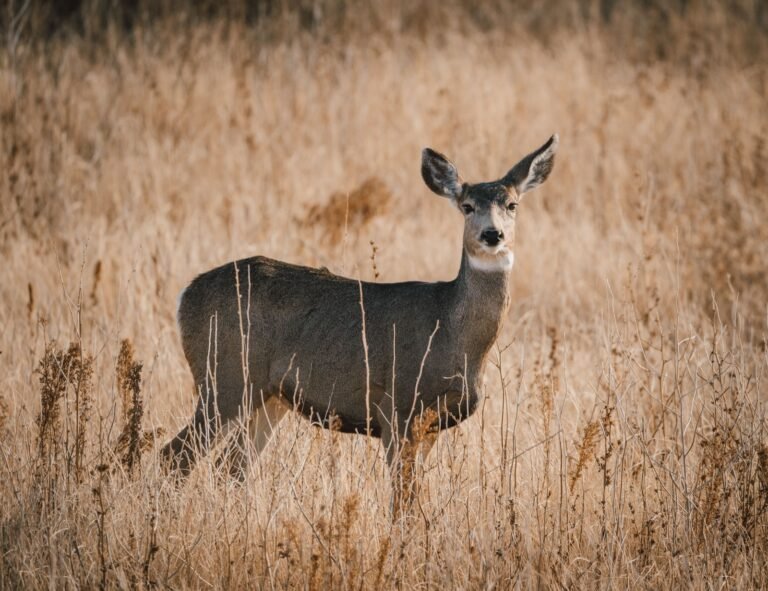
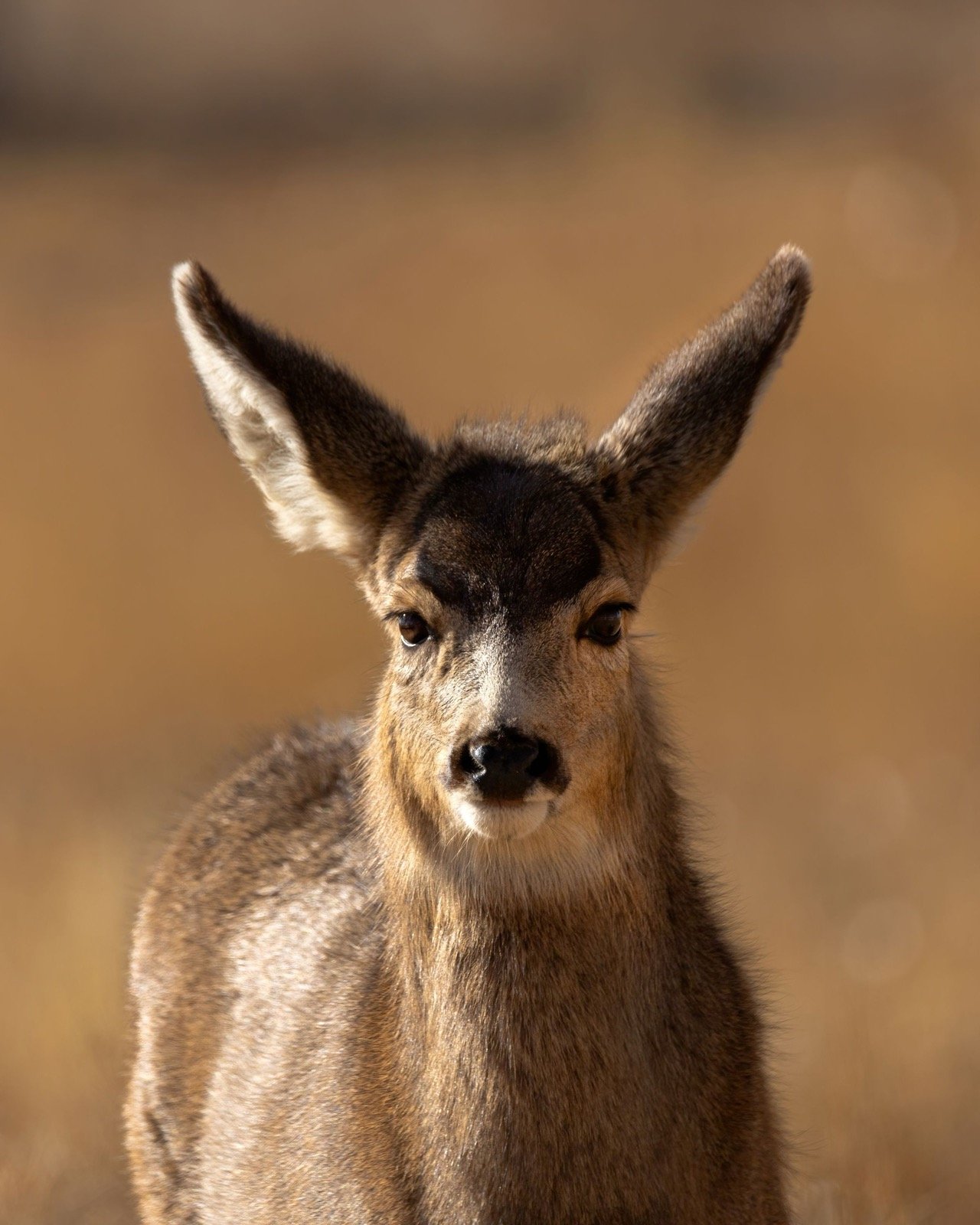
Featured image: Photo by Elijah Pilchard via Pexels. Representative mule deer portrait. This photograph is newly assigned to this guide and is not reused elsewhere on Big Game Ledger.