Wyoming Elk Hunting Guide: Hunt Areas, Seasons, Draws and Access
Reviewed for Wyoming’s 2026 elk season: August 24, 2026. Quotas, license limitations, access rules, fire restrictions and carcass regulations can change. Confirm the exact hunt area and license type with Wyoming Game and Fish Department before applying, purchasing or traveling.
Wyoming elk hunting can mean September archery in mountain timber, an October rifle hunt across sagebrush and foothills, a limited-quota bull hunt, or a late cow-and-calf management hunt. The scenery is a major part of the draw, but the license language matters just as much as the landscape. A general license, a regional nonresident license and a limited-quota license do not open the same places.
Research disclosure: Big Game Ledger has not hunted Wyoming. This guide is assembled from current WGFD regulations, application materials, Hunt Planner data and public-access resources. Official regulations control whenever they differ from this article.
Use the western big-game application deadlines calendar to schedule Wyoming application, modification and results checks. Always confirm the exact current dates, hunt area and license type through the Wyoming Game and Fish Department before applying or purchasing.
Wyoming elk planning at a glance
- Species focus: Rocky Mountain elk.
- Nonresident 2026 full-price draw: applications ran January 2–February 2; modifications or withdrawals were allowed through May 8 and tentative results were scheduled for May 21.
- Resident elk draw: January 2–June 1, with results scheduled for June 18.
- Final seasons: Wyoming sets dates and limitations by hunt area and license type. There is no single statewide elk opener.
- Planning tools: use the official Hunt Planner, draw odds, harvest reports, Access Yes properties and current Chapter 7 regulations together.
Start with license language, not a famous unit
Wyoming’s elk licenses are organized by hunt area and type. Full-price options can include a general or regional general license and limited-quota Types 1, 2, 4, 5 or 9. Reduced-price Types 6, 7 and 8 generally cover cow-or-calf opportunities. The legal animal, weapon, season and geography come from the current area table, not from the broad license label alone.
| Route | What to verify | Planning risk |
|---|---|---|
| Resident general | Which general hunt areas are open and each area’s dates and limitations. | Treating “general” as one statewide season. |
| Nonresident regional general | The named region and which general hunt areas inside it are valid. | Assuming every hunt area inside the region is included. |
| Limited quota | Exact hunt area, license type, quota and limitation. | Comparing draw odds without reading the license limitation. |
| Reduced-price cow/calf | Valid sex/age class, dates, land status and any access restriction. | Buying a tag before proving practical access. |
How to read Wyoming’s 2026 elk season table
A search for “Wyoming elk season” does not resolve to one statewide opener. Wyoming’s 2026 Chapter 7 elk regulation assigns dates, legal elk, limitations and any special archery period by hunt area and license type. The hunt-area row—not a statewide summary—is the controlling starting point.
For a focused explanation of the license pathways, read how Wyoming elk seasons work, including general, limited-quota and Type 9 archery-only hunts.
| Season-planning question | Where to verify it |
|---|---|
| Which dates apply? | Read the exact hunt-area and license-type row in the current Chapter 7 regulation. |
| Is there a special archery period? | Check the special-archery columns and every limitation attached to that area and type. |
| Where is the legal boundary? | Compare the official 2026 elk hunt-area map with the legal description and the WGFD Elk Hunt Planner. |
| Does a nonresident regional license cover the area? | Confirm that the hunt area is both inside the named region and open to general-license hunting; limited-quota areas inside the same region are not automatically included. |
| Can the dates change after application? | Review final regulations during the official modification window and recheck immediately before travel. |
Build the calendar only after the area and license type are fixed. Save the regulation page, hunt-area map, limitation text and application record together. Then use the WGFD application schedule for the current application, modification, results and preference-point dates. This prevents an old statewide season summary from being mistaken for the legal 2026 Wyoming elk season for a particular hunt.
How the nonresident draw works
For 2026, nonresident full-price elk applications closed February 2. WGFD allowed changes or withdrawals through May 8, after final quotas and season information were available. That timing matters: applicants may enter before final seasons are published, then use the modification window after reviewing the final regulation.
Wyoming uses preference points for part of the nonresident full-price elk allocation, while a random portion preserves a chance for applicants with fewer points. The regular and special draws use the same license pool structure but different prices; the higher-priced special application is not a guarantee. Study current odds for the exact area, type and draw rather than treating a statewide point total as predictive.
2026 costs to place in the budget
The 2026 application booklet listed $707 to remit for a nonresident regular full-price elk application, $1,965 for the special option and $303 for a reduced-price cow/calf application, before processing charges. Youth amounts and preference-point purchases differ. Confirm the live WGFD fee list at checkout because statutory fees, application charges and conservation-stamp requirements can change.
A realistic trip budget also includes travel, lodging or camp, mapping, fuel, food, meat cooling, pack-out help, taxidermy, emergency margin and any outfitter or private-access cost. A license price is only one line in the hunt ledger.
Map the hunt area and the access separately
Open the WGFD Elk Hunt Planner and read the current area regulation before scouting. Then audit public land, county roads, federal motor-vehicle maps, seasonal closures and the route from the legal road to the intended glassing or camp location. A public parcel that cannot be reached legally is not a usable plan.
Wyoming’s Access Yes program includes Hunter Management Areas and Walk-In Hunting Areas. Some properties require a separate permission slip, have limited dates or impose ranch-specific rules. Secure access before building the rest of the trip around it.
Adventure, terrain and bull expectations
Western Wyoming can deliver the classic mountain elk experience: steep timber, open parks, early snow and long pack-outs. Other areas mix sagebrush, broken foothills, agricultural edges and private-land boundaries. The excitement comes from bugling bulls, big country and a plan that survives real access—not from a promised antler score.
Do not use a statewide “average bull size.” Age structure, hunting pressure, habitat and license limitation vary sharply by herd unit. Compare several years of WGFD harvest information and treat past results as context rather than a forecast.
Safety, CWD and field compliance
Check current hunter-education eligibility, conservation-stamp rules, tagging procedures, evidence-of-sex requirements and carcass-transport restrictions before the hunt. Wyoming monitors chronic wasting disease in cervids; review the current WGFD CWD guidance and every state’s import rules along the route home.
A practical Wyoming planning sequence
- Choose resident or nonresident route and total budget.
- Select regional general, limited quota or reduced-price cow/calf.
- Read the exact 2026 hunt-area row and limitation.
- Compare draw odds and harvest reports for the same area and type.
- Prove legal access, road status and camp options.
- Build recovery, cooling and pack-out plans for the hardest realistic location.
- Recheck closures, fire conditions, CWD and tagging rules before travel.
Frequently asked questions
When is Wyoming elk season?
Wyoming does not have one statewide elk opener. Dates, legal animals and weapon restrictions vary by hunt area and license type. Confirm the exact row in the current WGFD elk regulations before applying or traveling.
What is the difference between a general and limited-quota Wyoming elk license?
A general license is valid only in the hunt areas, dates and limitations designated as general. A limited-quota license is tied to a specific hunt area and license type. Nonresidents must also confirm the regional-general rules that apply to their license.
Where can I find a 2026 Wyoming elk hunt-area map?
Use the official WGFD Elk Hunt Planner, then compare its hunt-area boundary with land ownership, legal roads and current access restrictions.
What do Wyoming elk license types mean?
The type number helps define the legal animal, season and weapon or opportunity for a specific hunt area. Never interpret the number by itself; read the current area table and every limitation attached to it.
How much should I budget for a Wyoming elk hunt?
Start with the live WGFD fee list, then add travel, lodging or camp, food, mapping, meat care, pack-out help and emergency margin. For a broader trip-cost framework, use our guided elk hunt cost guide.
Official Wyoming elk planning links
- 2026 Elk Hunting Seasons and Chapter 7
- Licenses, deadlines and application resources
- Elk Hunt Planner
- License fee list
- Access Yes public-access program
- CWD information
Return to the Elk Hunting hub or compare the Montana elk guide and Idaho elk guide.
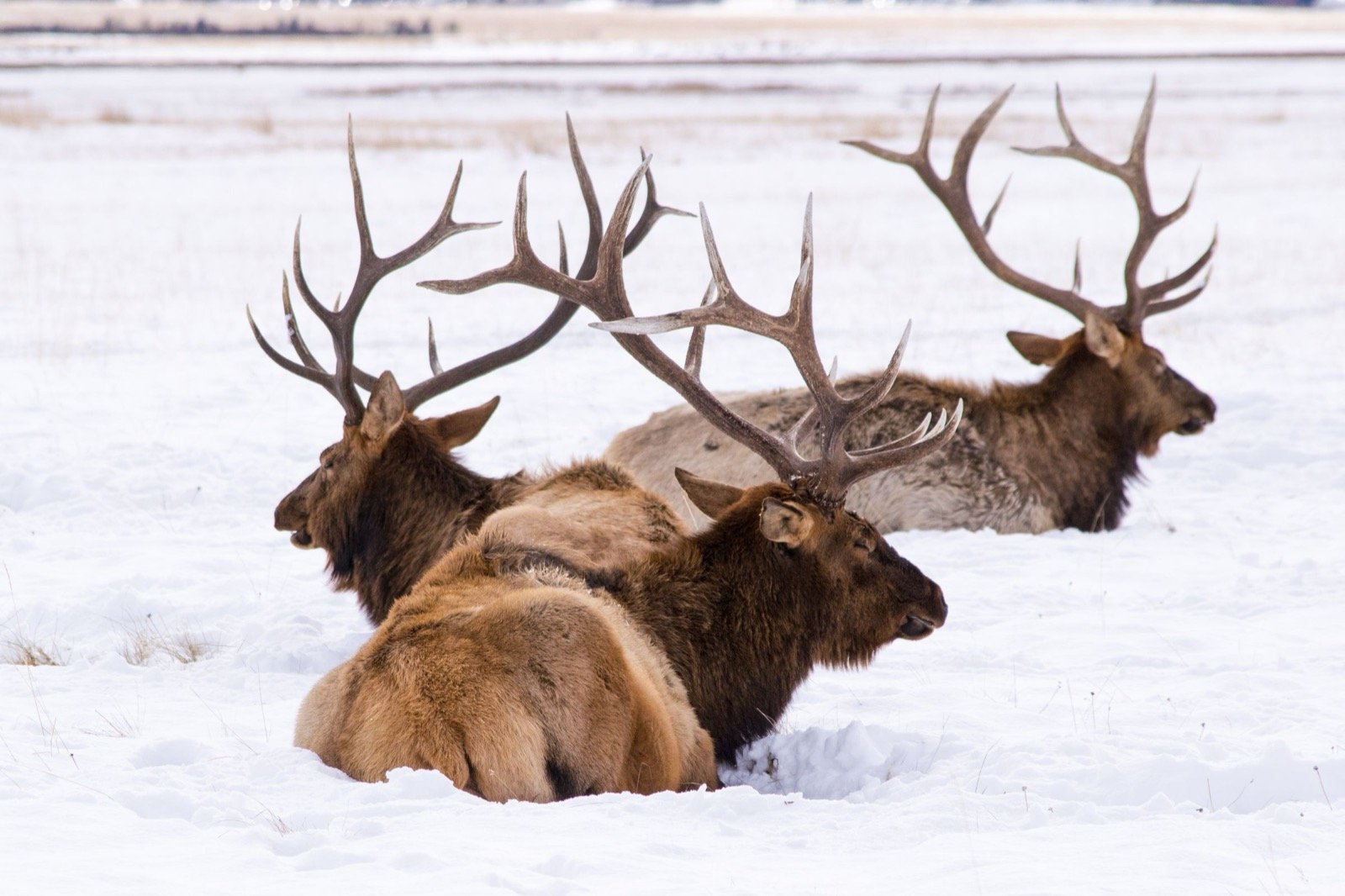
Featured image: elk resting in snow in Jackson, Wyoming, photographed by Mariana Bobina via Pexels. Licensed under the Pexels license and not reused on another Big Game Ledger page.