Idaho Elk Hunting Guide: Zones, Tags, Draws, Maps and Costs
Before comparing an outfitter quote or private-land package, review our 2026 guided elk hunt cost guide for published price examples, license costs, common exclusions and deposit questions.
Common Idaho elk hunting questions
How does a nonresident get an Idaho elk tag in 2026?
Idaho used drawings for the initial 2026 nonresident general-season deer and elk allocation. After those drawings, remaining opportunity depends on official returned-tag sales and any applicable controlled-hunt process. Check the current Idaho nonresident tag page rather than relying on the former first-come system.
Is an Idaho elk zone the same as a GMU?
No. A general elk zone can contain multiple game management units. The tag type controls the legal seasons printed for that zone, while the GMU helps define geography, access and some hunt-specific restrictions.
What belongs in an Idaho elk-hunt budget?
Budget separately for the hunting license, elk tag, application or transaction costs, travel, lodging or camp, food, maps, equipment, meat care and transport. A guided quote should state whether lodging, meals, packing, game retrieval, taxes and non-hunter costs are included.
When does Idaho elk season start?
Idaho does not have one statewide elk opening date. The legal start date depends on the elk zone or controlled-hunt number, A or B tag, weapon, legal animal and the season line printed in the current Big Game Seasons and Rules. Verify the exact zone, tag and dates in the Idaho Hunt Planner and current regulations before purchasing or traveling.
Can you hunt elk on public land in Idaho?
Many Idaho elk hunts include federal or state public land, but a tag does not guarantee legal or practical access. Confirm ownership, legal entry, road and trail status, motorized-hunting restrictions, closures, fire orders and private inholdings with the Idaho Hunt Planner and the responsible land manager. Access Yes properties must be used only under their current property-specific terms.
Official Idaho elk planning links
- 2026 Big Game Seasons and Rules
- Idaho Hunt Planner
- 2026 nonresident general deer and elk tags
- Controlled-hunt application information
- Returned tag schedule and instructions
- Motorized vehicles and hunting
- Idaho CWD information
- Mandatory hunter report
- Hunter education
Continue building your elk plan
Use the Elk Hunting hub to compare destinations, then return to the complete elk hunt planning guide. Build the navigation side in Maps & Apps and assemble the equipment side through our Gear resources.
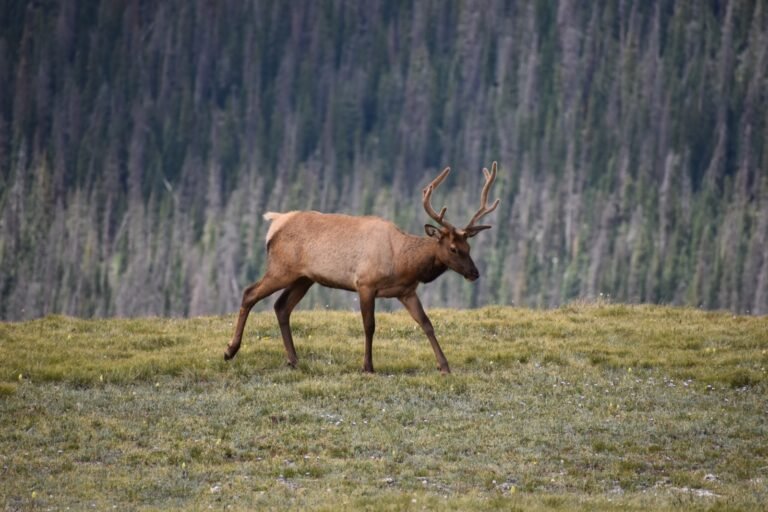
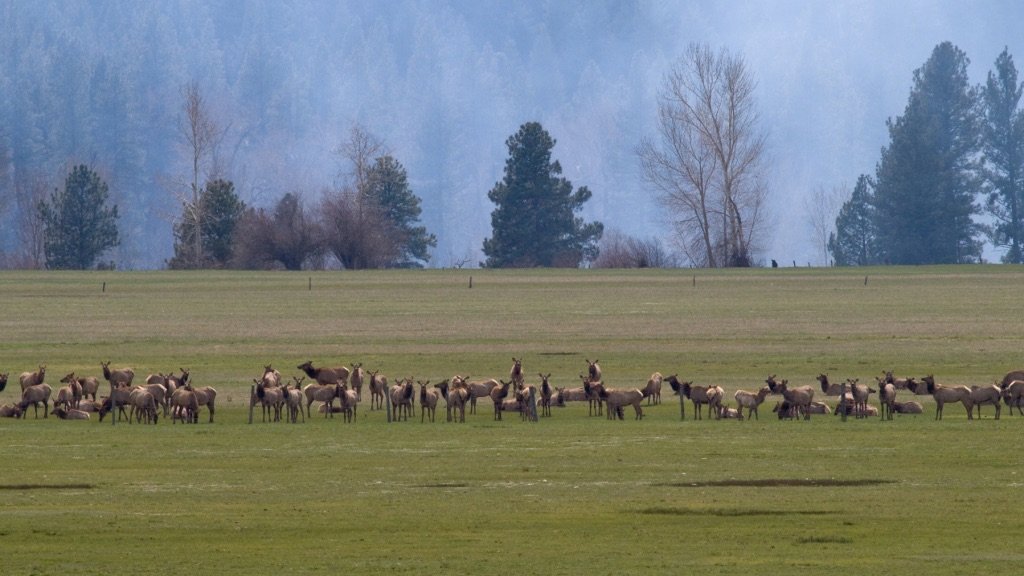
Featured image: elk herd in Boise National Forest, Idaho. U.S. Forest Service photograph; public domain.
Reviewed for the 2026 Idaho season: August 15, 2026. Regulations, tag inventory, access restrictions, wildfire closures and fees can change. Always confirm the hunt code, elk zone, game management unit and current rules with Idaho Fish and Game before purchasing a license or traveling.
Idaho rewards hunters who enjoy solving a complicated planning problem. Its elk country ranges from dense northern timber to steep central wilderness and more open southern mountain-and-desert transitions. The same variety that makes an Idaho hunt feel like a major western adventure also makes the state easy to misunderstand: a general-season tag is tied to an elk zone and tag type, controlled hunts use specific hunt numbers and boundaries, and the game management unit on your map is only one layer of the decision.
This Idaho elk hunting guide explains how those pieces fit together, what the 2026 nonresident allocation changes mean, and how to build a realistic Idaho elk plan without relying on a vague statewide “best unit” list.
Research disclosure: Big Game Ledger has not hunted Idaho and does not present this as firsthand field experience. We compile current agency rules, mapping data, harvest reports, land-manager information, and clearly attributed hunter and guide observations. Official regulations control whenever they differ from this guide.
Before comparing zones or controlled hunts, use the western big-game application deadlines calendar to organize the annual research cycle. Always confirm Idaho’s exact current dates and procedures through Idaho Fish and Game before applying or purchasing.
Idaho elk planning at a glance
- Species: Rocky Mountain elk.
- Management structure: Idaho manages general elk opportunity through 28 elk zones, with A and B tag systems in most zones. A zone may include several GMUs.
- General versus controlled: A general tag follows the seasons and restrictions printed for its zone and tag type. A controlled hunt requires a successful application for a specific hunt number.
- 2026 nonresident general tags: Idaho replaced the old opening-day, first-come process with drawings for the initial 2026 nonresident deer and elk allocation. The principal application ran December 5–15, 2025, followed by a February 2026 application period.
- 2026 controlled-hunt application: May 1–June 5 for deer, elk and several other fall species. A second drawing runs August 5–15 for qualifying leftover controlled hunts.
- Late planning: Initial drawing dates have passed. Use Idaho Fish and Game’s live nonresident inventory and returned-tag pages rather than old articles describing the former sale system.
- Reporting: Every elk tag holder must file a mandatory hunter report—within 10 days after harvest, or within 10 days after the season closes if the hunter did not hunt or did not harvest.
First understand zones, GMUs and hunt areas
The most common Idaho planning mistake is treating an elk zone, a GMU and a controlled-hunt area as interchangeable. They are related, but they answer different questions.
| Planning layer | What it tells you | What to verify |
|---|---|---|
| Elk zone | The group of GMUs associated with a general A or B elk tag. | Tag type, zone quota or cap, weapon restrictions and every season line printed for that tag. |
| Game management unit (GMU) | The geographic unit used for boundaries, access rules and many hunt details. | Exact boundary, private/public land pattern, motorized rule, CWD rules and local closures. |
| Controlled-hunt area | The legal boundary attached to a numbered controlled hunt. | Hunt number, dates, sex/antler restriction, weapon, tag quantity and whether the boundary differs from the whole GMU. |
Start in the Idaho Hunt Planner. Select elk, then inspect the actual hunt—not just the unit name. The planner combines rules, boundaries, historical harvest statistics, drawing odds, public-access layers and nearby services. Cross-check the result against the current Big Game Seasons and Rules brochure.
General A and B tags versus controlled hunts
General A and B zone tags
In most elk zones, Idaho separates general opportunity into A and B tags. Do not assume “A” always means archery and “B” always means rifle. Each tag can contain multiple season lines, weapons, dates and elk restrictions, and those details vary by zone. Read every line for the exact zone and tag year before comparing areas.
For nonresidents, the zone and tag type matter before a tag is purchased because quotas and limits are assigned to specific choices. The 2026 nonresident proclamation is the correct starting point for those allocations.
Controlled hunts
Controlled hunts trade certainty for specificity. A hunter applies for a numbered opportunity with its own dates, weapon, boundary and tag count. Use historical drawing odds to understand scarcity, but never treat a previous year’s odds as a forecast. Applicant pools and tag numbers change.
Idaho’s 2026 main controlled-hunt window for elk ran May 1 through June 5. Results were scheduled for early July, and most successful deer and elk applicants had to claim their controlled tag by August 1. Idaho also set a July 31 deadline for exchanging general deer and elk tags in 2026. Those deadlines are useful context for next year, but future dates must be rechecked when the next rules are released.
Returned tags and outfitter allocations
Tags returned to Idaho Fish and Game can re-enter inventory through scheduled sales. Availability changes quickly, and a tag appearing in a historical event listing does not mean it remains available. Check the official Returned Sold-Out Tags page and the live nonresident quota and availability page.
Some nonresident tags are allocated to licensed outfitters. That is a separate route, not proof that an outfitter has availability or performs well. Verify the outfitter’s Idaho license, exact hunt area, included services, cancellation terms and tag arrangement directly before paying a deposit.
What the 2026 nonresident drawing changes
For the 2026 hunting year, Idaho used a random drawing for the initial nonresident general-season deer and elk tag allocation. The first application period ran December 5–15, 2025, with a second application period in February 2026. That means older advice telling a nonresident to wait online for the former first-come sale is obsolete for the initial 2026 allocation.
The planning lesson is bigger than one set of dates: choose several acceptable zone-and-tag combinations before the application opens, price the nonrefundable license requirement, and read the current proclamation every year. Idaho may revise dates, procedures, quotas or choice rules.
Build a hunt shortlist from terrain and logistics
Do not select an Idaho elk hunt from harvest rate alone. First decide which kind of problem you are equipped to solve:
- Northern timber: Expect visibility, road density, wet weather and private-land edges to shape the plan. A map that looks close to access can feel very different beneath a closed canopy.
- Central mountain and wilderness country: Elevation change, river crossings, pack-out distance and limited road access can become the hunt’s controlling costs. A realistic recovery plan matters before a trailhead is chosen.
- Southern and southeastern mixed country: More open terrain can increase glassing value, but public/private boundaries, agriculture, seasonal access and motorized restrictions can decide whether a location is usable.
These are planning categories, not promises about elk numbers or trophy quality. After choosing a terrain style, compare individual hunts in the Hunt Planner. Look at multiple years of harvest data, hunter numbers, percentage of harvested antlered elk with six or more points where reported, access, and the exact season structure. Those figures describe past reported hunts; they do not guarantee an “average bull” or a future result.
Turn your Idaho hunt plan into an equipment checklist
Choose equipment after you have defined the hunt: your route, camp style, expected conditions and recovery plan. Start with the western big-game hunting gear checklist, then work through the decisions that match your plan:
- Carrying and recovery: Use our hunting backpack guide to compare fit, capacity and load-hauling design for your camp and pack-out plan.
- Footwear: Use our hunting boot guide to evaluate fit, support, insulation and testing for the terrain and load you expect.
- Glassing: Use our hunting binocular guide to compare field of view, magnification and carried weight for your planned observation distances.
These are research-led buying guides, not claims that we have field-tested equipment in Idaho. A product choice does not replace checking access, current rules or the practical limits of your hunt plan.
Maps and access checks that belong in every Idaho plan
- Save the elk-zone, GMU and controlled-hunt boundaries as separate layers.
- Display federal, state and private surface ownership; do not infer access from an unlabeled basemap.
- Check Idaho’s Access Yes properties, but read the property-specific terms and dates.
- Confirm road and trail status with the managing agency. A road drawn on an app may be gated, seasonal, unsuitable for a vehicle or closed by fire.
- Download offline maps before leaving service and carry a backup navigation method.
- Mark potential glassing points, water, camps, escape routes and more than one legal pack-out path.
How to use Idaho elk range and distribution maps
The Idaho Fish and Game Hunt Planner Map Center can display elk zones, game management units, controlled-hunt areas, game-distribution information, land ownership and other planning layers. Use those layers to organize research—not as a promise that elk will occupy a mapped area on a particular date.
- Start with the exact elk zone, tag type or controlled hunt. Confirm the legal boundary, season dates, weapon and animal restrictions in the current rules.
- Add any available game-distribution or seasonal-range layer as broad habitat and management context. It does not show live animals.
- Overlay land ownership, Access Yes properties, roads, trails and motorized restrictions. Confirm legal entry and route status with the responsible land manager.
- Compare several years of hunt-specific harvest information and practical access instead of ranking a hunt from one map layer.
- Download the final map for offline use only after checking current fire, road and area closures, and carry a backup navigation method.
A mapped seasonal range is not an Idaho elk density map. Weather, wildfire, forage, migration timing, hunting pressure, private-land access and disturbance can change how elk use an area. Treat the map as a research layer, then verify conditions close to the hunt date.
For a broader layer workflow, see how to read hunting maps for big-game planning.
For designated units, Idaho’s Motorized Hunting Rule restricts motor-vehicle use by big-game hunters to established roadways legally open to full-sized automobiles from August 30 through November 14. Land-manager travel rules still apply, and they may be more restrictive. Idaho Fish and Game specifically recommends confirming route status with the relevant land manager.
Wildfire and smoke can close roads or whole areas with little notice. Check the current Idaho Fire Restrictions Finder and the applicable Forest Service, BLM, state or private-land notice immediately before travel—not just when the hunt is booked.
License and tag costs to budget for 2026
The figures below are agency-listed 2026 prices reviewed August 15, 2026. They are not a complete trip budget and can differ by age, residency, disability status, price-lock eligibility, weapon permit and transaction method.
| Item | Idaho resident adult | Nonresident adult |
|---|---|---|
| Annual hunting license | $15.75 without price lock | $185.00 |
| Access/Depredation fee | $5.00 | $10.00 |
| Adult elk tag | $36.75 without price lock | $651.75 |
| Controlled-hunt application | $6.25 | $18.00 |
Check the current resident or nonresident fee page before purchase. Add any required archery or muzzleloader permit, application processing charge, mapping subscription, fuel or airfare, lodging, food, meat care, taxidermy, pack-out help and emergency margin. A remote Idaho elk hunt can be inexpensive on paper and costly after one access failure or unplanned recovery day.
Hunter education, CWD and recovery rules
Idaho requires hunter-education certification to purchase a hunting license for hunters born on or after January 1, 1975. A hunter who can show a previously held hunting license or a hunter-education certificate from Idaho or another state is exempt from that certification requirement. Confirm your documentation before the application period.
Idaho has special 2026–2027 CWD management-zone rules. For elk, deer and moose taken in GMUs 14, 18 and the specified portion of Unit 1, whole-carcass transport out of the zone is prohibited; only listed exceptions such as cut-and-wrapped meat, quarters or deboned meat without brain or spinal tissue, hides without heads, cleaned skull caps and dried antlers may leave. The agency’s current CWD page also identifies other units where hunters should review special rules. Read the exact CWD zone rules for the unit before deciding how the animal will be processed.
A responsible recovery plan begins before the shot. Know the legal evidence-of-sex requirement, tag-validation method, route to refrigeration or ice, whether a pack service is actually available, and how long the pack-out could take at the slowest member’s pace. Idaho’s mandatory report is due within 10 days after harvest—or within 10 days after season close for a tag holder who did not hunt or did not harvest.
A practical Idaho elk planning sequence
- Choose resident or nonresident route and set an all-in budget.
- Select weapon and realistic terrain style.
- Build a shortlist of zone-and-tag combinations or controlled hunt numbers.
- Read the current season line for every choice.
- Compare several years of hunt-specific data; do not rank areas from one season.
- Audit public access, roads, motorized rules, fire risk and private-land boundaries.
- Plan meat care and recovery for the farthest point you might legally hunt.
- Apply or buy through the current official process and save every confirmation.
- Recheck rules, CWD notices, closures, weather and fire conditions immediately before departure.
- File the mandatory hunter report by the deadline.
Before comparing an outfitter quote or private-land package, review our 2026 guided elk hunt cost guide for published price examples, license costs, common exclusions and deposit questions.
Common Idaho elk hunting questions
How does a nonresident get an Idaho elk tag in 2026?
Idaho used drawings for the initial 2026 nonresident general-season deer and elk allocation. After those drawings, remaining opportunity depends on official returned-tag sales and any applicable controlled-hunt process. Check the current Idaho nonresident tag page rather than relying on the former first-come system.
Is an Idaho elk zone the same as a GMU?
No. A general elk zone can contain multiple game management units. The tag type controls the legal seasons printed for that zone, while the GMU helps define geography, access and some hunt-specific restrictions.
What belongs in an Idaho elk-hunt budget?
Budget separately for the hunting license, elk tag, application or transaction costs, travel, lodging or camp, food, maps, equipment, meat care and transport. A guided quote should state whether lodging, meals, packing, game retrieval, taxes and non-hunter costs are included.
When does Idaho elk season start?
Idaho does not have one statewide elk opening date. The legal start date depends on the elk zone or controlled-hunt number, A or B tag, weapon, legal animal and the season line printed in the current Big Game Seasons and Rules. Verify the exact zone, tag and dates in the Idaho Hunt Planner and current regulations before purchasing or traveling.
Can you hunt elk on public land in Idaho?
Many Idaho elk hunts include federal or state public land, but a tag does not guarantee legal or practical access. Confirm ownership, legal entry, road and trail status, motorized-hunting restrictions, closures, fire orders and private inholdings with the Idaho Hunt Planner and the responsible land manager. Access Yes properties must be used only under their current property-specific terms.
Official Idaho elk planning links
- 2026 Big Game Seasons and Rules
- Idaho Hunt Planner
- 2026 nonresident general deer and elk tags
- Controlled-hunt application information
- Returned tag schedule and instructions
- Motorized vehicles and hunting
- Idaho CWD information
- Mandatory hunter report
- Hunter education
Continue building your elk plan
Use the Elk Hunting hub to compare destinations, then return to the complete elk hunt planning guide. Build the navigation side in Maps & Apps and assemble the equipment side through our Gear resources.
Featured image: elk herd in Boise National Forest, Idaho. U.S. Forest Service photograph; public domain.