How to Plan a Wyoming Mule Deer Hunt: Regions, Areas, Draws and Access
License-route and wilderness-access guidance checked September 11, 2026. The listed 2026 application window has closed. Confirm the exact hunt area, license type, legal deer and season in current Wyoming regulations; no 2027 quota or date is assumed here.
Wyoming mule deer planning starts with residency and license route. A resident general license, a nonresident region general license and a limited-quota area license are not the same product. Then comes a second distinction: publicly owned land is not always legally reachable, and designated wilderness has an additional rule for nonresident big-game hunters.
Research disclosure: Big Game Ledger has not hunted Wyoming. This guide is assembled from current agency regulations, application materials, maps and access resources. Official rules control whenever they differ from this article.
Wyoming mule deer planning at a glance
- The 2026 deer draw application window ran January 2–June 1; eligible residents can obtain general deer licenses outside that limited-quota application route.
- Applicants could modify or withdraw through June 1; tentative results were scheduled for June 18.
- Wyoming separates regional general deer licenses from limited-quota hunt-area licenses.
- Species accuracy: verify that the hunt is explicitly valid for mule deer rather than assuming every deer license covers the same species.
Choose the correct Wyoming license route
The Wyoming deer Hunt Planner distinguishes these routes. Match the license to the area’s season table, not just the region map.
| Route | What it means for planning |
|---|---|
| Resident general deer | Available over the counter to eligible residents; usable in areas open to general-license hunting, with each area’s dates and limitations. |
| Nonresident region general deer | Limited in number and specific to a region. It covers that region’s eligible general-license areas, not every limited-quota hunt inside the outline. |
| Limited-quota hunt-area license | Research the area and license type together. A deer license restricted to white-tailed deer does not become a mule-deer license because both animals occur there. |
Practical example: before selecting a nonresident region, write a line for each general area you intend to use: area number, dates, legal deer and public entry route. If one area closes earlier than another, your region license does not make their seasons interchangeable. Keep a second legally accessible area on the plan only if its dates and restrictions also fit.
Nonresident wilderness rule: public land does not always mean unguided
WGFD’s hunting FAQ states that nonresident big-game hunters in federally designated wilderness need a licensed guide or qualifying resident companion. The resident companion needs the agency’s noncommercial guide license. This is a designated-wilderness rule, not a blanket rule for every national-forest acre.
Before putting a remote basin on your shortlist, display the wilderness boundary as well as land ownership. If the intended hunt lies inside designated wilderness, resolve the companion or outfitter arrangement before treating it as a DIY option. Moving the camp outside the boundary does not resolve a hunt that still takes place inside it.
Compare two access plans before choosing a region
This is our trip-planning exercise, not a ranking of Wyoming regions:
- Plan A — road-supported: prove the public road reaches the parcel, identify a legal parking point, and confirm any private crossing permission. Price fuel, repeated drives and cold storage.
- Plan B — backcountry: locate wilderness boundaries, legal trail access and realistic loaded travel time. Price any required guide arrangement, recovery support, camp and additional weather days.
Use the plan you can actually support when comparing application choices. A region with attractive past harvest numbers can still be the wrong fit if most of your usable habitat requires access you do not have. Do not assume the presence of a road, fence crossing or checkerboard public section proves a right to enter.
Start with the exact hunt, not a reputation
Write down the official hunt code or license name before comparing units. Record the legal deer, dates, weapon, boundary, quota and access notes on one line. A famous unit with the wrong season or unreachable land is not a usable plan.
| Planning layer | Question to answer |
|---|---|
| License | Is it general, limited, controlled, guided, landowner or leftover? |
| Species | Does the hunt cover mule deer, another deer species or either? |
| Season | What are the legal dates, weapon and animal restrictions? |
| Access | Can the intended public land be reached legally under current road rules? |
| Recovery | Can meat be cooled and removed from the hardest realistic location? |
Draws, points and historical odds
The WGFD draw-results page separates resident, nonresident regular, nonresident special, preference-point and random reports. Compare the same area or region and license type in the correct table. A result from the special draw is not the result of applying in the regular draw. Likewise, a random-draw result is not a points threshold. Keep the quoted fee and the matching historical report side by side; neither assures a future draw or harvest.
Terrain, maps and legal access
Wyoming planning must distinguish a deer region from a hunt area and a public parcel from legal access. Use the Hunt Planner, county roads, federal travel maps and Access Yes property rules together.
Start with the official hunt-planning or mapping resource, then cross-check federal travel maps, county road status and current fire or emergency closures. Offline maps help in the field but do not replace legal boundary descriptions.
Costs and field logistics
Use the current WGFD fee list for the chosen license route, applicable point purchase and conservation stamp. Do not substitute an old regular-draw price for a special-draw application. Separately total access arrangements, scouting, travel, camp, recovery, processing and a weather reserve. Ask whether a provider’s quote includes packing meat, transporting it to cold storage, and extra days if roads close; do not infer those services from the word “guided.”
Buck expectations and hunt quality
Big country and mature bucks create the appeal, but there is no defensible statewide “average buck size.” Age structure, winter survival, precipitation, migration, pressure and season timing vary sharply. Compare several years of unit-level harvest and age data without turning them into a promise.
Hunter education, CWD and field compliance
Before travel, verify hunter-education eligibility, tagging or E-Tag procedures, evidence-of-sex rules, mandatory reporting, chronic wasting disease sampling and carcass-transport restrictions. Check every state through which meat or parts will travel.
A practical Wyoming planning sequence
- Choose hunt style, weapon and total budget.
- Record exact hunt codes and legal species.
- Compare current rules, draw history and quotas.
- Prove legal access and road continuity.
- Plan glassing, water, camp, recovery and meat care.
- Apply through the current agency system and save confirmation.
- Recheck closures, weather, CWD and tagging before travel.
Official Wyoming mule deer planning links
Return to the Mule Deer Hunting hub, browse Hunt Planning, or compare supporting Maps & Apps.
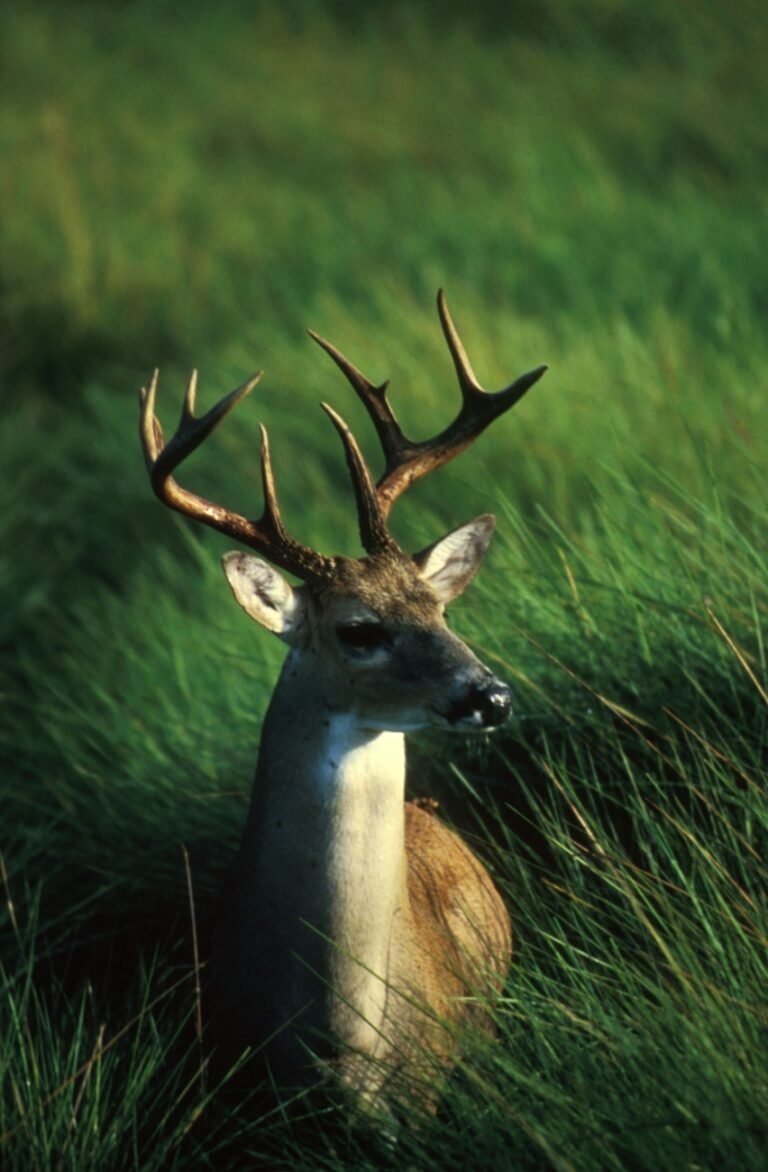
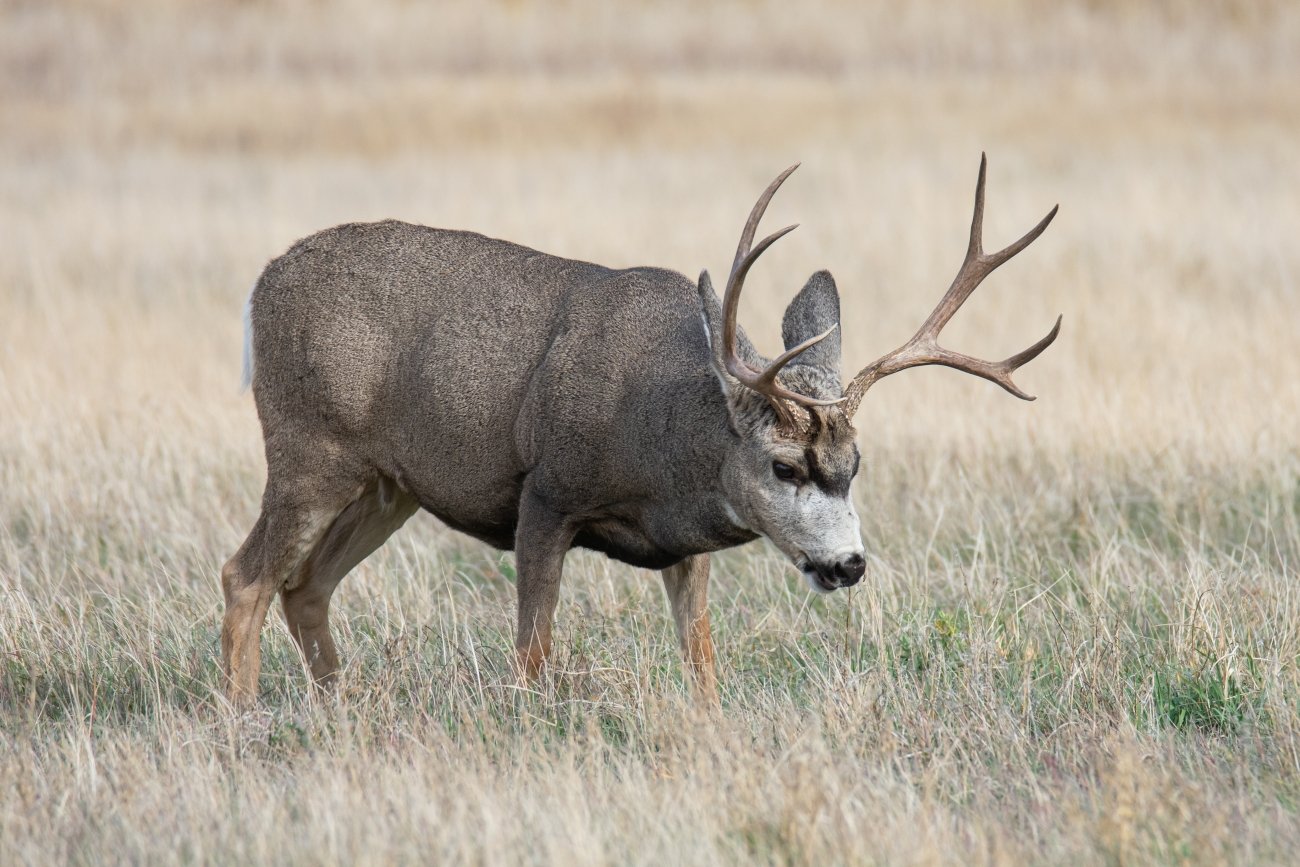
Featured photo: Mule deer at National Elk Refuge, Wyoming. Gannon Castle / USFWS; public domain. A wildlife photograph is not a statement of hunting access at the pictured location.