Washington Mule Deer Hunting Guide: GMUs, Seasons, Permits and Access
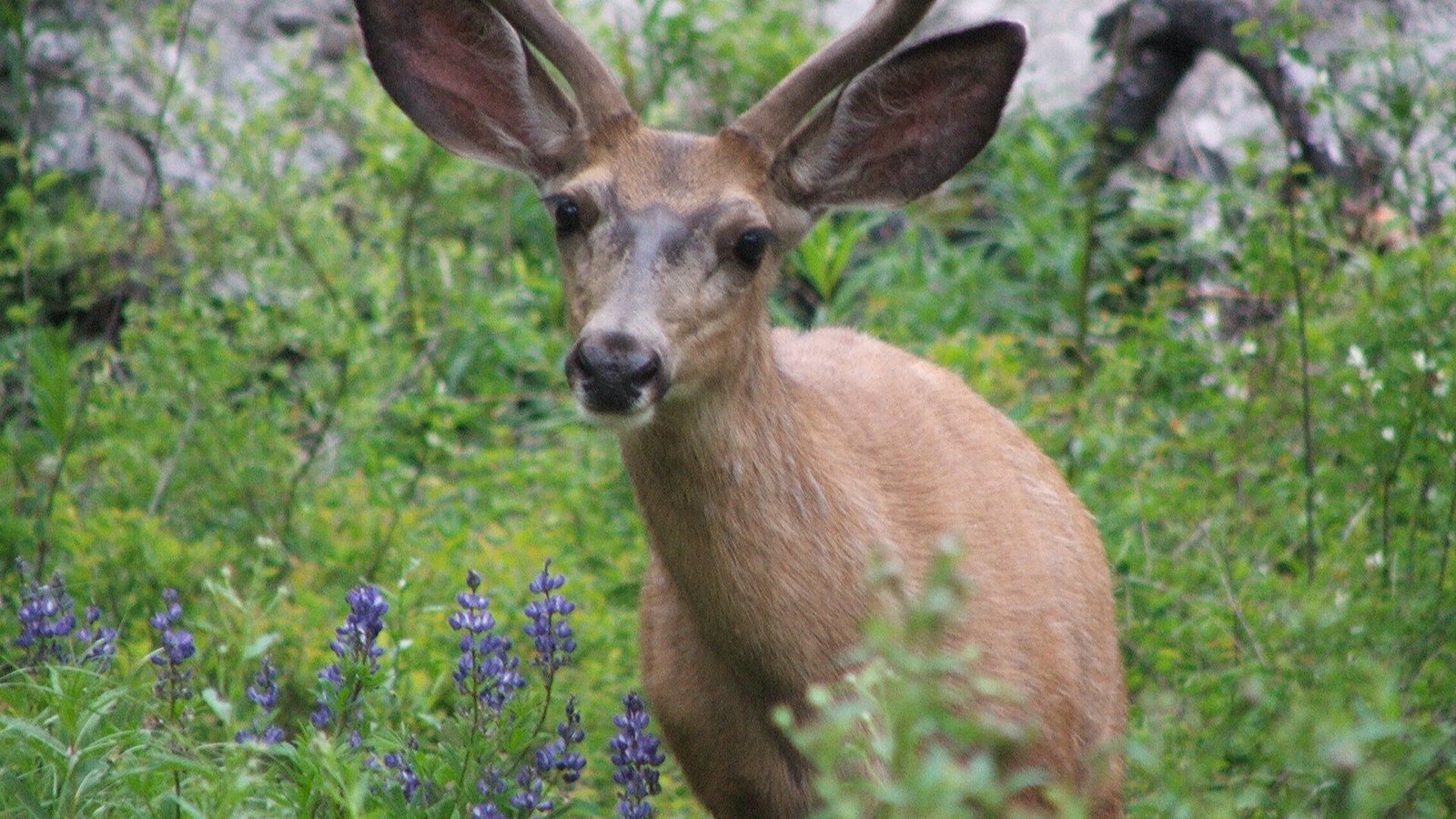
Young mule deer in North Cascades National Park, Washington. National Park Service photograph; public domain.
Review record: August 17, 2026 season review; September 11, 2026 targeted update to CWD submission, harvest-reporting distinctions and article structure. Seasons, legal deer, permit numbers, access, fees and disease rules can change. Confirm the exact Game Management Unit and hunt in Washington’s current Big Game Hunting Seasons and Rules before buying a license, selecting a tag or traveling.
Washington mule deer hunting ranges from the dry shrub-steppe of the Columbia Basin to the Okanogan high country, the east slope of the Cascades and the broken ridges of the southeast. The appeal is classic western country with a wide range of hunt styles, but Washington’s deer framework is species-, weapon- and GMU-specific. A plan must identify the exact legal deer and tag before it compares terrain or trophy potential.
Research disclosure: Big Game Ledger has not hunted Washington. This guide is assembled from current Washington Department of Fish and Wildlife regulations, licensing pages, maps, access programs and disease guidance. Official rules control whenever they differ from this article.
Washington mule deer planning at a glance
- Washington uses Game Management Units (GMUs), deer areas and named special-permit hunts. Record the exact unit and legal-deer column.
- Hunters select a deer tag tied to a hunting method or a multiseason option; the tag and season must match.
- The 2026 booklet lists the modern-firearm general mule deer season as October 17–27 in listed eastern and central GMUs with a three-point minimum.
- Special-hunt submissions opened April 20. WDFW extended the 2026 deadline from May 20 to May 27; that extension should not be assumed in another year.
- Mandatory harvest reporting is due after the season. The 2026–27 booklet lists January 31, 2027 as the reporting deadline.
- Washington confirmed CWD in north Spokane County. Current disease rules affect baiting, carcass transport and testing, especially in the Eastern Region.
Species accuracy comes first
Washington supports mule deer, black-tailed deer and white-tailed deer, sometimes within a relatively short drive. The legal-deer table changes by GMU and season. Do not use “deer” as a substitute for species identification, and do not assume an any-buck or three-point rule applies everywhere.
The 2026 booklet lists a modern-firearm mule deer general season of October 17–27 with a three-point minimum across specified GMUs. Other rows apply to black-tailed or white-tailed deer, and some units have different legal-animal rules. GMUs 290 Desert, 329 Quilomene, 371 Alkali and 485 Green River are permit-only for deer; GMUs 157 Mill Creek Watershed, 490 Cedar River and 522 Loo-wit are closed to deer hunting in the 2026–27 booklet.
General seasons, special permits and tag choices
A general deer tag can create broad opportunity, while a special permit authorizes a specific time, place or hunt category. The permit does not replace the required license and matching transport tag. WDFW allows multiple hunt choices on many applications, but quality deer categories have their own choice limits. Read the current application instructions before ranking choices.
| Planning layer | Question to answer |
|---|---|
| Tag | Modern firearm, archery, muzzleloader or multiseason? |
| GMU | Is it general, permit-only, partly private or closed? |
| Legal deer | Mule deer, white-tailed deer, black-tailed deer, any buck or another restriction? |
| Access | What public, private or reservation rules control the approach? |
| Compliance | What reporting, CWD sampling, tagging and transport steps apply? |
Historical draw and harvest data describe past conditions only. Compare the exact hunt number, applicant category, choice order and year. Tag numbers, season design and applicant pressure can move.
Where the adventure changes
North-central Washington can mean open slopes, ponderosa pine, burns and high basins where glassing is central. The Columbia Basin and breaks country can reward careful use of elevation, water and cover, but private-land boundaries may dominate the plan. Southeastern mountain and canyon country adds steep recovery problems and variable road access.
The size of the country is exciting, yet it makes logistics decisive. A buck across a drainage may require hours to reach, and warm October afternoons can make meat cooling urgent. Plan the approach and the exit at the same time. Washington does not have one credible statewide “average buck size”; local age structure, winter survival, habitat, pressure and season timing matter far more.
Maps, public land and private access
Start with WDFW’s official GMU maps, then verify federal or state land rules, county roads, gates, fire restrictions and the legal unit boundary. GMUs 372, 382 and 564 are identified in the 2026 booklet as mainly private property, illustrating why a unit boundary is not an access guarantee.
WDFW’s Private Lands Program includes Feel Free to Hunt, Register to Hunt, Hunt by Written Permission and Hunt by Reservation properties. Each label creates a different obligation. Read the property page and posted signs rather than assuming enrollment means unrestricted vehicle access or unlimited hunter numbers.
Licenses and a realistic trip budget
Use WDFW’s current big-game license table for the applicable residency and age category. Washington changed license fees before the 2026 season, so an older article may be materially wrong. Confirm the deer license package, chosen transport tag, special-hunt application charge and any vehicle-access requirement before checkout.
The full budget should include license and tag, applications, travel, fuel, lodging or camp, mapping, optics, food, emergency communications, meat cooling, pack-out help and an unexpected-closure margin. If the hunt depends on private access, learn the registration or reservation process before making nonrefundable travel purchases.
Comparing a do-it-yourself deer trip with a guided elk trip? The guided elk hunt cost guide is a separate comparison resource for package exclusions and deposit questions—not a price estimate for this Washington mule deer hunt.
CWD, baiting, reporting and field rules
For deer harvested in WDFW’s Eastern Region (100-series GMUs), submit the head with at least three inches of neck attached, or the required extracted lymph nodes, within five days of harvest and before leaving the Eastern Region. This is a sample-submission requirement, not a promise of laboratory results within five days. Follow the current WDFW testing instructions and collection-site map.
Choose a collection option before the hunt and confirm its operating hours. A self-service drop-off may be useful outside office hours, but heads left there are not returned. If you want to keep the head, arrange an appropriate staff-assisted or other approved sampling option. Plan the drive from your hunting area to that location; do not assume every town has a collection site.
The harvest report is a separate task. Submitting a CWD sample does not satisfy mandatory harvest reporting. Complete the applicable tag and permit reports through WDFW’s reporting system, including no-hunt or unsuccessful reports when required. Keep both your sample-submission information and your harvest-report confirmation.
WDFW’s September 8, 2026 reminder confirms the statewide ban on baiting deer, elk and moose and the prohibition on cervid urine or glandular scent lures. Transport is a separate check: do not move an intact carcass out of the 100-series transport-restriction zone. Consult the allowed-parts and preparation rules, plus the rules of every state on your route, before packing the vehicle. Sampling alone does not make restricted carcass parts lawful to transport.
A practical Washington planning sequence
- Choose a hunting method, travel window and total budget.
- Identify GMUs where the current legal-deer row explicitly fits mule deer.
- Decide between general opportunity and special-permit applications.
- Compare current seasons, permit tables and multi-year results.
- Prove legal access from the road to the intended hunting ground.
- Plan glassing, water, camp, pack-out and meat care.
- Buy the correct license and matching tag; save all confirmations.
- For a 100-series GMU, identify a CWD sample-submission location and lawful carcass-transport plan before hunting.
- Recheck fire, closures, tagging and reporting immediately before travel.
- Submit required samples before leaving the Eastern Region and within five days, then complete the separate harvest report.
Common Washington mule deer hunting questions
Does a Washington deer tag guarantee access to a mule deer hunt?
No. A tag does not create access across private land, closed roads or restricted public parcels. Confirm the legal season for the exact GMU, then verify ownership, motorized restrictions, fire closures and any separate access permission.
Are Washington special permits separate from general deer seasons?
Yes. Washington offers general-season deer opportunity and separate special-permit hunts. A special-permit application does not replace the need to understand the underlying license and transport requirements. Use the current WDFW regulations and permit pages for the exact hunt.
Where should a Washington mule deer plan begin?
Begin with a legal GMU and season combination, then compare public access, terrain, road systems, likely weather, fire history and meat-recovery logistics. Statewide reputation is less useful than a unit-specific plan.
Official Washington mule deer planning links
- 2026–27 Big Game Hunting Seasons and Rules
- Current big-game regulations
- Special hunt permits and raffles
- Big-game licensing and fees
- Official GMU maps
- Private-land hunting access
- Washington CWD rules and updates
- Mandatory harvest reporting
Return to the Mule Deer Hunting hub, read the beginner’s mule deer guide, browse Hunt Planning, or compare supporting Maps & Apps.
Featured image: Young mule deer at Flat Creek in North Cascades National Park, Washington. NPS staff photograph; public domain. Optimized for web display. This representative wildlife photograph is not evidence that the pictured park location is open to hunting.