What a Pronghorn Hunt Actually Involves: A Beginner’s Planning Guide
Reviewed for 2026 planning: August 24, 2026. Pronghorn seasons, hunt-area boundaries, legal animals, permit availability, application dates, access rules and carcass requirements vary by state and can change. Confirm the exact hunt with the responsible wildlife agency before applying, purchasing or traveling.
Pronghorn hunting is often described as a simple open-country hunt. The country may look easy from a highway, but a real plan has to solve several separate problems: drawing or buying the correct license, finding legal access, locating animals across enormous visible landscapes, approaching within an ethical shooting distance, and cooling meat quickly in dry, exposed conditions.
Research disclosure: Big Game Ledger has not hunted pronghorn. This guide combines official wildlife-agency information, federal species resources and established planning principles. It does not replace current regulations or experienced instruction in the field.
Pronghorn hunting at a glance
- Species: American pronghorn (Antilocapra americana), a North American species that is neither a deer nor a true antelope.
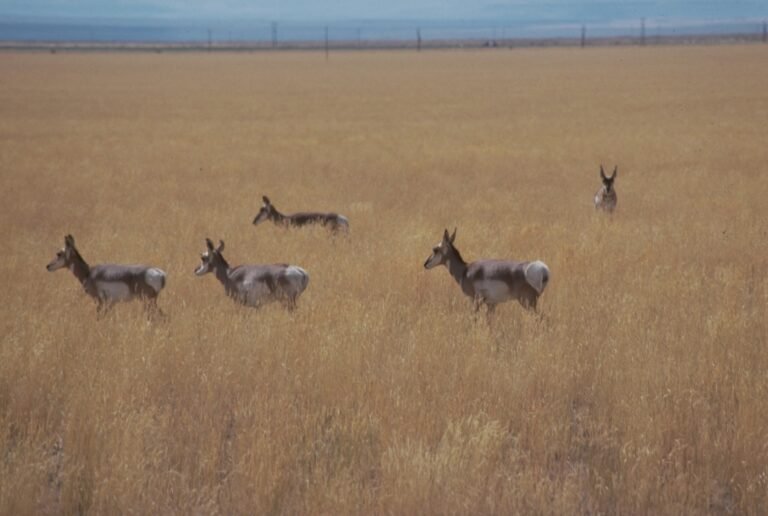
- Typical landscape: prairie, sagebrush, high desert, agricultural edges and broad basins with long sight lines.
- Primary planning challenge: matching a legal permit to land you can actually reach and hunt.
- Common field system: vehicle-based scouting or foot access, glassing, wind-aware approaches and careful shot preparation.
- Recovery priority: shade, clean meat handling and rapid cooling in conditions that may still be warm.
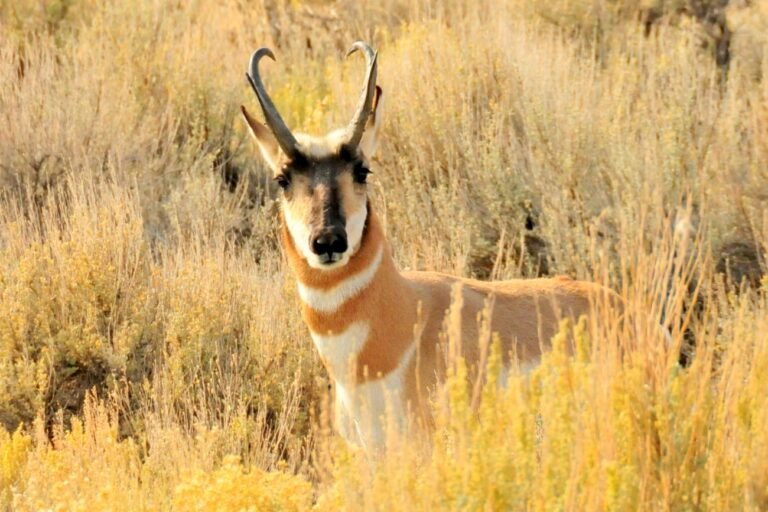
The National Park Service pronghorn profile explains the animal’s open-country adaptations, strong vision and distinctive horns. That biology affects nearly every part of the hunt: where to glass, how visible a hunter becomes, how fences influence movement and why terrain that looks flat may still contain useful folds and drainages.
1. Start with the exact legal opportunity
Do not begin with a photograph, a famous county or a broad claim that one state has “easy tags.” Begin with the exact permit pathway. States may organize pronghorn hunting by hunt area, game management unit, district, season, weapon, legal animal, residency and land type. A license that sounds statewide may be restricted by geography or access.
- Identify the state, hunt area or unit and legal animal.
- Confirm whether the license is drawn, over the counter, leftover, private-land-specific or tied to another authorization.
- Read every season, weapon and access limitation attached to the exact hunt code.
- Verify hunter education, tagging, evidence-of-sex and reporting requirements.
- Record the official regulation URL and the date you checked it.
Use the Pronghorn Hunting hub to compare the state systems already covered, then open the official wildlife-agency links inside the selected state guide.
2. Choose the hunt format before comparing states
| Hunt format | What it requires | Common planning mistake |
|---|---|---|
| DIY public land | Verified public access, legal roads, backup parcels and enough time to scout. | Counting public acreage without proving a legal route into it. |
| Private access | Written permission, exact boundaries, dates, fees and rules. | Assuming a license includes landowner permission. |
| Guided hunt | Documented inclusions, exclusions, licensing responsibility and cancellation terms. | Comparing prices without comparing access and services. |
| Archery or other close-range method | More scouting time, concealment options and realistic approach routes. | Choosing a unit only from animal numbers. |
| Rifle hunt | Stable field positions, verified ballistics and disciplined shot limits. | Treating visible distance as ethical shooting distance. |
3. Map land ownership and access separately
Pronghorn country often contains a patchwork of federal, state and private parcels. A map may show public land while the only practical road crosses private property. Conversely, a small public parcel connected to a legal road may be more useful than a much larger landlocked block.
- Load the official hunt-area boundary.
- Add current land-ownership information.
- Verify county, federal and state road status.
- Check seasonal closures and motor-vehicle restrictions.
- Mark water, fences, drainages, low ridges and likely glassing positions.
- Build at least two backup access plans.
- Download maps for offline use before leaving service.
Our hunting-map guide explains the difference between a boundary layer, an ownership layer and a legal-access decision. Third-party mapping apps are planning tools; official regulations, deeds, agency notices and posted property controls determine what is legal.
4. Build an application calendar
Pronghorn opportunities can involve applications months before the season, separate point deadlines, license purchases, leftover lists and private-land arrangements. Build a calendar instead of relying on reminders from social media.
- Application opening and closing dates
- License or prerequisite purchase deadline
- Point purchase or preference deadline
- Application modification or withdrawal date
- Draw-result date
- Leftover or alternate-list date
- Season dates for the exact hunt
- Final regulation and access recheck
Historical draw odds describe past demand and allocation. They do not guarantee a future result. Compare several years for the same residency, hunt code and choice position, and note any quota or rule changes.
5. Scout the landscape, not only the animals
Pronghorn can be visible from far away, but visibility does not solve the hunt. Scouting should answer where animals spend time, how they move through fences and openings, where a vehicle can be parked legally, and which terrain features can hide an approach.
- Glass at multiple times of day.
- Record wind direction and thermal changes.
- Identify low ridges, dry creek beds and vegetation that break line of sight.
- Mark fence crossings without assuming they are legal access points.
- Watch how hunting pressure changes animal locations.
- Keep a second area ready if the first becomes inaccessible or crowded.
6. Build an optics system you can use for hours
Good glassing is less about owning the most expensive optic than maintaining a steady, repeatable search. Binoculars are the primary tool for locating and evaluating animals. A tripod can reduce fatigue and reveal movement that handheld glassing misses. A spotting scope can help evaluate distant animals when the legal-animal definition demands more detail.
- How to choose hunting binoculars
- How to choose a hunting tripod
- How to choose a spotting scope
- How to choose a hunting rangefinder
Practice finding an object with the naked eye, transferring to binoculars and then moving to a supported optic. That sequence matters when animals are moving across a large landscape.
7. Plan every approach around visibility and wind
Open country makes a hunter visible, but “flat” ground is rarely perfectly flat. Small folds, road cuts, sagebrush, dry channels and ridgelines can create an approach. Before moving, identify where the animal can see, where the wind will carry scent and what happens if the animal changes direction.
- Do not skyline yourself on a ridge.
- Use terrain before relying on camouflage.
- Move only when the route has a safe destination.
- Keep vehicles on legal routes and avoid using them to pressure wildlife.
- Back out when wind, access or shot conditions fail.
8. Establish shot limits before the hunt
A pronghorn standing in open country may look closer than it is. Range every intended shot, use a stable position and account for wind. Practice from realistic field positions before the trip and define a maximum distance based on repeatable accuracy—not equipment advertising or another hunter’s ability.
Confirm the legal animal before touching the trigger or releasing an arrow. Both sexes can have horns, and legal definitions may depend on horn length, sex, age class or hunt-specific language. The current regulation controls.
9. Make recovery and cooling part of the stalk
Pronghorn seasons can occur in warm, sunny and windy conditions with little natural shade. Before beginning an approach, know the distance to the animal, vehicle, road, shade, ice and processor or camp. A successful shot begins a time-sensitive meat-care job.
- Carry the required tag and know how to validate it.
- Bring clean cutting tools, gloves, breathable game bags and a way to keep meat off the ground.
- Expose meat to moving air while protecting it from dirt and insects.
- Move meat to shade and active cooling as quickly as conditions require.
- Follow evidence-of-sex, transport, inspection and reporting rules.
Use the Big Game Meat-Care Kit to plan the tools and cooling workflow before travel.
10. Build a realistic pronghorn hunt budget
| Budget category | What to include |
|---|---|
| Application and license | Prerequisite license, application fee, tag, points and required stamps. |
| Access | Private permission, trespass fee, guide or access-program costs when applicable. |
| Travel | Fuel, airfare, rental vehicle, lodging, meals and weather delays. |
| Field system | Maps, optics support, water, shade, clothing and communications. |
| Recovery | Game bags, ice, coolers, processor, shipping and taxidermy if chosen. |
| Contingency | Vehicle repair, extra night, medical issue, access change or meat-storage problem. |
Do not publish or trust a single “average cost” without defining the hunt format. A nearby DIY hunt and a fly-in guided package are different products. Confirm every current price before booking or applying.
A beginner’s pronghorn planning sequence
- Choose DIY public, private-access or guided.
- Select a state and exact permit pathway.
- Read the current hunt code and legal-animal definition.
- Prove access before comparing trophy claims or draw odds.
- Build the application calendar and total budget.
- Scout animals, pressure, wind and approach terrain.
- Practice with the complete optics and shooting system.
- Prepare recovery, cooling and reporting workflows.
- Recheck regulations, closures, fire conditions and access before travel.
- Record what worked for the next application cycle.
Download the printable big-game hunt planning checklist and adapt it to the exact pronghorn state guide.
Frequently asked questions
Are pronghorn actually antelope?
No. The National Park Service explains that pronghorn are the only living member of the family Antilocapridae. “Antelope” remains a common name in some state regulations, agency pages and local usage, so search both terms when researching a hunt.
What is the best state for a first pronghorn hunt?
There is no universal best state. Compare permit availability, residency rules, legal access, travel cost, season timing and the hunt format you can execute. Start with the state comparison library.
Do I need a spotting scope for pronghorn?
Not always. Quality binoculars on a stable support may cover much of the locating work. A spotting scope becomes more useful when animals must be evaluated at long distance or when the legal-animal definition requires additional detail.
Is public-land pronghorn hunting easy?
No. Open terrain can make animals easier to see while legal access and unseen property boundaries make the hunt harder to execute. Public land must also be legally reachable.
How far should a beginner shoot at a pronghorn?
There is no responsible universal distance. Use the maximum range at which you can repeatedly place shots from a stable field position under comparable wind and time pressure. A closer shot or a passed opportunity is better than exceeding that limit.
Why is meat cooling emphasized on a pronghorn hunt?
Many pronghorn hunts take place in exposed country with sun, wind and limited shade. Recovery distance and cooling equipment should be decided before the stalk so clean meat can reach shade and active cooling promptly.
Official research starting points
- U.S. Fish and Wildlife Service: Pronghorn
- National Park Service: Pronghorn biology and identification
- U.S. Geological Survey: Western Migrations tool
- Big Game Ledger: Pronghorn state research hub
- Big Game Ledger: Official wildlife-agency resource library
Next step: Choose the state guide that matches your application strategy, then build the rest of the trip through Hunt Planning, Maps & Apps and the Gear library.
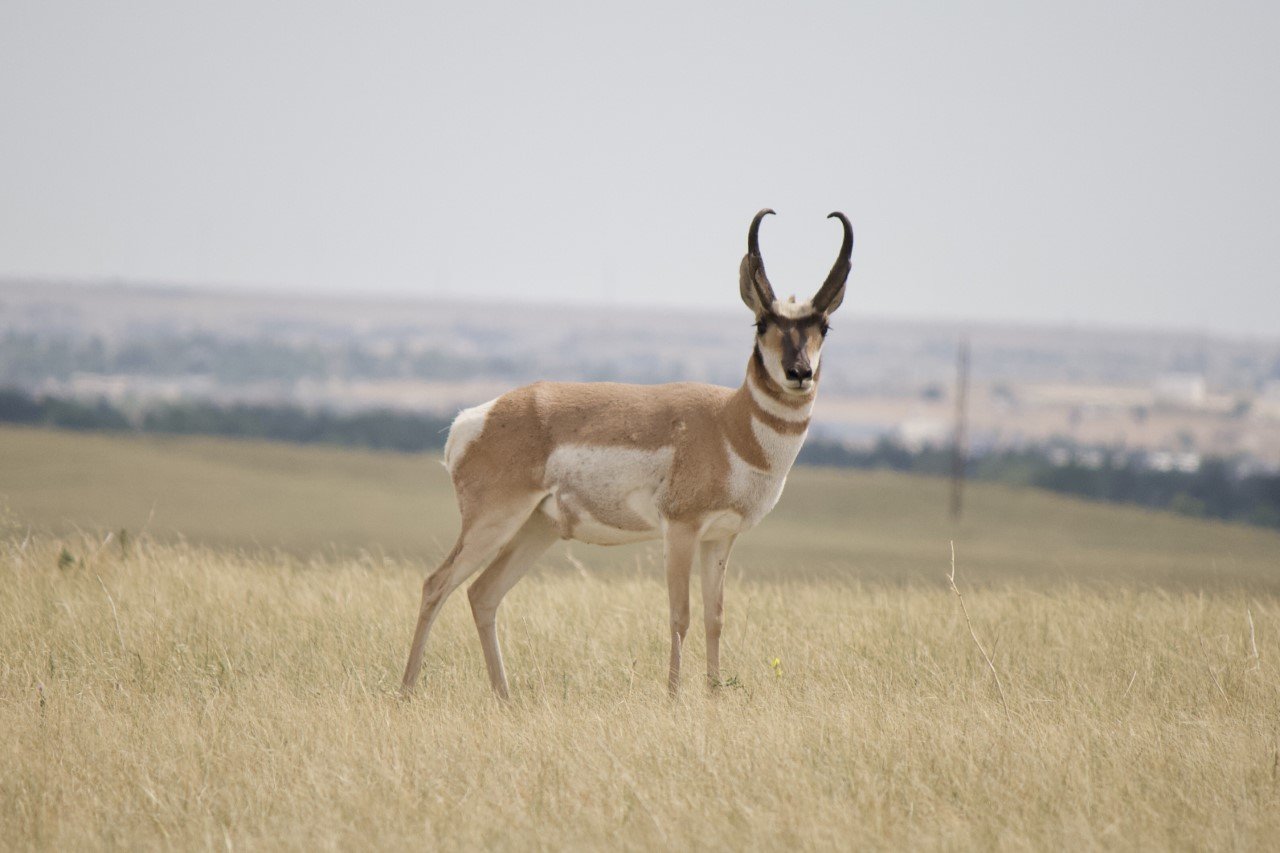
Featured image: mature pronghorn buck on a grassy prairie hillside at F.E. Warren Air Force Base, photographed by Alex Schubert/USFWS. Public domain. Source: U.S. Fish and Wildlife Service. This image is not reused on another Big Game Ledger page.