How to Plan a Nevada Mule Deer Hunt: Units, Bonus Points, Draws and Costs
Draw mechanics, remaining-tag rules and the access example checked September 11, 2026. The main and second 2026 draws have closed. Remaining tags are not guaranteed; verify current availability, eligibility and field rules with NDOW. Do not carry these dates into 2027.
A Nevada mule deer plan has two tests: can you obtain the specific tag, and can you support the hunt on the dates and land that tag covers? Bonus points address the first question only. Water, legal vehicle access, camp location and a workable meat-cooling route often decide whether an attractive unit fits your trip.
Research disclosure: Big Game Ledger has not hunted Nevada. This guide is assembled from current agency regulations, application materials, maps and access resources. Official rules control whenever they differ from this article.
Nevada mule deer planning at a glance
- Nevada’s 2026 main draw ran March 23–May 13; results were scheduled for May 29.
- Nevada squares bonus points and adds one application entry, improving odds without creating a guarantee.
- A separate restricted nonresident guided mule deer draw preceded the main draw.
- Species accuracy: verify that the hunt is explicitly valid for mule deer rather than assuming every deer license covers the same species.
Start with the exact hunt, not a reputation
Write down the official hunt code or license name before comparing units. Record the legal deer, dates, weapon, boundary, quota and access notes on one line. A famous unit with the wrong season or unreachable land is not a usable plan.
| Planning layer | Question to answer |
|---|---|
| License | Is it general, limited, controlled, guided, landowner or leftover? |
| Species | Does the hunt cover mule deer, another deer species or either? |
| Season | What are the legal dates, weapon and animal restrictions? |
| Access | Can the intended public land be reached legally under current road rules? |
| Recovery | Can meat be cooled and removed from the hardest realistic location? |
Draws, points and historical odds
NDOW assigns random numbers to the entries produced by the squared bonus-point formula, then uses the application’s lowest number in the drawing. More points improve the chance of a favorable number; they do not reserve a tag in a seniority queue. See the NDOW draw explanation.
Main draw, second draw and remaining tags mean different things
NDOW distinguishes the second draw from First-Come, First-Served sales. Second-draw tags may be available to either residency, while FCFS tags retain their original residency designation. Buying an FCFS tag uses the hunter’s bonus points for that species and triggers applicable waiting-period rules. Check the current remaining-tag conditions before treating a returned tag as a low-consequence backup.
Our decision checklist: before buying a short-notice tag, confirm the weapon, dates, unit group, residency, time off and recovery help. A tag is not useful simply because it appeared on the screen. If it would consume points saved for a different hunt, compare that tradeoff against the trip you can realistically complete now.
Public access example: Pole Canyon is not unrestricted camping land
NDOW identifies Pole Canyon Cooperative Wildlife Management Area in Hunt Unit 101 as mule-deer habitat, but its property rules prohibit camping and campfires, restrict travel to designated roads and limit motorized and bicycle access to specified access points. Providing a guide service is also prohibited there. Those property conditions are separate from whether a person holds a valid deer tag.
This is an access example, not a recommendation to select Unit 101. It demonstrates why a large green parcel on a hunting map is not enough. Before picking a camp, check whether camping is allowed on that particular property, where you can park, how you can retrieve meat and whether the services in a proposed guide arrangement are permitted.
A Nevada field plan that does not depend on an unverified spring
Our suggested planning sheet has four entries for each candidate camp:
- Water: a confirmed supply, the capacity you can carry, and a refill alternative. Treat a map symbol as a question until checked.
- Vehicle access: the legal road, the vehicle it permits and a turnaround point that works with your actual load or trailer.
- Cold storage: a named option with confirmed opening hours and a second option if the first is unavailable.
- Exit: a route and fuel reserve for leaving the area if weather, fire restrictions or road conditions change.
Compare those costs across units before spending more on optics or a longer stay. A shorter, supportable hunt can be a better fit than a remote itinerary whose entire recovery plan depends on one road.
Terrain, maps and legal access
Nevada mule deer country can be extremely dry and remote. Unit boundaries, wilderness access, water, road condition, private inholdings and meat cooling deserve equal weight with draw odds.
Start with the official hunt-planning or mapping resource, then cross-check federal travel maps, county road status and current fire or emergency closures. Offline maps help in the field but do not replace legal boundary descriptions.
Costs and field logistics
Build the budget from the current agency fee table rather than an old article. Include the qualifying license, application or bonus-point charge, deer tag, travel, camp or lodging, mapping, fuel, food, meat cooling, pack-out help, taxidermy and an emergency margin. Do not treat the tag price as the trip price.
Buck expectations and hunt quality
Big country and mature bucks create the appeal, but there is no defensible statewide “average buck size.” Age structure, winter survival, precipitation, migration, pressure and season timing vary sharply. Compare several years of unit-level harvest and age data without turning them into a promise.
Hunter education, CWD and field compliance
Before travel, verify hunter-education eligibility, tagging or E-Tag procedures, evidence-of-sex rules, mandatory reporting, chronic wasting disease sampling and carcass-transport restrictions. Check every state through which meat or parts will travel.
A practical Nevada planning sequence
- Choose hunt style, weapon and total budget.
- Record exact hunt codes and legal species.
- Compare current rules, draw history and quotas.
- Prove legal access and road continuity.
- Plan glassing, water, camp, recovery and meat care.
- Apply through the current agency system and save confirmation.
- Recheck closures, weather, CWD and tagging before travel.
Official Nevada mule deer planning links
- Applications and licensing
- 2026 application deadlines and draw-result calendar
- Current Nevada hunting regulations
- Official hunt planner or maps
Return to the Mule Deer Hunting hub, browse Hunt Planning, or compare supporting Maps & Apps.
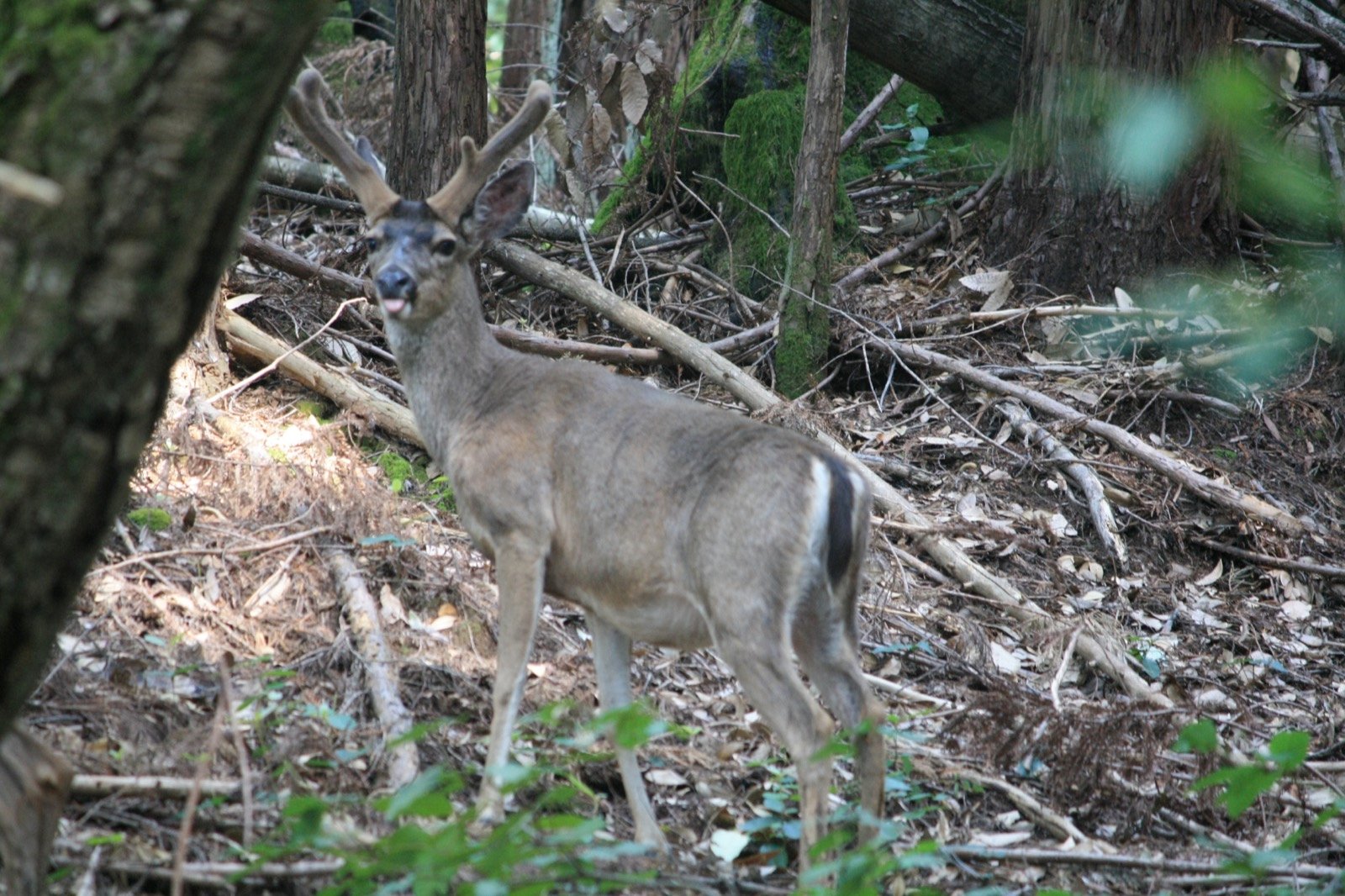
Featured image: Photo by O Dechant, released to the public domain via Wikimedia Commons. Representative mule deer image. This photograph is newly assigned to this guide and is not reused elsewhere on Big Game Ledger.