How to Plan a Colorado Mule Deer Hunt: Draws, Units, Seasons and Costs
Reviewed September 1, 2026: This guide uses Colorado Parks and Wildlife’s 2026 Big Game Brochure, current deer, draw, fee, mapping and chronic wasting disease resources. Hunt codes, quotas, dates, fees, access, closures and field rules can change. Confirm the exact hunt in the current brochure and your issued license before applying, purchasing or traveling.
Colorado mule deer hunting is a hunt-code decision before it is a unit decision. A legal plan must connect the species and sex, Game Management Unit, season, method of take, public- or private-land restriction and license type printed in the official hunt-code table. A familiar GMU name or a line on a third-party map is not enough.
Research disclosure: Big Game Ledger has not hunted Colorado. This guide is based on current Colorado Parks and Wildlife materials and does not replace the controlling brochure, regulations, license conditions, land-management orders or emergency closures.
Colorado mule deer planning at a glance
- The 2026 primary draw opened March 1 and closed April 7 at 8 p.m. Mountain Time. Those dates describe the 2026 cycle, not a permanent annual schedule.
- A qualifying license is required before applying for a limited deer license in the primary or secondary draw.
- Deer preference points are used in the primary draw. Drawing a first-choice deer license returns the applicant’s deer points to zero.
- Second-, third- and fourth-choice licenses, the secondary draw, leftover licenses and qualifying over-the-counter licenses do not use deer preference points.
- The official hunt code and issued license control the unit, dates, sex, method and land restriction.
- Colorado’s Hunting Atlas is a research tool; it does not create access across private land or override a closure.
Start with the exact Colorado deer hunt code
A Colorado hunt code is more precise than a GMU. Two deer licenses associated with the same unit can have different dates, methods of take, sex restrictions or public-versus-private-land conditions. Copy the complete code from the current Colorado Big Game Brochure, then verify every column and footnote tied to that row.
Use a unit reputation only after the legal hunt is defined. Historical success, point requirements and public-land percentages describe earlier conditions; they do not guarantee access, a license or a particular class of buck.
How the primary draw and preference points work
Colorado accepts one primary-draw application per species, with as many as four hunt choices. Preference points give priority in the primary draw and apply to the first choice. An applicant who properly applies but does not draw the first-choice deer license generally receives a deer point; the point-only code can also be entered as the first choice. Drawing a first-choice deer license removes the accumulated deer points.
Later choices work differently. A license drawn as a second, third or fourth choice does not use deer points, but it also does not generate a point by itself. The secondary draw and leftover or reissued licenses do not use preference points. Read CPW’s current primary-draw instructions and deer draw reports before treating a prior point level as a target.
Draw reports are planning evidence, not promises. Quotas, applicant pools, hunt codes and land restrictions can change between years. Group applications are prioritized using the member with the fewest points, so a group’s point total is not the average or the highest member’s balance.
2026 Colorado big-game draw calendar
The dates below are a checkpoint for the completed 2026 cycle. Rebuild the calendar from CPW when the next brochure is issued.
| 2026 event | Published timing |
|---|---|
| Primary draw opens | March 1 |
| Primary application and correction deadline | April 7 at 8 p.m. MT |
| Primary draw results | May 26–29 |
| Primary surrender deadline | June 1 at 11:59 p.m. MT |
| Primary license payment deadline | June 12 at 11:59 p.m. MT |
| Secondary draw application period | June 18–30; closes at 8 p.m. MT |
| Secondary results | July 7 |
| OTC and remaining limited licenses on sale | August 4 at 9 a.m. MT |
The Western big-game application deadlines calendar can organize multi-state research, but CPW remains the authority for Colorado dates and corrections.
2026 deer season framework
Colorado deer dates vary by hunt code and location. The statewide brochure provides a broad framework, but high-country, special, private-land-only, Ranching for Wildlife and Plains opportunities may differ. The exact hunt-code row controls.
| Common 2026 deer period | Published framework |
|---|---|
| Archery | Sept. 2–30, unless the hunt-code table states otherwise |
| Muzzleloader | Sept. 12–20, unless otherwise listed |
| Second rifle | Oct. 24–Nov. 1 |
| Third rifle | Nov. 7–15 |
| Fourth rifle | Nov. 18–22, only where a deer hunt code is offered |
| Plains rifle deer | Oct. 24–Nov. 3; late and split seasons can differ |
Do not infer that deer is legal in a unit merely because another big-game season is open. Carry the issued license, know its dates and legal method, and verify current field rules before leaving home.
Resident, nonresident and license-allocation differences
Residents and nonresidents use the same hunt codes, but fees and license allocation differ. For primary-draw deer and elk hunt codes that required six or more resident points in the prior draw, up to 20% of licenses may go to nonresidents. For codes requiring fewer than six resident points, up to 25% may go to nonresidents. These are allocation ceilings, not promised percentages for every applicant or hunt.
A qualifying license must be purchased before a limited-license application is submitted; it can be placed in the same online transaction if it is added first. A qualifying license is not required merely to buy an eligible leftover or over-the-counter license. Review CPW’s current qualifying-license guidance and nonresident information before budgeting.
2026 Colorado deer fee checkpoints
These current figures are research checkpoints, not a guaranteed checkout total. Taxes, qualifying-license choices and other required or optional items can change.
| 2026 item | Resident | Nonresident |
|---|---|---|
| Application processing fee, per species | $8.93 | $11.49 |
| Annual Habitat Stamp, ages 18–64 | $12.76 | $12.76 |
| Adult deer license | $51.25 | $506.92 deer/fishing combination |
| Adult annual small-game qualifying-license example | $38.49 | $104.86 |
Verify the live CPW deer page, refund rules and payment deadlines before submitting. A failed payment can cost an awarded license.
Units, maps and legal public-land access
Use the Colorado Hunting Atlas and official GMU resources to connect boundaries, species layers, public-land context and field-office information. Then confirm ownership and travel separately with current federal or state land-management maps, Motor Vehicle Use Maps where applicable, seasonal road orders and on-the-ground signs.
- Boundary: confirm the complete GMU and hunt-code description.
- Ownership: identify federal, state and private parcels; public land does not create a right to cross private land.
- Motorized access: check the managing agency’s legal road and trail system, not just a visible two-track.
- Seasonal restrictions: check closures, fire orders, camping limits and weather-related access before travel.
- Recovery route: measure the uphill and downhill pack-out before deciding that an area is practical.
For a destination-level example, use the White River National Forest public-land mule deer guide. It explains how to connect Colorado GMUs with Forest Service access, Wilderness constraints, travel management and recovery planning. The statewide page remains the license-and-draw framework; the White River page handles that specific public-land destination.
Terrain, season timing and realistic hunt quality
Colorado mule deer habitat ranges from eastern plains and foothills to high-elevation summer range and lower winter country. Elevation, snow, hunting pressure, migration timing, road access and private-land patterns can change what is practical within the same GMU. Research a specific hunt and season instead of applying a statewide expectation to every unit.
A draw history or harvest statistic cannot establish future buck quality. CPW’s reports describe previous quotas, applications and results. They should be combined with current habitat, access and season research, not presented as a guarantee of success or trophy potential.
Hunter education, CWD and field compliance
Colorado generally requires hunters born on or after January 1, 1949, to complete approved hunter education before applying for or purchasing a hunting license. Carry the required proof and review legal method, fluorescent-orange or pink requirements, carcass tagging and transport rules in the current brochure.
According to CPW’s current 2026 chronic wasting disease page, there is no mandatory CWD testing for harvested deer during the 2026 seasons. Voluntary deer testing is available for $25 per animal. Testing rules rotate and can change, so verify the live CWD page and any hunt-code instructions immediately before the hunt.
A practical Colorado mule deer planning sequence
- Choose resident or nonresident status and confirm hunter-education eligibility.
- Select the species, sex, method and season that fit the calendar.
- Copy candidate hunt codes from the current brochure.
- Compare current quotas and historical draw reports without treating them as future guarantees.
- Check the first-choice preference-point consequence and later-choice strategy.
- Map GMU boundaries, ownership, legal access and the recovery route.
- Budget the qualifying license, application, habitat stamp, deer license, travel and meat care.
- Recheck the brochure, license, closures, CWD page and weather before departure.
Frequently asked questions
Are Colorado mule deer licenses over the counter?
Do not assume they are. Most Colorado mule deer planning revolves around limited hunt codes in the primary or secondary draw. Certain deer opportunities may be sold as leftover, reissued or over the counter, but the current brochure and sales list must confirm the species, sex, unit, season and land restriction.
How many preference points are needed for Colorado mule deer?
There is no statewide number. Point requirements vary by hunt code, residency, quota and applicant demand. Use CPW’s current Draw Recap and Drawn Out At reports as historical guidance, then plan for change.
Does drawing a second-choice deer license use Colorado preference points?
No. Colorado deer points apply to the first choice in the primary draw. Drawing a second-, third- or fourth-choice license does not use the accumulated deer points. Confirm the current draw instructions before applying.
Can nonresidents hunt Colorado mule deer?
Yes, but nonresident allocation limits and higher fees apply. The primary-draw cap depends partly on how many resident points the hunt required previously, and the cap does not guarantee that a particular percentage will be available to every applicant.
Where is the official Colorado mule deer unit map?
Start with CPW’s Maps and GIS resources and Hunting Atlas. Use the brochure’s GMU descriptions and hunt-code tables for the legal hunt, then verify ownership and travel rules with the responsible land-management agency.
Official Colorado mule deer research links
- Colorado Parks and Wildlife big-game page
- 2026 Colorado Big Game Brochure
- Hunting deer in Colorado
- Primary draw
- Deer draw statistics
- Leftover, remaining and reissued licenses
- Where to hunt and Hunting Atlas
- Chronic wasting disease
Continue through the Mule Deer Hunting hub, the beginner’s mule deer planning guide, Hunt Planning and Maps & Apps.
Source review: 2026 Colorado Big Game Brochure and Colorado Parks and Wildlife deer, primary-draw, qualifying-license, nonresident, fee, draw-statistics, mapping, leftover-license and CWD resources. Reviewed September 1, 2026. Check the live agency pages and brochure corrections before every application and hunt.
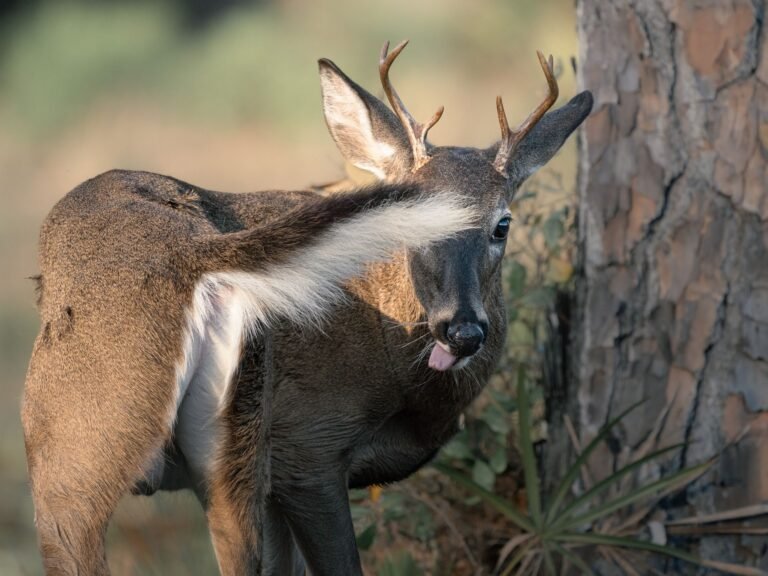
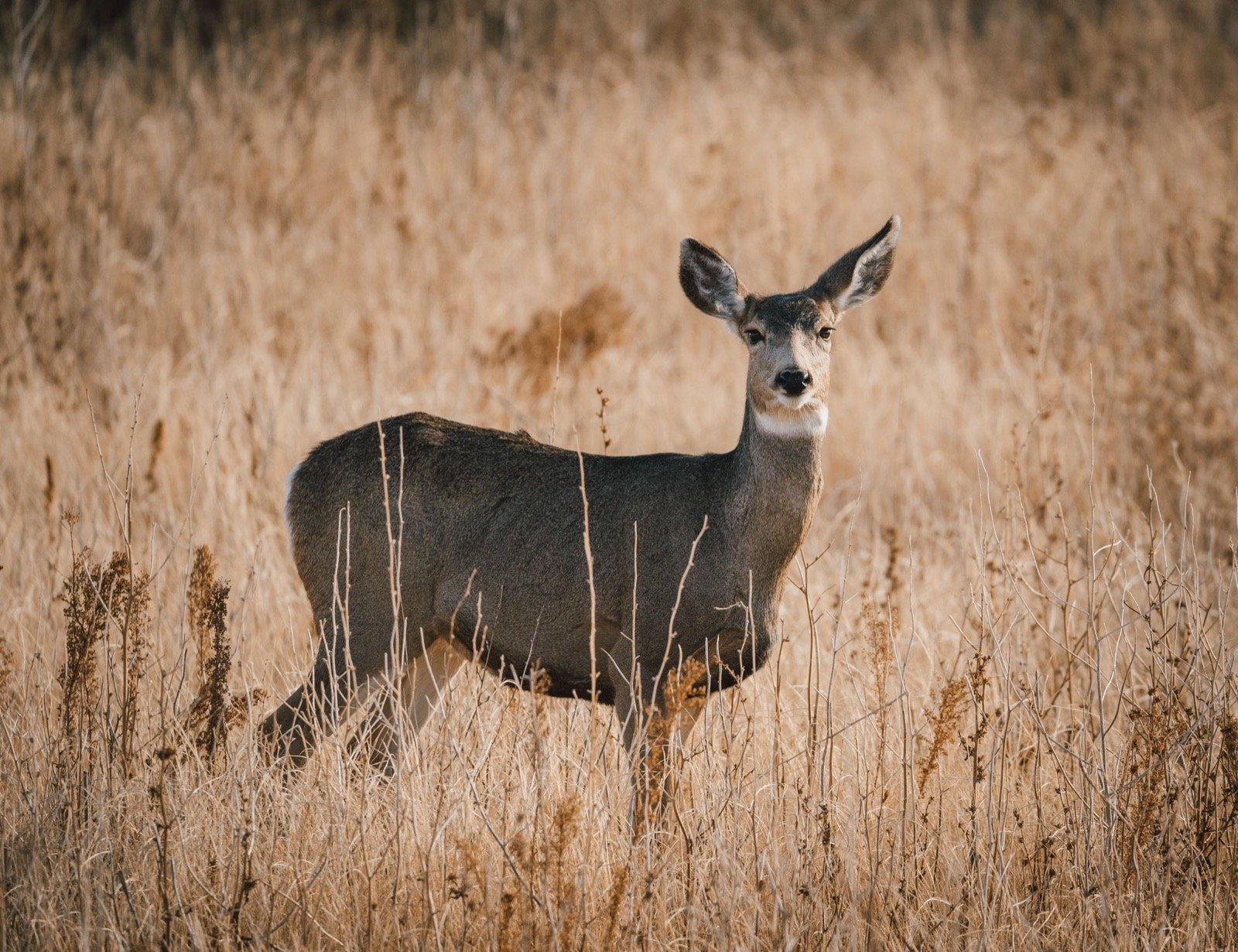
Featured image: Photo by Danny Shives via Pexels. Photographed near Sedalia, Colorado. This photograph is newly assigned to this guide and is not reused elsewhere on Big Game Ledger.