Utah Moose Hunt Planning Guide (2026)
CWMU eligibility, operator requirements and guidebook corrections checked September 11, 2026. This article uses 2026 documents; future-year hunt numbers and availability must be confirmed separately.
Editorial note: This is a research-based Utah moose planning guide, not a firsthand hunt report.
Utah treats bull moose as once-in-a-lifetime big game. Public limited-entry permits and Cooperative Wildlife Management Unit opportunities create different access and service arrangements. The 2026 application guidebook is the controlling starting point, including corrections posted after its January release.
Utah moose hunt at a glance
| Permit structure | Once-in-a-lifetime limited-entry bull permits, separate antlerless opportunity and CWMU hunts |
|---|---|
| Draw | Bonus-point system with a portion of permits considered in random opportunity under current rules |
| Key identifier | Exact hunt number and unit/CWMU in the current guidebook |
| 2026 warning | Utah removed an erroneously listed public CWMU moose permit through a posted correction |
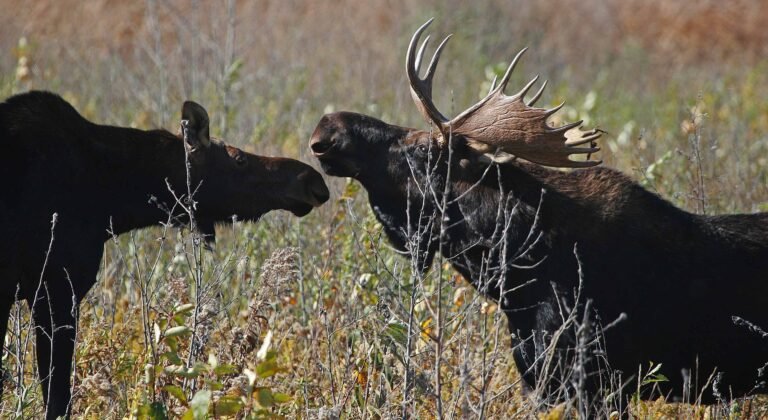
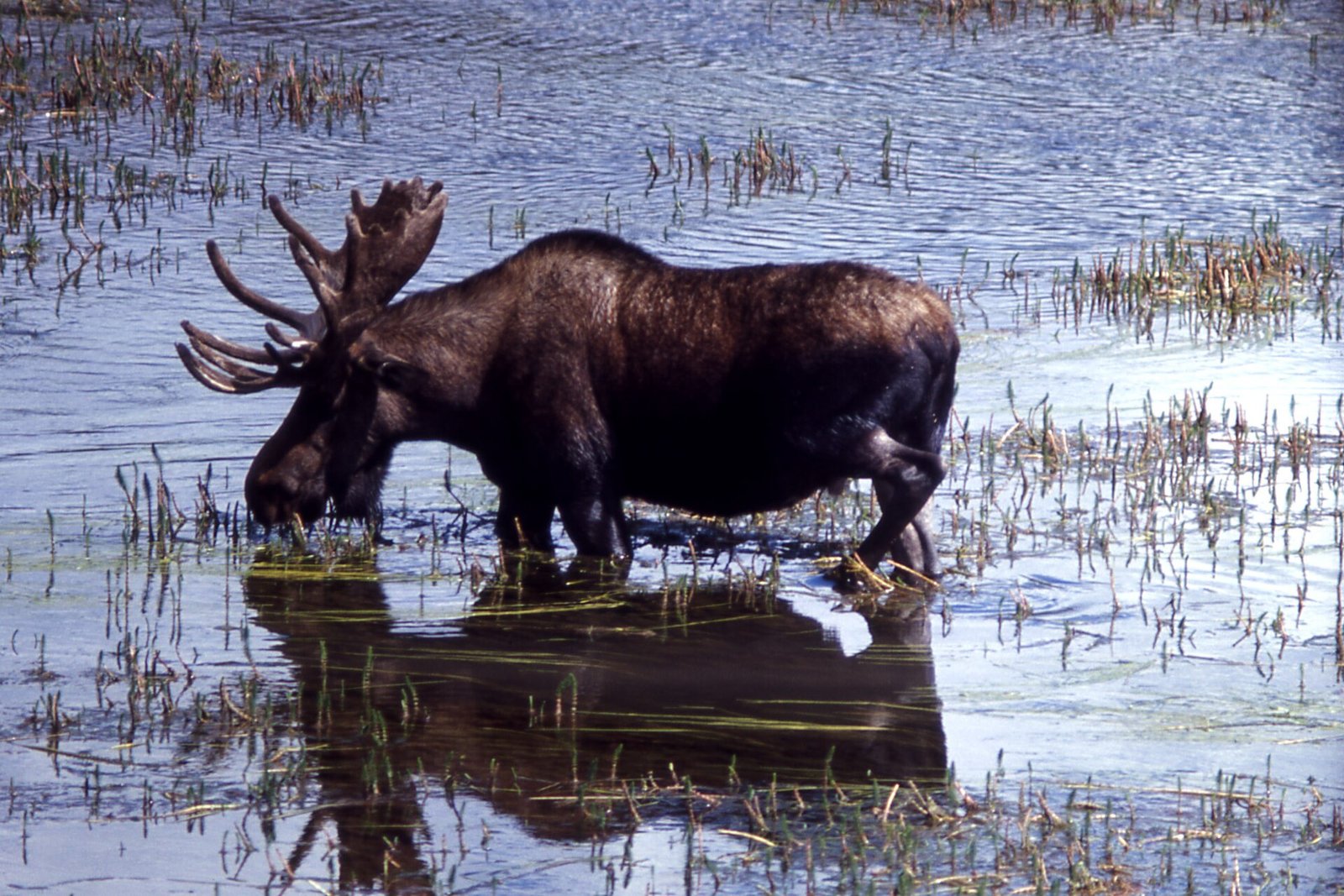
Moose in mountain willow habitat. Photo: Canter/NPS, public domain.
Application and eligibility
Read Utah’s current waiting-period and once-in-a-lifetime rules before buying a point or listing a hunt. Bonus points improve a chance but do not create a guaranteed date. Compare point tables and drawing-odds reports for the exact hunt number, applicant residency and year.
Nonresident? Separate the two CWMU routes first
Utah DWR’s CWMU rules state that nonresidents cannot apply for a CWMU permit in the public drawing. They may obtain a voucher directly from the landowner or operator. Utah residents have both routes, subject to eligibility restrictions. A public CWMU listing is therefore not automatically an application choice for a hunter living in Texas or Georgia.
A CWMU permit is restricted to the named property and listed species and sex. It is not permission to hunt the surrounding public unit. A voucher also needs to be redeemed for the actual permit; do not treat a private booking confirmation as the hunting authorization.
Corrections matter
The Utah Division of Wildlife Resources posts corrections on the big-game page. The March 13, 2026 correction specifically removed Sand Creek CWMU hunt MB6264 because it has no public moose permit that year. This is exactly why a saved January PDF is not enough. Reopen the current guidebook version before the deadline and again before travel.
Use the right guidebook for the decision
The DWR guidebook page separates the application guide, field regulations and antlerless application guide. Use the application guide to choose a bull-moose hunt; use the field guide to prepare for the actual season; use the antlerless guide for that separate permit route. Checking one document does not answer all three questions. The page also lists corrections, so retain the version and review date with your notes.
Map habitat and ownership together
Utah moose use Wasatch and northern mountain willow, riparian corridors, aspen-conifer edges and high basins. Unit boundaries may include private valley bottoms or inholdings. Map land ownership, legal roads, seasonal closures, water crossings and a downhill or level extraction route.
Fire, early snow and high-elevation weather can change vehicle access. Build a backup drainage and confirm current land-manager restrictions.
Gear and recovery
- Binoculars for separating antlers and branches in timber
- Offline maps with hunt boundary and ownership
- Load-hauling packs, enough game bags and multiple capable helpers
- Layering for large temperature swings and waterproof footwear for willow bottoms
- Satellite communication where canyon and mountain coverage is unreliable
Questions to settle with a CWMU operator
DWR tells successful public-draw CWMU hunters to contact the operator for dates, an access map and property rules. Restrictions may address scouting, camping, vehicles and companions. CWMU hunt reporting is required within 30 days after the hunt ends, including unsuccessful hunts. Use the program instructions rather than a general unit calendar.
Before committing to a private arrangement, request written answers to these practical questions. This is our comparison checklist, not a claim that a particular operator provides these services:
- Access: Which gates and acreage are included, and can you return for retrieval after the normal daily access window?
- People: Are a hunting partner and recovery helpers permitted, and is guiding included or separately charged?
- Timing: Which actual hunting days will you receive, and what happens if weather prevents arrival?
- Recovery: Who moves meat from the field, where is cooling available, and when does the operator’s responsibility end?
- Price: Does the quote include the state permit, lodging, processing and taxes, or only access and services?
If two quotes differ sharply, compare the excluded services before judging value. Do not assume private land eliminates the need for physical preparation or a recovery crew.
Build the hunt around the permit type
A public limited-entry tag and a CWMU permit are not interchangeable experiences. For a public unit, evaluate road density, trailheads, wilderness or motor restrictions, private inholdings and the distance from likely moose habitat to a legal pickup point. For a CWMU opportunity, obtain the operator’s current written rules and identify the specific acreage, dates, access windows, guide requirements and recovery services. Never infer CWMU terms from the statewide season table.
Budget and logistics
Separate sunk application costs from hunt costs. A realistic Utah plan includes the tag, travel, vehicle or trailer access, lodging or camp, scouting trips, mapping, game bags, ice or refrigerated storage and processing. High-elevation weather can make a short map distance slow and expensive. A lower-cost plan is not automatically better if it depends on a road that may close or leaves no practical extraction route.
Final Utah checklist
- Reopen the current guidebook and corrections page using the exact hunt number.
- Confirm once-in-a-lifetime eligibility, waiting periods and the correct application choice.
- Download unit, ownership and motor-use maps for offline use.
- Identify a second access route and a warm-weather meat-cooling option.
- Verify tagging, evidence-of-sex, transport and reporting rules before the hunt.
Official Utah resources
- Utah big-game guidebooks and revisions
- 2026 Big Game Application Guidebook
- Utah Hunt Planner
- Utah drawing results and odds
- CWMU program information
Next: Compare Utah with Colorado and Wyoming in the Moose Hunting Hub.