Washington Moose Hunt Planning Guide (2026–2027)
Moose eligibility, hunt-area rules, CWD sampling and the 2025 harvest-report example checked September 11, 2026. The 2026–2027 booklet covers April 1, 2026–March 31, 2027; it is not a forecast of fall 2027 hunts. Recheck the current rule, pamphlet corrections and your permit before hunting.
Editorial note: This is a research-based Washington moose planning guide, not a firsthand hunt report.
Washington moose hunting is a highly limited special-permit opportunity concentrated in the state’s northeastern moose range. Permit categories, species/sex restrictions, hunt areas and eligibility rules must be read from the current pamphlet. Screen legal access and likely trip costs before applying; finalize the map and reservations against the exact permit if selected.
Washington moose hunt at a glance
| License method | Special permit drawing |
|---|---|
| Current rules | 2026 Big Game Hunting Seasons and Rules, with a posted April correction |
| Primary habitat | Northeastern timber, wetlands, riparian corridors and regenerating forest |
| Central issue | Very low permit supply, exact permit category, CWD rules and practical public/private access |
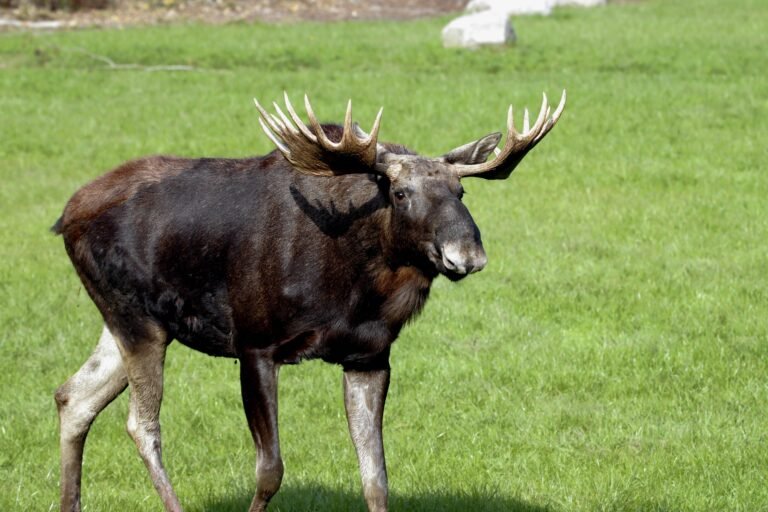
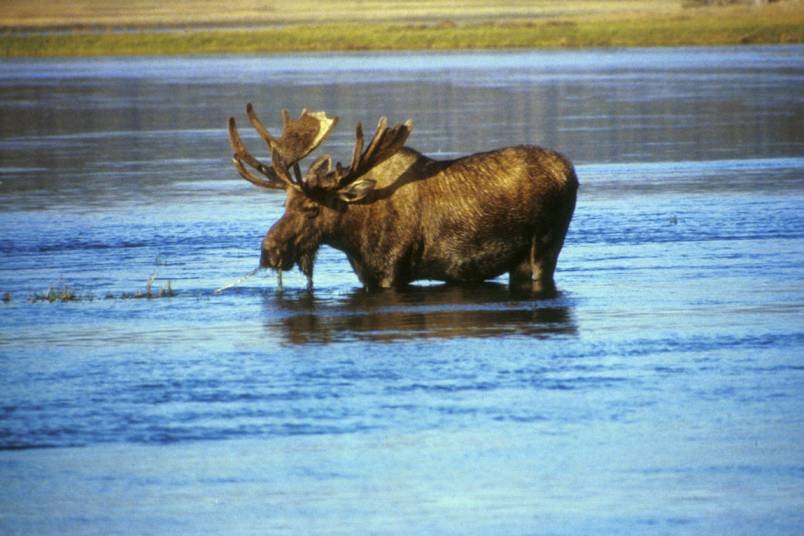
Bull moose feeding in a shallow lake. Photo: Ralph Town/USFWS, public domain.
Read the special-permit table line by line
Do not use an old area name or a prior permit category. Confirm applicant eligibility, permit category, legal animal, valid moose area or GMU, dates and weapon restrictions. Washington offers multiple special-permit categories across big game; only the exact moose line applies.
Draw odds can be extremely low. Points or prior applications do not turn the permit into a certainty. Build a long-term portfolio only if the annual application cost and eligibility make sense.
Bull and antlerless categories are not interchangeable
The current Washington rule uses an any antlered bull moose category. A previous harvest under that category or the older “any moose” category prevents another application in that bull category. Separate antlerless and restricted-applicant categories have different eligibility conditions; read the particular category rather than assuming the bull restriction applies identically to every hunt. Bull calves are not legal under the any-antlered-bull season. Source: WAC 220-415-070, effective May 8, 2026.
Check the actual hunt boundary, not just the GMU name
These examples from the 2026 moose rule show why one statewide season or a generic northeastern pin is insufficient. They are examples, not a complete list or recommendations.
Douglas A — Early / Late
2026 area and dates: GMU 108; October 1–31 / November 1–30.
The same GMU has different permit periods. Do not book an October trip against a November permit.
Spokane West A
2026 area and dates: GMU 124 west of Highway 395; October 1–November 30.
The permit does not cover all of GMU 124. Mark the highway boundary and confirm each parcel’s access.
49 Degrees North A — Early / Late
2026 area and dates: GMU 117; October 1–31 / November 1–30, with the Parker Lake exception.
Moose Area 3 requires its own Parker Lake permit. A GMU-wide map layer can conceal that exception.
Read harvest percentages without mistaking them for draw odds
WDFW’s 2025 moose harvest report lists Kettle Range–East Okanogan with 6,719 total applicants, ten permits issued, nine hunters and six harvested moose. Its rounded 67% hunter-success figure is six divided by nine—not six divided by everyone who applied.
Huckleberry A — Early shows 100% success from seven hunters, while nine permits were issued and seven reports returned. That small, incomplete set should not become a promise that every future permit holder will succeed. Nor does dividing permits by the applicant column calculate your personal chance in a weighted drawing. Our recommendation: keep applicants, permits issued, reports returned, hunters and harvest in separate columns; compare matching hunt names across years and investigate missing reports before ranking areas. These are historical results, not 2026 availability or projected success.
Access in northeastern Washington
Moose habitat can cross national forest, state, timber-company and private land. Obtain current company access rules, fire closures, motor restrictions and gate status. Recent wildfire, logging and regrowth can create good browse while also changing road condition and visibility.
Map exercise before applying: identify a legal parking point, the first private boundary, a route you could use with a loaded pack and a second pickup option. Ask the land manager whether hunting permission also allows your planned vehicle, recovery partner and after-hours retrieval. An access map and a moose permit answer different questions; neither replaces the other. Start with the WDFW private-lands access map, then confirm current property-specific conditions.
CWD sampling belongs in the exit plan
For a moose harvested in WDFW’s Eastern Region (100-series GMUs), provide extracted lymph nodes or the head with at least three inches of neck attached before leaving the region and within five days of harvest. Choose a current sampling location before the trip; do not assume you can drive the whole animal home and deal with testing later. WDFW’s CWD testing page lists options and operating details.
Heads left at self-service collection sites are not returned. If you want to retain the head, arrange an appropriate staffed sampling option. Sample submission does not replace the harvest report or moose-tooth submission. Separately, whole carcasses cannot be moved from the 100-series GMUs to other parts of Washington; review the allowed parts and preparation requirements, plus any destination-state rules, before transport.
Field and recovery plan
Dense timber can shorten identification time. Carry binoculars, move slowly and avoid forcing a shot through branches. After a harvest, follow current tag validation and mandatory reporting, preserve evidence of sex, and cool meat despite cool-weather expectations.
- Save the permit boundary and legal roads offline.
- Confirm hunter-orange requirements for the season and overlapping hunts.
- Plan at least two extraction routes around gates and wet ground.
- Carry communication for areas without dependable cellular coverage.
Do not overlook the tooth submission: successful moose hunters must submit a lower-jaw incisor to WDFW within 60 days of harvest, using a WDFW office or the supplied postage-paid envelope. Arrange this before the head goes to a taxidermist; it is separate from checking harvest-report and CWD requirements. See the moose reporting rule.
Estimate before applying; finalize after the draw
Before applying, decide what an unsuccessful application may cost and whether a drawn hunt would fit your time and budget. Do not make nonrefundable travel commitments on the assumption of a permit. Once selected, price the exact hunt: license and tag, scouting travel, fuel, lodging or camp, timber-company access requirements, mapping, recovery equipment, cold storage and processing. If a guide is considered, ask for the specific permit area, recent access experience and a written list of services. Do not treat promotional success rates as transferable to a different permit category or year.
Final Washington checklist
- Match the permit result to the exact table line, legal animal, dates and boundary.
- Check the pamphlet corrections page and emergency rule notices.
- Reconfirm CWD sampling and carcass-transport requirements.
- Verify fire closures, timber-company rules, motor restrictions and gate status.
- Identify a recovery crew, legal pickup locations and the nearest cold-storage backup.
Common planning question
Do points guarantee a future moose permit?
No. Points are part of the state’s drawing system, but limited permit supply and applicant demand mean no applicant should treat a future selection as certain.
Official Washington resources
- Washington big-game regulations
- 2026 Big Game Hunting Seasons and Rules
- Washington special-hunt permits
- Washington CWD information
- Private Lands Hunting Access
Next: Use the moose planning workflow for extraction and reporting, or compare destinations in the moose hunting hub.