How to Plan a Montana Elk Hunt: Licenses, Districts, Draws and Access
Reviewed for the 2026 Montana season: August 24, 2026. License availability, district rules, quotas, access conditions, fire restrictions and fees can change. Confirm the exact hunting district and current rules with Montana Fish, Wildlife & Parks before applying, purchasing or traveling.
Montana elk hunting combines several different adventures under one state name: western timber, high mountain basins, open breaks, agricultural edges, Block Management properties and private-land shoulder-season opportunities. The state also uses several terms that are easy to blur together. A general elk license, an elk permit and an Elk B license are not interchangeable, and a nonresident combination license does not guarantee that every hunting district is open for the animal or season a hunter wants.
This guide explains the 2026 structure, application routes, major season windows, access systems and cost categories needed to turn a Montana idea into a district-specific plan.
Research disclosure: Big Game Ledger has not hunted Montana and does not present this as firsthand field experience. This guide is assembled from current Montana FWP regulations, mapping and access tools, drawing information, agency harvest resources and clearly attributed outside observations. Official regulations control whenever they differ from this article.
Montana elk planning at a glance
- Species focus: Rocky Mountain elk.
- 2026 archery season: September 5–October 18, subject to hunting-district rules.
- 2026 general season: October 24–November 29.
- 2026 muzzleloader season: December 12–20.
- Backcountry districts: FWP lists an earlier September 15–November 29 general season in HDs 150, 280 and 316; HD 316 does not have an archery-only season.
- Shoulder seasons: Potentially August 15–February 15, but dates, valid licenses and land rules vary by district. These are primarily antlerless management opportunities, often tied to private-land access.
- Nonresident combination drawing: The 2026 application ran March 1–April 1. The initial deadline has passed.
- Special elk permits: April 1 application deadline in 2026.
- Elk B licenses: Antlerless licenses tied to a time and district or group of districts; some are drawn and some may be available over the counter. The 2026 drawing deadline was June 1.
Understand Montana’s license layers
Montana planning becomes much easier when each document is assigned its actual job.
| Document | What it does | Common mistake |
|---|---|---|
| General elk license | Authorizes one elk where the district regulations list a valid general-license opportunity. | Assuming it is valid for a bull in every district. |
| Elk permit | Works with a general elk license and expands or specifies an opportunity in a particular district. | Treating the permit as a second elk license. |
| Elk B license | An antlerless license valid for a specified time and district or group of districts. | Assuming every B license is over the counter or valid statewide. |
| Nonresident combination | The drawing route that includes a general elk license and other package privileges, depending on the combination. | Confusing a successful combination draw with a limited elk permit or guaranteed district access. |
Read the individual hunting-district table in the 2026 Deer, Elk and Antelope Regulations. Check the legal elk, license or permit, season dates, weapon, district boundary and special notes as one package. A statewide season date is only a planning reference.
How the nonresident route works
Montana allocates its principal nonresident general packages through a random drawing. For 2026, online applications opened March 1 and closed April 1 at 11:45 p.m. Mountain time. A hunter could apply for one of the general Deer Combination, Elk Combination or Big Game Combination packages—not all three.
A preference point applies to the nonresident combination drawing. A bonus point applies to many special licenses and permits. They solve different problems. Before purchasing either, use FWP’s current drawing statistics and application instructions instead of assuming that one point system carries into the other.
Nonresidents who missed or were unsuccessful in the combination drawing could register for the 2026 Alternate’s List from May 1 through June 1. Returned combinations may be reissued later, but registration does not guarantee a license and availability varies. At this point in the 2026 cycle, use MyFWP and the official list rather than third-party claims about leftover inventory.
General districts, permits and “trophy” expectations
A general elk license can provide broad opportunity, but each hunting district controls what that opportunity means. One district may list a brow-tined bull during a particular season, another may require a permit for the desired opportunity, and another may concentrate antlerless harvest on private land. Compare the exact district regulation before comparing scenery or reputation.
Montana FWP does not publish one defensible statewide “average bull size” for trip planning. Harvest reports, permit statistics, age structure, access and pressure are district- and season-specific. A mature-bull plan should examine several years of district-level information and still treat past results as context—not a promise.
What Montana’s 2026 season windows actually mean
Archery and general seasons
FWP lists September 5–October 18 for the 2026 archery season and October 24–November 29 for the general season. Those dates do not erase district-specific permit, legal-animal or land restrictions. Archery hunters also need the applicable Bow and Arrow license and qualifying education or prior archery-license proof.
Backcountry districts
FWP identifies HDs 150, 280 and 316 with a September 15–November 29 backcountry general season, while noting that HD 316 does not have an archery-only season. Earlier dates do not make access simple. Trailheads, wilderness rules, weather, stock use, fire closures, pack-out time and emergency communication all need district-specific review.
Shoulder seasons
Montana shoulder seasons are firearms seasons outside the main archery and five-week general seasons. Their primary purpose is population management, and most focus on antlerless elk found on private land. Dates can begin as early as August 15 and extend as late as February 15, but the valid license, land type and timing vary by district.
A shoulder season never grants permission to enter private land. Some Block Management cooperators participate during shoulder dates and others do not. Read the exact district regulation and the property’s current map and rules before treating a shoulder season as an available hunt.
Use the Hunt Planner, then verify the map
The Montana FWP Hunt Planner combines hunting districts, legal descriptions, regulations, ownership and access-program layers. FWP explicitly describes the map as a guide and tells hunters to verify its information against current regulations and property-specific documents.
- Confirm the hunting-district boundary and every detached or excluded parcel.
- Display federal, state and private ownership rather than relying on a terrain basemap.
- Identify the legal access route, not merely the closest road.
- Open the current Block Management property map and follow its reservation, sign-in, weapon, species, road and timing rules.
- Check land-manager travel plans, seasonal gates, wildfire closures and vehicle restrictions immediately before departure.
- Download offline maps and carry a backup navigation method.
Block Management and private access
Montana’s Block Management Program creates public hunting access through agreements with private landowners. It does not create one statewide permission system. Each BMA can set its own reservation method, sign-in procedure, open dates, internal closures, road rules, species limits and party restrictions. The 2026 guide and property maps are the operational documents to carry.
Private-land elk distribution can change the character of a hunt quickly. A public parcel with excellent habitat does not help if elk move behind an inaccessible boundary. Build a shortlist with more than one legal access plan and contact landowners or reservation systems early when the district depends heavily on private ground.
2026 license costs to place in the budget
These are agency-listed 2026 figures reviewed August 24, 2026. Montana pages can present package components differently, so verify the final amount and prerequisites in the current fee sheet and checkout before applying.
| Item | 2026 agency-listed amount | Planning note |
|---|---|---|
| Resident general elk license | $20 | Base hunting and conservation prerequisites are separate. |
| Resident base hunting license | $10 | Prerequisite for hunting or applying. |
| Resident conservation license, age 18–61 | $8 | Required prerequisite. |
| Nonresident General Elk Combination | $1,112 | Dedicated 2026 nonresident fee page; conservation, $50 base hunting fee and AIS Prevention Pass are separate. |
| Nonresident General Big Game Combination | $1,312 | Includes general deer and elk package privileges; separate prerequisites still apply. |
| Elk permit application/permit | Verify current checkout | Requires the general elk license route and does not authorize a second elk. |
| Nonresident preference point | $100 | Used for the combination drawing; not the same as an elk-permit bonus point. |
Start with the current nonresident fee page or Buy & Apply gateway. Add travel, lodging or camp, mapping, food, fuel, meat care, pack-out help, taxidermy, emergency margin and any reservation or outfitter costs. Do not treat a tag price as the trip price.
Match your equipment to the Montana hunt you have planned
Define the district, season, legal access route, camp style and recovery plan before choosing equipment. Use the western big-game hunting gear checklist to review what you already own, what needs testing and what your hunt still requires.
- Pack and recovery plan: Our hunting backpack guide helps compare fit, capacity and load-hauling design for the camp and pack-out arrangements you have selected.
- Footwear: Our hunting boot guide helps evaluate fit, support and insulation against your expected terrain, carried load and conditions.
- Clothing: Our western hunting layering guide helps organize clothing for moving, stopping and changing weather. Test the layers together before relying on the complete system.
These are research-led resources, not claims that we have field-tested gear in Montana. For guided or supported hunts, confirm what equipment and recovery services are included before purchasing duplicates. Equipment choices do not replace checking district rules, access or closures.
Hunter education, CWD and field compliance
Anyone born after January 1, 1985 must complete a hunter-education course issued by Montana, another state or a Canadian province before purchasing or applying for a Montana hunting license. Archery participation has additional qualification requirements; verify them before the application opens.
Montana has documented CWD in the state and maintains current testing, carcass-transport and disposal guidance. Review the Montana CWD page for the hunting district and year, and also check every state through which meat or parts will travel. Do not transport a whole carcass into Montana from a jurisdiction where CWD has been detected.
Before hunting, know the current tag-validation procedure, evidence-of-sex requirement, check-station obligation, legal shooting-hours rule and carcass-disposal requirements. Plan refrigeration and recovery for the most distant legal point you may reach, not the easiest location shown on the map.
A practical Montana elk planning sequence
- Choose resident or nonresident route and set a total trip budget.
- Pick a hunt format: general, permit-dependent, Elk B, backcountry or shoulder season.
- Shortlist hunting districts using the current regulations and Hunt Planner.
- Confirm the legal elk, valid license, weapon and dates for every choice.
- Compare multiple years of district-level harvest and drawing information without treating it as a forecast.
- Audit land ownership, Block Management rules, private permission, road status and fire risk.
- Build a recovery and meat-care plan for the hardest realistic location.
- Apply through the current FWP process and save every confirmation.
- Recheck quotas, district notes, access maps, closures and weather before travel.
- Follow the current tagging, check-station and carcass rules in the field.
Frequently asked questions
When is Montana elk season in 2026?
Montana FWP lists the general reference dates as September 5–October 18 for archery and October 24–November 29 for the general season. District-specific rules can differ, so confirm the exact hunting district in the current Montana elk regulations and Hunt Planner.
What is the difference between a Montana general elk license and an elk permit?
A general license authorizes hunting only where and when the district regulations allow it. A permit can add or restrict an opportunity in a particular district; it is not automatically a second elk license.
How do nonresidents get a Montana elk license?
The common route is the nonresident Big Game or Elk Combination drawing. Availability, deadlines, alternates and included privileges can change, so use the current FWP application page.
Where can I compare Montana elk hunting districts?
Use the official Montana Hunt Planner to compare district boundaries, regulations and statistics, then verify access through public land, Block Management or documented private permission.
How much are Montana elk tags?
Resident and nonresident routes have different licenses and fees, and combination prices can change. Check the live FWP nonresident fee page, then add the trip categories in our guided elk hunt cost guide.
Official Montana elk planning links
- Montana FWP Elk Species Guide
- 2026 Deer, Elk and Antelope Regulations
- Montana FWP Hunt Planner
- Applications, drawings and points
- Nonresident license fees
- Nonresident Alternate’s List
- Block Management
- Elk shoulder seasons
- Hunter education
- CWD information
Continue building your elk plan
Return to the Elk Hunting hub, compare the Colorado guide and Idaho guide, or build the broader trip through our beginner’s elk hunt planning guide. Use Maps & Apps and Gear for the supporting systems.
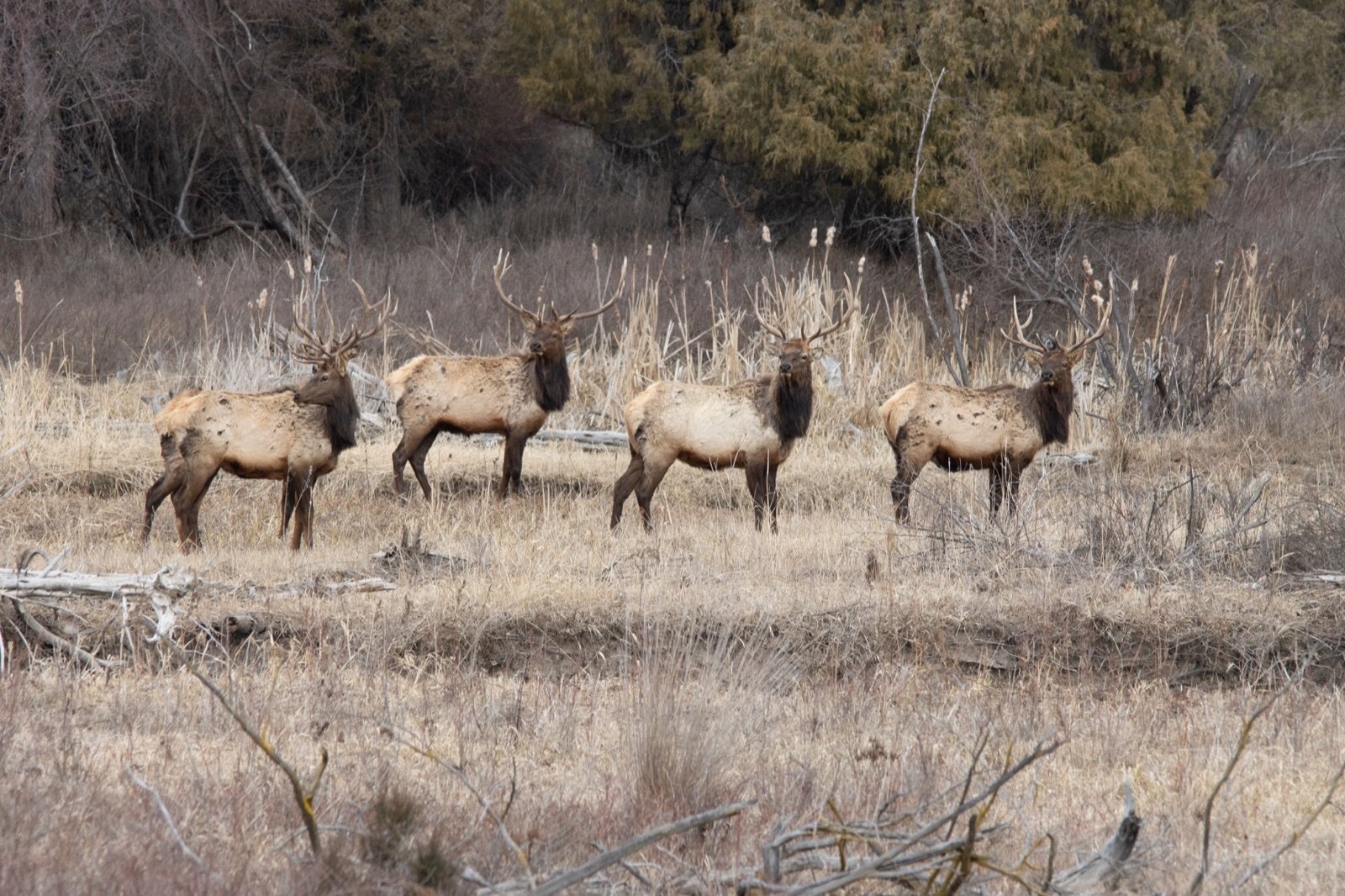
Featured image: four bull elk photographed in Charlo, Montana, by Dick Hoskins via Pexels. The image is licensed through the Pexels license and has not been reused from another Big Game Ledger page.