How to Plan a Montana Mule Deer Hunt: Districts, Licenses, Draws and Access
Review record: August 24, 2026 season review; September 11, 2026 targeted update to license types, point systems, nonresident fees and Block Management access. License availability, quotas, access, closures, fees and field rules can change. Confirm the exact hunt with Montana’s wildlife agency before applying, purchasing or traveling.
Montana mule deer hunting can involve high basins, timber edges, sagebrush, broken canyon country or dry public-land terrain. The meaningful planning unit is the exact license or permit: species, unit, dates, weapon, legal animal and boundary must all match.
Research disclosure: Big Game Ledger has not hunted Montana. This guide is assembled from current agency regulations, application materials, maps and access resources. Official rules control whenever they differ from this article.
Use the western big-game application deadlines calendar to schedule Montana license, permit and preference-point research. Always confirm the exact current dates, district rules and procedures through Montana Fish, Wildlife & Parks before applying or purchasing.
Montana mule deer planning at a glance
- Montana’s 2026 archery season runs September 5–October 18 and the general season October 24–November 29, subject to district rules.
- A general deer license, deer permit and Deer B license serve different purposes.
- Nonresident combination licensing and special deer permits must be matched to the exact hunting district.
- Species accuracy: verify that the hunt is explicitly valid for mule deer rather than assuming every deer license covers the same species.
Montana mule deer archery season: what the statewide dates do—and do not—mean
Montana lists September 5–October 18 as the general 2026 archery season for deer and elk, but those dates are only a statewide reference. The exact hunting district can change the available license, legal deer, permit requirement and valid dates. Start with the Montana FWP deer regulations page, then verify the district in the current regulation and Montana Hunt Planner.
- Statewide reference: September 5–October 18, 2026 for the general archery season, subject to district rules.
- Backcountry districts: the 2026 regulation lists September 5–14 as the archery period associated with HDs 150, 280 and 316, followed by the September 15–November 29 backcountry general season; HD 316 does not have an archery-only season.
- Legal opportunity: confirm whether the general deer license is valid for the intended mule deer, or whether a permit, Deer B license or other district-specific authorization is required.
- Archery eligibility: verify every required license, bow-and-arrow credential or education qualification in the current rules before hunting.
For an archery mule deer plan, save the district boundary, valid license, legal animal, access route and season line together. An archery date does not establish public access, guarantee that a general license is valid for the intended buck, or override a district limitation. Check Block Management property rules, public-land travel restrictions, fire conditions and closures separately.
Start with the exact hunt, not a reputation
Write down the official hunt code or license name before comparing units. Record the legal deer, dates, weapon, boundary, quota and access notes on one line. A famous unit with the wrong season or unreachable land is not a usable plan.
| Planning layer | Question to answer |
|---|---|
| License | Does the district require a general deer license alone, that license plus a deer permit, or a specific Deer B license? |
| Species | Does the hunt cover mule deer, another deer species or either? |
| Season | What are the legal dates, weapon and animal restrictions? |
| Access | Can the intended public land be reached legally under current road rules? |
| Recovery | Can meat be cooled and removed from the hardest realistic location? |
General deer license, deer permit and Deer B are not interchangeable
A general deer license authorizes one deer under the applicable district rules. Residents can buy it over the counter; most nonresidents obtain it through a combination-license drawing. Where a deer permit is required, it must accompany the general deer license. The permit is not an extra deer tag. A nonresident applying for that permit must also apply for the appropriate deer or big-game combination.
Deer B is an antlerless license restricted by its district, dates and legal animal. A regional antlerless white-tailed deer license does not authorize a mule deer. Check FWP’s license descriptions and the district’s regulation line before treating any available license as a substitute for your intended buck hunt.
Preference points and bonus points: keep two separate records
Combination-license preference points: FWP allocates 75% of nonresident combination licenses by preference-point priority and 25% randomly among applicants with no preference points. The split describes license allocation, not a 25% or 75% personal chance. Points are lost after obtaining a combination license or failing to apply in consecutive years; holding points without buying another does not exclude them from the draw.
Deer-permit bonus points: this is a different balance and drawing. Bonus points are squared, with one additional chance for the current application. For example, four bonus points produce 17 chances, not a 17% probability. The number and point totals of other eligible applicants still matter. Read FWP’s bonus and preference-point rules and compare historical results for the correct license or permit.
Planning implication: keep separate entries in your planning sheet for the combination license and your intended deer permit. Before paying, decide whether you would still use the combination license if you do not receive that permit. Do not assume a refund rule described for an elk-permit application also applies to a deer-permit application.
Terrain, maps and legal access
Montana mule deer country ranges from western mountains to breaks, coulees and private agricultural edges. Check hunting-district boundaries, Block Management enrollment, permission, roads and legal animal together.
Start with the official hunt-planning or mapping resource, then cross-check federal travel maps, county road status and current fire or emergency closures. Offline maps help in the field but do not replace legal boundary descriptions.
Turn Block Management acreage into an actual access plan
A colored parcel on a map is not a reservation. Type I Block Management Areas generally let hunters administer their own permission, often through a sign-in system. Type II permission is issued by the landowner or FWP and often involves reservations or hunter limits. Every property has its own access, parking, camping and retrieval rules. Use the current Block Management guide and individual-area instructions, not last year’s assumptions.
For two candidate areas, record how permission is obtained, the allowed entry point, the legal walking route and the retrieval restrictions. Confirm where the district boundary falls relative to the property. Then identify a separate legal alternative if permission is unavailable. This is a trip-planning exercise, not a claim that a particular property has openings or holds more deer.
Costs and field logistics
For a dated planning checkpoint, FWP’s 2026 nonresident fee schedule lists the General Deer Combination at $760. The Conservation License, Base Hunting License and Aquatic Invasive Species Prevention Pass are separate. Application charges, any chosen points and other hunt-specific requirements must also be checked. This is not a checkout-total quote; verify the current fee schedule and your eligible license package before payment.
Budget the trip separately: travel, lodging or camp, food, fuel, navigation, meat cooling and recovery assistance. For an access-dependent trip, check permission before making nonrefundable reservations. Keep a reserve for additional driving or a changed base camp if the intended property or road cannot be used.
Buck expectations and hunt quality
Big country and mature bucks create the appeal, but there is no defensible statewide “average buck size.” Age structure, winter survival, precipitation, migration, pressure and season timing vary sharply. Compare several years of unit-level harvest and age data without turning them into a promise.
Hunter education, CWD and field compliance
Before travel, verify hunter-education eligibility, tagging or E-Tag procedures, evidence-of-sex rules, mandatory reporting, chronic wasting disease sampling and carcass-transport restrictions. Check every state through which meat or parts will travel.
A practical Montana planning sequence
- Choose hunt style, weapon and total budget.
- Record exact hunt codes and legal species.
- Compare current rules, draw history and quotas.
- Prove legal access and road continuity.
- Plan glassing, water, camp, recovery and meat care.
- Apply through the current agency system and save confirmation.
- Recheck closures, weather, CWD and tagging before travel.
Frequently asked questions
When is Montana mule deer season in 2026?
Montana FWP lists general reference dates of September 5–October 18 for archery and October 24–November 29 for the general season. Check the exact hunting district in the current deer regulations because district rules can differ.
What tag or license is needed for Montana mule deer?
The required deer license, permit or combination depends on residency and the hunting district. Read the district regulation and current license package before applying; a general license is not valid for every opportunity.
Can I hunt mule deer during Montana’s archery season?
Some deer opportunities are available during Montana’s September 5–October 18, 2026 archery reference window, but legal species, sex, equipment and district restrictions still control. Verify the exact district in Hunt Planner.
How do I choose a Montana mule deer hunting district?
Compare current regulations, harvest information, habitat, access and travel logistics in the official Montana Hunt Planner. Do not rank districts from harvest percentages alone.
How can I find public access for a Montana mule deer hunt?
Layer public land with legal roads and review Block Management opportunities or documented private permission. Build the remaining trip details with the Big Game Ledger planning checklist.
Official Montana mule deer planning links
Return to the Mule Deer Hunting hub, browse Hunt Planning, or compare supporting Maps & Apps.
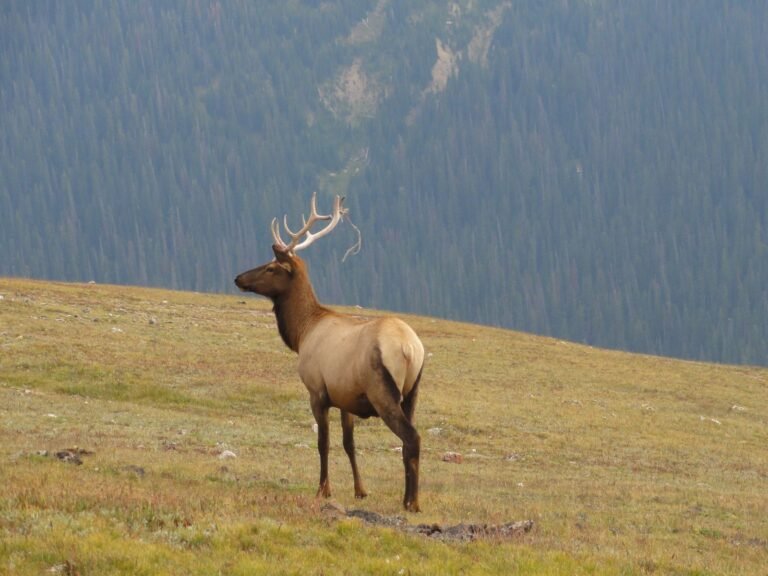
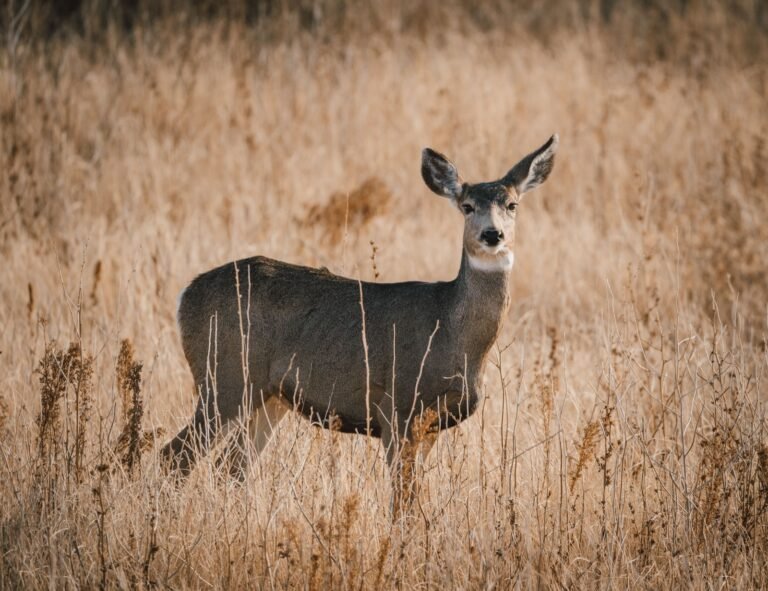
Featured image: Photo by Stephen Leonardi via Pexels. Representative mule deer portrait. The image illustrates the species; it does not document our own Montana hunt.