How to Plan a Colorado Pronghorn Hunt: Draws, GMUs and Access
Last reviewed: August 20, 2026
Research note: Big Game Ledger has not hunted Colorado pronghorn firsthand. This guide synthesizes current Colorado Parks and Wildlife (CPW) publications and clearly separates official rules from planning interpretation. Regulations, hunt codes, quotas, access and fees can change. Confirm every decision with the current Colorado Big Game brochure and your CPW account before applying or traveling.
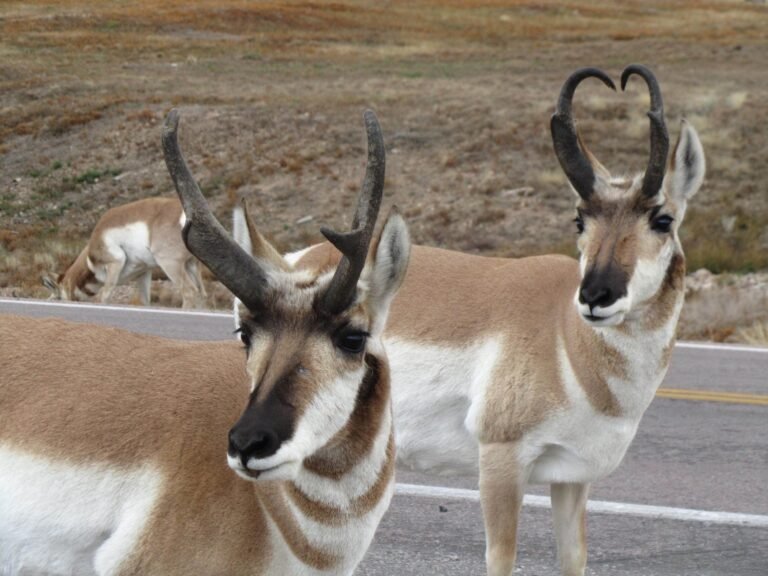
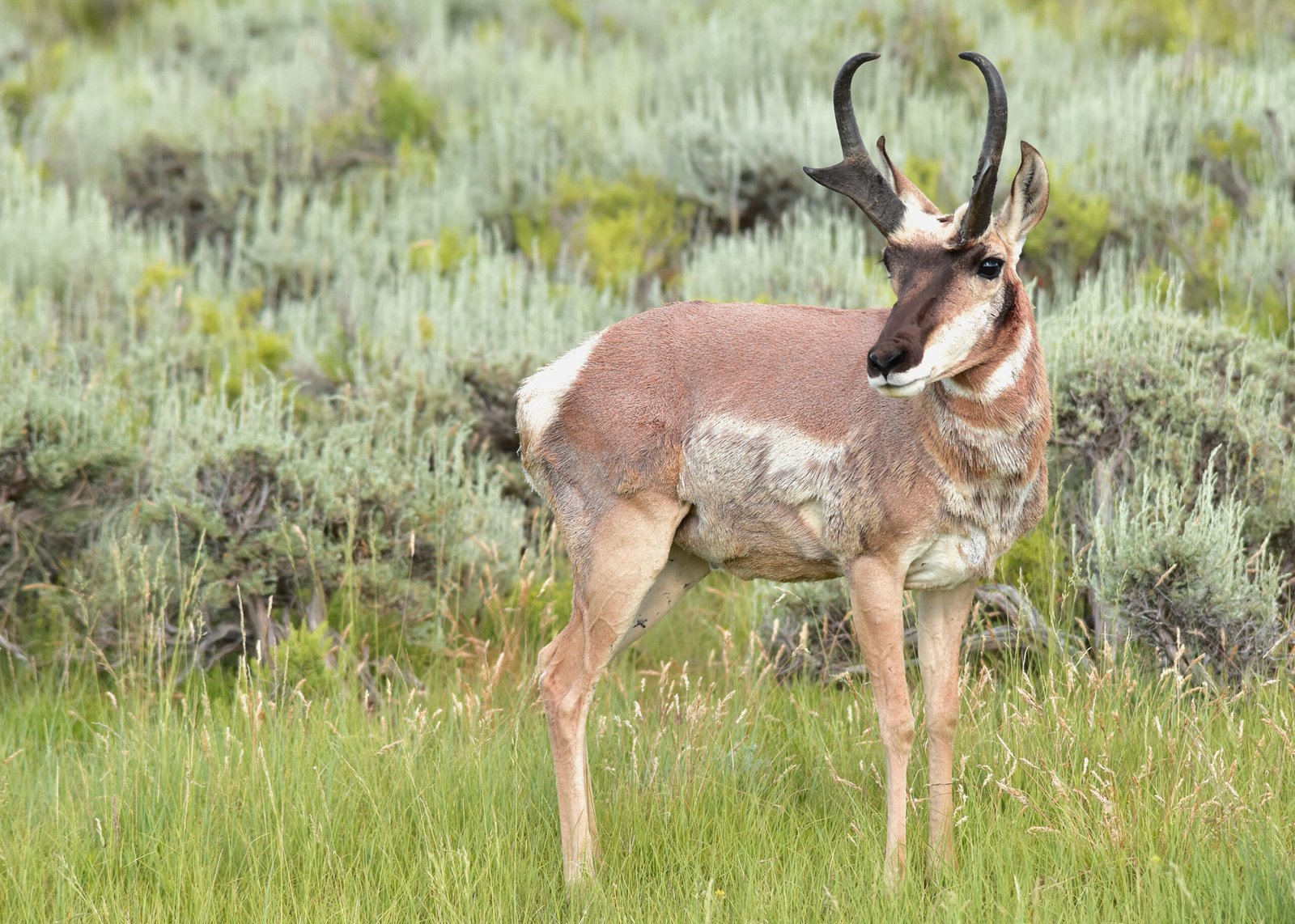
Pronghorn at Arapaho National Wildlife Refuge, Colorado. Photo: Tom Koerner/USFWS, public domain.
Colorado gives pronghorn hunters three very different planning environments: the open agricultural country of the eastern plains, high-desert and sagebrush country in the northwest, and smaller, more scattered populations in western and southwestern basins. The state also mixes limited licenses with over-the-counter archery opportunity. That variety is attractive, but it rewards hunters who research the exact hunt code, land ownership and access before treating any unit as a destination.
Colorado pronghorn planning at a glance
| Planning item | What to know for 2026 |
|---|---|
| Primary draw | Applications open March 1 and close April 7 at 8 p.m. Mountain Time. |
| Secondary draw | Applications run June 18 through June 30 at 8 p.m. Mountain Time. |
| Methods | Limited archery, muzzleloader and rifle licenses are offered through hunt codes. CPW also lists over-the-counter archery buck and doe licenses when sales open in August. |
| Qualifying license | A current qualifying license is required before applying in either draw, including a preference-point-only application. |
| Access warning | A license does not create permission to cross or hunt private land. Verify every parcel, route and property-specific rule. |
| Best research tools | Current brochure, Drawn Out At report, draw recap, harvest report, Hunting Atlas and Walk-In Access atlas. |
Why Colorado belongs on a pronghorn shortlist
Colorado’s pronghorn opportunity is broader than a single famous region. CPW’s 2026 license-recommendation report shows a modeled 2025 pre-hunt population of roughly 68,800 pronghorn statewide when the four regional estimates are combined. Most were modeled in the Southeast, Northeast and Northwest regions, with a smaller Southwest population. Those numbers describe planning scale, not the number of animals a hunter will see and not the quality of a particular buck.
The practical appeal is the range of choices. A hunter may research limited rifle or muzzleloader hunt codes, use limited archery options, or consider an over-the-counter archery license. Each path has a different balance of draw odds, season timing, pressure, access and field difficulty. Colorado is therefore best approached as a portfolio of hunt-code and access problems—not as one statewide hunt.
Where to begin researching Colorado pronghorn
The table below is a research map, not a trophy ranking. Population estimates are modeled planning figures from CPW’s 2026 recommendations, while hunt codes and quotas must be checked in the current brochure.
| Research zone | Current context | Examples to investigate |
|---|---|---|
| Southeast plains | CPW modeled about 35,300 pronghorn before the 2025 season, the largest regional total. Agricultural land, grassland and private-property patterns make access work central. | Data analysis units include GMUs 110–111, 112–115, 116–127, 120–126, 128–147 and other southeastern combinations. Start with the exact hunt code, then map public and enrolled access. |
| Northeast plains | CPW modeled about 13,700 pronghorn. The region includes extensive plains habitat, but ownership and legal approaches vary sharply by parcel. | Research GMU groups such as 87–95 and 951, 99–100, and 93, 97, 98, 101 and 102. Never infer permission from visible open country. |
| Northwest sagebrush country | CPW modeled about 16,000 pronghorn. Northwestern Colorado can offer more public-land research than some eastern plains areas, along with large basins, sagebrush and longer glassing distances. | One major herd data unit includes GMUs 3, 4, 5, 13, 14, 214, 301 and 441; another includes 6, 16, 17, 161 and 171. Verify current hunt-code boundaries rather than assuming the herd unit equals the license boundary. |
| Southwest and western basins | CPW modeled about 3,800 pronghorn across the Southwest region. Lower density makes current distribution, access and scouting more important than statewide reputation. | Use CPW maps and current statistics to identify the specific herd, then confirm whether a practical hunt code and sufficient legal access exist. |
CPW publishes its assumptions and proposed license levels in the 2026 Big Game License Recommendation Summary. Treat that report as biological context. It does not replace the regulations brochure or guarantee local abundance.
Understand Colorado hunt codes before comparing units
Colorado limited licenses are attached to hunt codes. The exact code determines species, sex, method, unit or unit group, and season. Two hunters saying “Unit 3 pronghorn” may be discussing different methods, dates or license conditions. Write down the complete hunt code for every option you compare.
For each candidate, record:
- the complete 2026 hunt code and legal unit boundary;
- sex and method;
- season dates;
- license quota and any special restrictions;
- whether the license is valid only on private land or has another access condition;
- historical draw position, applicant volume and harvest data; and
- how much land you can legally reach without crossing private property.
CPW explains the available methods and licensing framework on its official Hunting Pronghorn page. If the brochure and a summary page appear to differ, follow the current regulation and contact CPW for clarification.
Limited licenses versus over-the-counter archery
Archery, muzzleloader and rifle limited licenses are available through the draw. CPW also states that archery buck and doe pronghorn licenses are available over the counter when licenses go on sale in August. “Over the counter” removes the draw requirement; it does not remove unit boundaries, dates, legal-method rules or access limits.
That distinction matters. A license that is easy to buy can still be difficult to use if the legal area has little reachable habitat. Before buying an OTC archery license, map the valid units, identify several legal access points and consider whether an archery stalk is realistic in the cover and pressure you expect.
2026 application calendar
- March 1: primary draw applications open.
- April 7 at 8 p.m. MT: primary draw deadline.
- May 26–29: big-game draw results are scheduled by species.
- June 1 at 11:59 p.m. MT: license surrender deadline after the primary draw.
- June 12 at 11:59 p.m. MT: primary-draw payment deadline.
- June 18–June 30 at 8 p.m. MT: secondary draw application window.
- July 7: secondary draw results.
- July 9 at 11:59 p.m. MT: secondary-draw surrender deadline.
- July 21 at 11:59 p.m. MT: secondary-draw payment deadline.
- August 4 at 9 a.m. MT: leftover and over-the-counter licenses are scheduled to go on sale.
Deadlines are unforgiving, and CPW uses Mountain Time. Submit early enough to resolve account, payment or qualifying-license problems before the portal closes.
Qualifying licenses, fees and preference-point research
Colorado requires a current qualifying license before a hunter can submit a primary- or secondary-draw application, even when applying only for a preference point. The qualifying-license requirement does not apply to leftover or OTC purchases. Hunters ages 18 through 64 generally also need a habitat stamp when buying or applying for a license.
CPW’s 2026 pronghorn page lists the following charges:
| Charge | Resident | Nonresident |
|---|---|---|
| Application processing fee | $8.93 | $11.49 |
| Adult pronghorn license | $51.25 | $506.92, including the applicable fishing combination |
| Youth pronghorn license | $20.30 | $130.07 |
| Habitat stamp | $12.76 when required | |
Fees can change, and a complete application budget may also include the qualifying license, travel, lodging, access arrangements and field costs. Verify the live total during checkout.
Use CPW’s pronghorn statistics to compare the 2026 Drawn Out At report, draw recap and recent harvest report. Historical points and odds are evidence, not promises: quotas, applicant pools and hunt codes change. Build a short list with a realistic first choice, then keep alternatives whose access and season still fit your plan.
Access is the deciding variable
On Colorado’s plains, a unit can contain pronghorn habitat while offering little public ground or few legal approaches. Do not evaluate a hunt from biological numbers alone.
- Open CPW’s Maps and Access resources and the Colorado Hunting Atlas.
- Overlay the precise hunt-code boundary with public parcels, roads and property lines.
- Identify at least three legal access points and a backup area before applying.
- Check current closures, State Wildlife Area rules and vehicle restrictions.
- For private land, obtain clear permission and document the dates, boundaries, vehicle rules and guests covered.
- Recheck access immediately before the hunt; ownership, enrollment and temporary restrictions can change.
CPW’s Walk-In Access Program can add valuable opportunity. Big-game Walk-In properties are generally open from September 1 through the end of December, but only signed properties are open. A parcel shown in an atlas without the required boundary signs is not open under the program. Access is on foot, and property-specific rules control.
A practical scouting and hunt plan
Start with maps, not miles
Mark legal access, likely glassing points, water, roadless pockets, agricultural edges and places where terrain can hide a stalk. Then eliminate attractive-looking country you cannot legally reach. This prevents a common planning failure: finding animals first and discovering the access problem second.
Verify from public positions
Scout from legal roads and parcels. Record where animals enter public ground, how they react to traffic, and which terrain folds can conceal movement. On open plains, a small drainage, terrace or patch of taller vegetation can matter more than a large elevation change.
Build multiple daily options
Have a first-light glassing position, a midday relocation plan and an evening alternative. Wind, crops, livestock, other hunters or a landowner decision can make a single-point plan unusable.
Plan animal recovery before the shot
Pronghorn country can be warm and exposed. Carry a sharp knife, game bags, gloves, water and a cooling/transport plan appropriate for the distance to the vehicle. Confirm evidence-of-sex, tagging, transport and carcass rules in the current brochure.
Core gear for a Colorado pronghorn hunt
- reliable binoculars and a stable glassing system;
- a mapping app plus downloaded offline maps and backup power;
- sun protection, water capacity and wind layers;
- shooting support appropriate to the legal method;
- rangefinder and method-specific practice within ethical limits;
- game bags and a complete meat-care kit;
- paper copy or offline copy of the license and current regulations; and
- written permission and landowner contact details when using private access.
For a broader packing framework, use the Western Big-Game Hunting Gear Checklist. Gear is secondary to access, legal compliance and a practiced shooting system.
Colorado pronghorn budget worksheet
| Category | Include |
|---|---|
| Application | Processing fee, qualifying license, habitat stamp and any point-related choice |
| License | Resident or nonresident pronghorn license |
| Access | Private access fee if applicable, written agreement and scouting travel |
| Travel | Fuel or airfare, rental vehicle, lodging/camping and meals |
| Field | Maps, water, game bags, ice/coolers and emergency margin |
| After the hunt | Meat processing, transport and taxidermy only if desired |
Do not advertise a “typical Colorado pronghorn cost” from one example. Resident status, access strategy, distance and license path produce materially different totals.
Final pre-application checklist
- Confirm the complete hunt code, method, sex and 2026 season dates.
- Check the Drawn Out At report and applicant history without treating past odds as guaranteed.
- Map sufficient legal access inside the actual license boundary.
- Read the qualifying-license and habitat-stamp requirements.
- Verify current fees and payment-card information.
- Download current maps and save CPW contact information.
- Read the current carcass, transport, weapon and tagging rules.
- Build at least one backup hunt and one backup access area.
Official Colorado resources
- CPW: Hunting Pronghorn
- 2026 Colorado Big Game brochure
- CPW: Primary Draw
- CPW: Qualifying License
- CPW: Pronghorn Statistics
- CPW: Maps and Access
- CPW: Walk-In Access Program
- CPW: Leftover, Remaining and Reissued Licenses
Bottom line: Colorado offers meaningful pronghorn choice, but the best hunt is the one where the license, access and field plan all match. Use CPW’s current hunt codes and statistics to narrow the list, then let legal access—not reputation—decide which option is truly viable.