How to Plan a Moose Hunt: Draws, Access, Gear and Recovery
Last reviewed: August 24, 2026. Permit structures, dates, quotas, fees and legal definitions can change. Verify the current agency regulations before applying or traveling.
Editorial note: This is a research-based planning guide, not a firsthand hunt report. It contains no affiliate links and makes no promise about draw success, access, animal size or hunting outcome.
A first moose hunt can fail on paper long before the season starts. The common problems are applying for the wrong hunt, misunderstanding a legal-bull definition, underestimating access, or discovering after the shot that the crew cannot recover and cool the animal. This guide organizes the project from eligibility through reporting.
Moose hunt planning at a glance
| First decision | Choose a state and permit pathway that you can legally and realistically use. |
|---|---|
| Highest-consequence detail | The exact legal animal, including any antler-width, brow-tine, sex or permit-specific restriction. |
| Primary logistical risk | Recovery distance, crew capacity, wet ground, darkness and cooling hundreds of pounds of meat. |
| Best starting point | The official state species page, current regulations, hunt planner and draw or lottery results. |
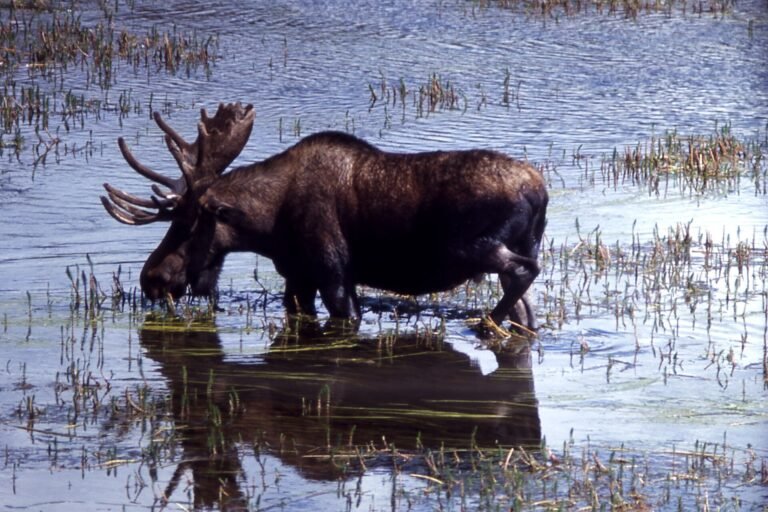
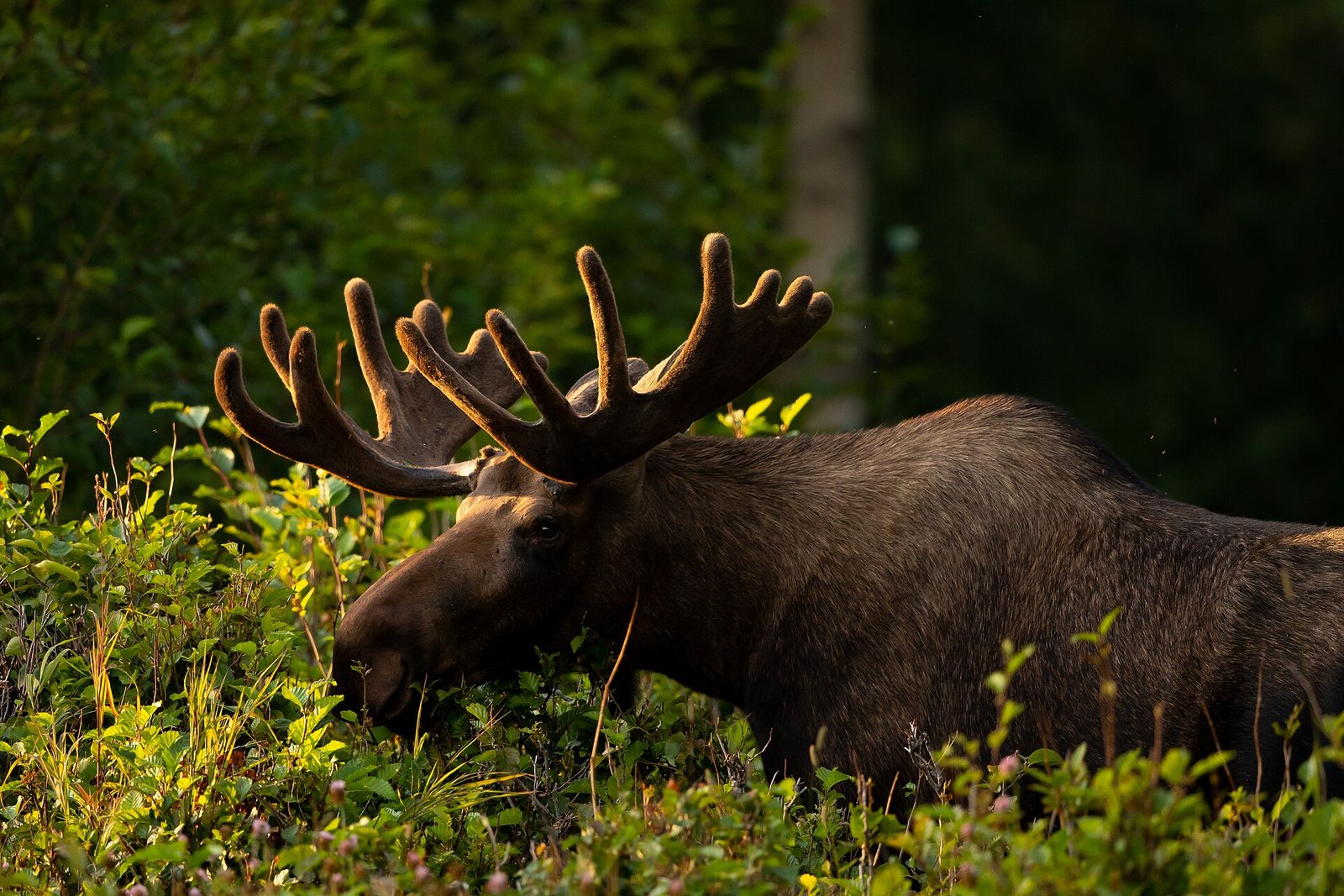
Bull moose browsing in evening light. Photo: Lisa Hupp/USFWS, public domain.
Step 1: choose the permit pathway
Begin with eligibility, not scenery. Alaska offers general-season, registration, drawing and other hunt types that vary by Game Management Unit. Most western states issue limited permits through drawings. Maine, New Hampshire and Vermont use annual lotteries or permit allocations. Some opportunities are resident only, some set small nonresident quotas, and some create different pathways for antlerless animals.
Create a comparison sheet with applicant residency, license prerequisite, deadline, point or lottery method, expected payment timing, waiting period, guide requirement, hunt area, legal animal and current official link. If one cell is unknown, do not apply until the agency resolves it.
Step 2: learn the legal animal before unit research
Moose regulations may define a legal bull by antler spread, brow-tine count, spike-fork configuration or a combination. A permit can instead authorize any bull, antlerless moose, cow or either sex. Those words are not interchangeable, and photographs taken from poor angles can be deceptive.
Alaska specifically provides an “Is This Moose Legal?” training video and requires nonresident moose hunters to complete an orientation. Treat antler judging as a legal skill: study agency diagrams, practice with varied angles, know whether both sides matter, and decide in advance that an uncertain animal is not a shot.
Step 3: compare habitat with season dates
- Alaska and northern river systems: transportation, water level, aircraft or boat logistics and weather can control access.
- Rocky Mountain states: willow parks, high basins, timbered ridges and steep extraction routes can place animals far from usable roads.
- New England: dense cover, logging roads, private timber ownership, wetlands and short assigned seasons reward detailed local access work.
Do not assume the rut peaks on the same dates across the continent. Use state biologist information and local seasonal observations, then plan a method that still works if calling activity is poor.
Step 4: map the recovery before the scouting route
For every candidate basin, drainage or timber block, mark legal parking, private boundaries, gates, motor restrictions, water crossings, slope, soft ground and the distance to active cooling. Measure the full loaded route rather than a straight line. Set a group no-go boundary for terrain or distance that exceeds the recovery system.
The Alaska Department of Fish and Game warns that a hunter may need to move roughly 400 to 700 pounds of meat. That single fact should control pack selection, helper count, water, daylight, satellite communication and the decision to use a boat, transporter or other legal support.
Step 5: build a moose-specific gear system
| System | What to verify |
|---|---|
| Navigation | Offline ownership, hunt boundary, legal roads, extraction waypoints, compass and paper/exported backup |
| Optics | Binoculars accessible on the body; tripod or support where long glassing is realistic |
| Calling | Legal calls, wind indicator and quiet position; no claim that calling replaces location work |
| Footwear | Traction and waterproofing matched to bog, snow, deadfall or steep willow country |
| Recovery | Tested load-hauling packs, enough game bags, multiple sharp knives, saw only if useful and legal, gloves and clean ground barrier |
| Cooling | Airflow, shade, vehicle or boat transfer, ice or commercial cold storage and a delay contingency |
| Communication | Satellite device where cellular coverage is unreliable, written check-in plan and emergency contacts |
Start with the big-game gear list, hunting backpack guide, boot guide and meat-care kit. Scale every item to the actual moose, terrain and transport law.
Step 6: scout for current use, not old stories
Use official harvest and draw data to narrow choices, then scout habitat. Look for fresh tracks, droppings, browsed willow, rubbed saplings, beds and crossings. Record date, weather and access—not just a pin. A summer sighting may not describe fall distribution, and a famous drainage can create concentrated pressure.
Step 7: write the shot-to-cooler sequence
- Confirm the animal is legal and the background is safe.
- After the shot, mark the location and approach cautiously; do not crowd a wounded animal in thick cover.
- Validate or notch the tag at the time and place required by the state.
- Preserve evidence of sex and any required antler or specimen relationship.
- Open the carcass or use an allowed field method promptly, keeping meat clean.
- Move meat into airflow and shade, then begin the planned transport cycle.
- Complete check-station, inspection, sampling and harvest-reporting duties by the exact deadline.
Questions for a guide, transporter or landowner
- Which services are included, and which licenses or permits remain the hunter’s responsibility?
- Is the business currently licensed for the area and activity?
- Who controls meat, antler and gear transport, and what weather delays are excluded?
- What physical condition, pack weight and terrain should the hunter train for?
- How is meat cooled if aircraft, boat or road travel is delayed?
- What written cancellation, substitution and refund terms apply?
Do not treat testimonials or social posts as proof of current outfitter performance. Verify licensing, contracts, references and agency requirements directly.
Final 30-day verification
- License, permit and orientation documents printed or stored offline
- Legal-animal diagrams reviewed by every hunter
- Emergency orders, closures, fire restrictions and road status checked
- Private permission and access-program rules documented
- Recovery crew, vehicle, boat or transporter reconfirmed
- Cold storage and processor hours confirmed without assuming availability
- Reporting, inspection, check-station and specimen deadlines in the calendar
- Weather backup and trip-cancellation threshold agreed
Build the full moose-hunt budget
A moose permit can be the smallest line in the trip budget. Build the estimate from current agency fees and written quotes, then include the application or point purchase, prerequisite license, permit, travel, vehicle or aircraft access, lodging or camp, maps and communication, meat-care supplies, helpers or pack-out support, cold storage, processing, shipping, and an emergency reserve. Keep provider quotes separate from official agency charges and record the source and date for every number.
| Budget category | What to verify before committing |
|---|---|
| Application and licensing | Residency rules, prerequisite license, application or point cost, permit payment timing and refund policy |
| Access and transportation | Airfare, rental vehicle, fuel, boat or aircraft service, baggage, road restrictions and weather-delay terms |
| Camp and communication | Lodging, food, shelter, satellite communication, charging and weather backup |
| Recovery and meat care | Helpers, legal transport, game bags, cold storage, processor hours, shipping and contingency capacity |
| Commercial services | Exact inclusions, licensing, cancellation terms, taxes, deposits and who controls each part of the recovery |
Do not use a statewide “average cost” as a final estimate. A road-accessed New England permit, a remote Alaska hunt, and a western limited-entry hunt can have entirely different transportation and recovery exposure.
Official research starting points
- Alaska Department of Fish and Game — nonresident moose orientation
- Maine Department of Inland Fisheries and Wildlife — moose laws, permits and seasons
- Idaho Fish and Game — moose hunting and controlled hunts
- Wyoming Game and Fish — moose hunt planner
These links are starting points, not substitutes for the current regulations, emergency orders, permit documents, and hunt-area rules that apply to the selected hunt.
Use the state guides
The Moose Hunting Hub compares the major state pathways and links to Alaska, Maine, Idaho, Montana, Wyoming, Colorado, Utah, Washington, New Hampshire and Vermont guides. Each state page routes readers to the wildlife agency, current regulations, applications and official planning tools.