What an Elk Hunt Actually Involves: A Beginner’s Planning Guide
Research guide · Last reviewed August 15, 2026. This is a source-based planning guide, not a firsthand hunt account. It synthesizes information from wildlife agencies, public-health authorities, and federal land managers. Rules, seasons, license structures, access, and disease guidance vary by state, unit, year, and land manager; verify every trip against current official sources.
An elk hunt is not simply a few days of walking through the mountains with a tag. It is a project that can begin months before opening morning and continue after a successful shot. The work includes choosing a state and hunt unit, securing the correct license, understanding legal access, preparing for steep country and variable weather, locating animals, and having a realistic plan to cool, protect, and transport a large volume of meat.
For a new hunter, the clearest way to understand the experience is to break it into phases: permission, preparation, scouting, the daily hunt, recovery, and the trip home.
Use the printable planning checklist
Track regulation sources, applications, access, maps, budget, field systems and backup decisions in one six-page workbook.
The short version
A typical western elk hunt may involve arriving before daylight, hiking or climbing to a place where the hunter can listen or glass, searching large areas for fresh sign or visible animals, and repeatedly adjusting as elk, weather, pressure, and wind change. Some hunts return to a vehicle or established camp each night. Others require carrying several days of equipment into the backcountry.
Finding elk is only one part of the challenge. The hunter must remain inside the correct unit and season, use the authorized method of take, distinguish legal animals, avoid private land and closed routes, take a safe and ethical shot, follow state tagging and reporting rules, and protect the meat if an animal is harvested.
Where the adventure changes: six states for different elk-hunt goals
There is no single “best” elk state. The best fit depends on whether the goal is frequent opportunity, remote country, a limited-entry hunt with greater potential to encounter mature bulls, or simply the most memorable first western adventure. Herd size alone does not predict success, and a state’s strongest unit may be much harder to draw than its general hunting opportunity.
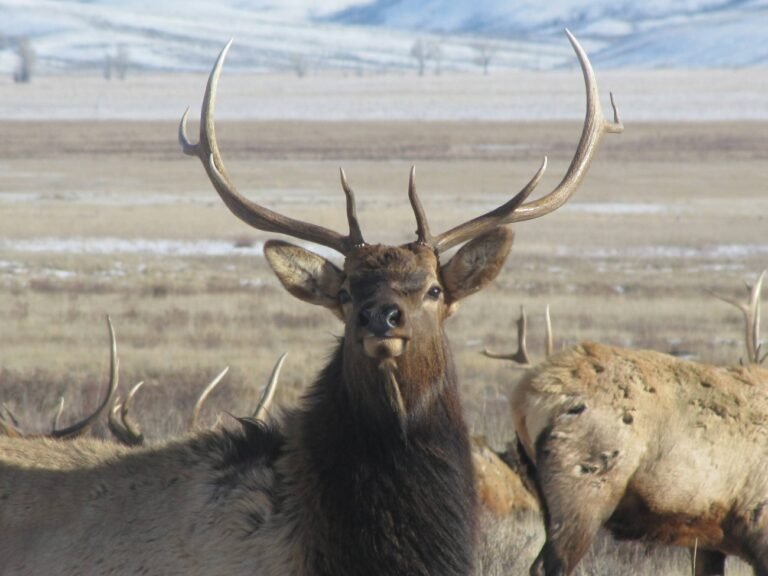
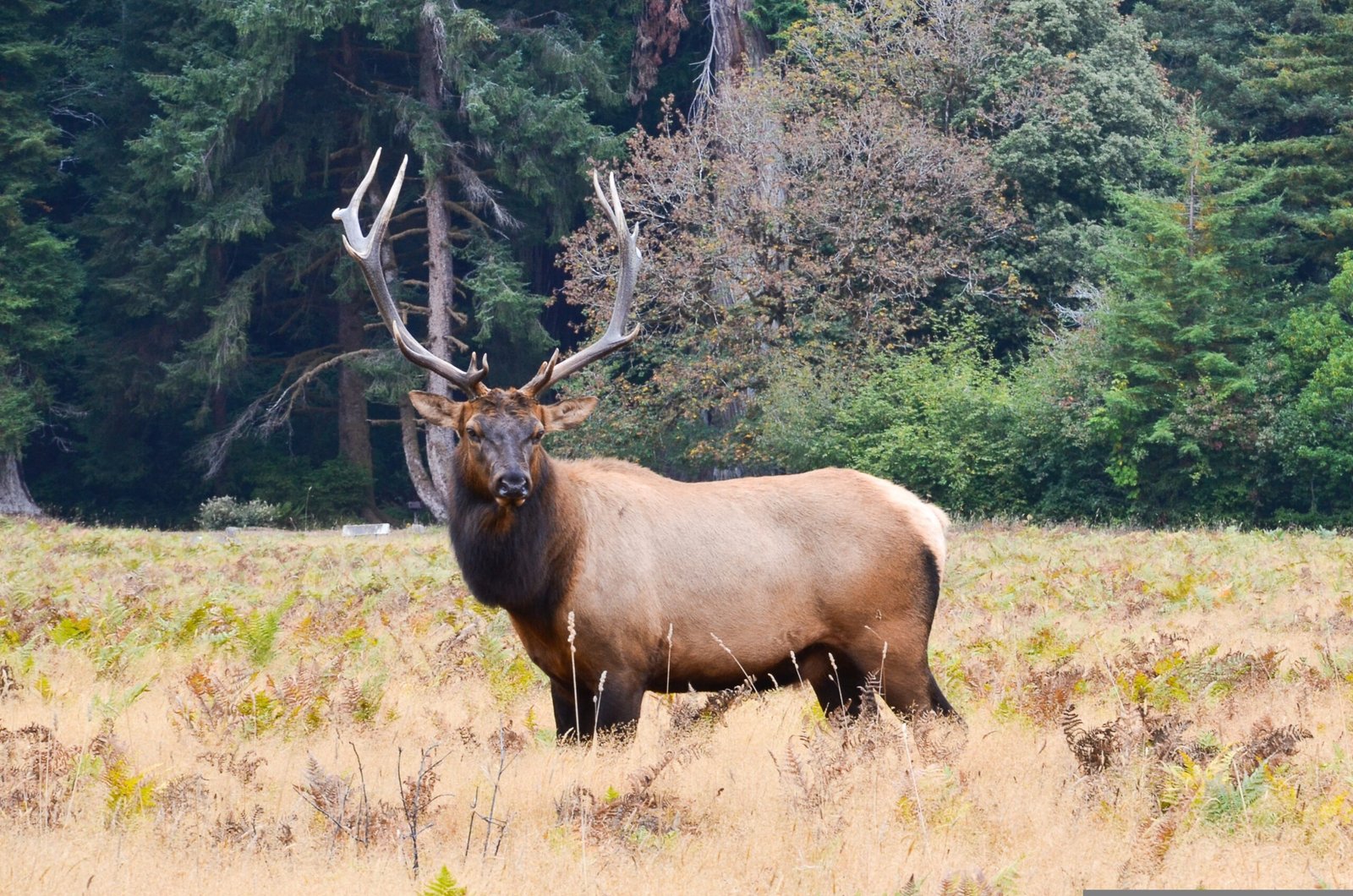
How large is an average bull? As a useful Rocky Mountain elk benchmark, the National Park Service lists bulls at roughly 700 pounds and about five feet at the shoulder. Yellowstone describes a typical healthy bull’s antlers as roughly 55–60 inches long, just under six feet wide, and about 30 pounds per pair. Those are physical dimensions—not a trophy score. Age, genetics, forage, subspecies, and local management create substantial variation. Wildlife agencies do not publish one standardized, comparable “average bull score” for every state, so the state notes below do not pretend that such a ranking exists.
Species scope: The six destinations below are discussed in the interior-West Rocky Mountain elk planning context. That label should not be applied automatically to every elk hunt: coastal Pacific Northwest coverage must distinguish Roosevelt elk, and California coverage must distinguish among tule, Roosevelt, and Rocky Mountain elk according to the exact herd and location. See the Elk Hunting hub for the sourcing standard.
Colorado: the scale-and-variety choice
Why it belongs on the list: Colorado Parks and Wildlife estimates more than 280,000 elk—the largest statewide population reported by a wildlife agency—and manages a mixture of limited, remaining, and certain over-the-counter opportunities. The attraction is breadth: high basins, dark timber, open parks, vehicle-based camps, and demanding pack-in country can all be part of a Colorado plan. Excitement factor: the feeling of entering a huge elk landscape with many possible hunt formats. Reality check: a large herd does not make every unit easy, and pressure, access, and bull age structure vary sharply by hunt.
Idaho: the rugged DIY adventure
Why it belongs on the list: Idaho Fish and Game reports more than 120,000 elk and manages them across 28 elk zones, combining general-season opportunity with controlled hunts intended to provide mature-bull opportunity in selected areas. Central Idaho can deliver the steep, remote, physically demanding trip many people picture when they hear “western elk hunt.” Excitement factor: big elevation changes, thick timber, river canyons, and the possibility of a true backcountry itinerary. Reality check: Idaho changed nonresident general deer and elk tags to an application-and-draw process for 2026; never assume last year’s purchase path still applies.
Wyoming: the classic mountain-and-basin hunt
Why it belongs on the list: Wyoming Game and Fish estimated about 109,000 elk in 2024 and publishes hunt-area maps, drawing odds, access information, and harvest reports through its Hunt Planner. The state combines sagebrush basins, forested ranges, and Greater Yellowstone country. Excitement factor: glassing broad country, moving between open slopes and timber, and planning around distinct herd units. Reality check: general and limited-quota paths, resident rules, nonresident allocations, and public access differ by hunt area.
Montana: the sprawling big-country experience
Why it belongs on the list: Montana offers general-license and special-permit structures across an enormous range of prairie breaks, foothills, timber, and designated backcountry districts. Montana Fish, Wildlife & Parks publishes current population-status charts, regulations, maps, and harvest information rather than one simple statewide promise. Excitement factor: long views, large landscapes, and the ability to build very different hunts within one state. Reality check: private-land distribution and legal access can matter as much as the number of elk in a hunting district, and most nonresidents must draw a combination license before using general elk opportunity.
Arizona: the limited-entry aspiration
Why it belongs on the list: Arizona Game and Fish reports a herd of nearly 35,000 elk and lists mature males at up to 900 pounds. Elk permits are primarily managed through a draw, supported by unit maps, annual survey data, harvest summaries, and aging results. Excitement factor: the contrast of bugling elk, ponderosa forest, high plateaus, and desert-edge country—plus the anticipation attached to a difficult-to-obtain permit. Reality check: “up to 900 pounds” describes possible body size, not the average harvested bull, and a famous unit is not a realistic annual plan for most applicants.
New Mexico: the fresh-start draw and landscape variety
Why it belongs on the list: New Mexico’s wildlife department describes productive elk herds across diverse landscapes and offers public and private opportunities for archery, muzzleloader, and rifle hunters. Its public draw does not use preference points: applications receive random sequence numbers, subject to statutory resident, outfitted, and nonresident quotas. Excitement factor: a first-time applicant can enter without being decades behind in points, and the hunt may range from high forest to open volcanic and desert-edge terrain. Reality check: equal treatment within a quota pool does not mean high draw odds, especially for nonresidents or heavily demanded hunts.
Practical takeaway: Colorado is the strongest starting point for scale and format variety; Idaho for a rugged DIY objective; Wyoming for a classic mountain-and-basin plan; Montana for expansive country; Arizona for a patient limited-entry strategy; and New Mexico for a random-draw premium option. Treat those as planning archetypes, not guarantees. Compare the exact unit, season, public access, draw odds, recent harvest reporting, and recovery logistics before choosing.
Official licensing and application pages
Ready to move from general research to a real hunt plan? Start with the responsible state wildlife agency. These links lead to official licensing and application information—not an outfitter, affiliate, or third-party license seller.
- Colorado Parks and Wildlife — Buy & Apply
- Idaho Fish and Game — Licenses, Tags and Permits
- Wyoming Game and Fish — Licenses & Applications
- Montana Fish, Wildlife & Parks — Buy and Apply
- Arizona Game and Fish — Hunt Draw and Licenses
- New Mexico Department of Wildlife — Big-Game Applications and Draws
License structures, deadlines, fees, residency rules, available tags, and account requirements can change. Confirm the current regulation booklet and the exact hunt code before applying or purchasing.
1. The hunt begins with a legal opportunity
Western states divide elk country into management units or hunt areas. A license can be limited through a draw, available from a remaining-license list, sold over the counter for certain units and seasons, or tied to private-land access. Those terms are not interchangeable, and the details change.
Colorado Parks and Wildlife’s planning sequence is a useful example: confirm hunter-education eligibility, choose the species and sex, choose the unit, select the season and method of take, then determine which license option applies. Colorado’s system should not be assumed to describe another state; each wildlife agency publishes its own regulations and application process.
- Species and sex: A license may authorize an antlered elk, an antlerless elk, either sex, or a more narrowly defined legal animal.
- Method: Archery, muzzleloader, and rifle seasons differ in timing, equipment rules, and field conditions.
- Place: Unit boundaries and land ownership determine where the license is valid and where the hunter may legally stand.
- Time: The printed season and legal hunting hours control when hunting may occur.
- Hunter eligibility: Hunter education, identification, age, residency, and other requirements must be confirmed before applying or buying.
Before spending money on travel or equipment, read the current regulation booklet and the official page for the exact hunt code or license. Save the documents used for the decision and check again before departure for corrections, closures, fire restrictions, or emergency orders.
2. Choose what kind of elk hunt you are planning
“Elk hunt” covers several very different trips. A beginner should define the format before building a gear list or budget.
- Vehicle-access or base-camp hunt: Sleep near a road or established camp and travel into hunting areas each day. This can simplify food, shelter, and meat transport, although legal motorized access still must be verified.
- Backcountry hunt: Carry shelter, sleep system, food, water treatment, navigation, and emergency equipment away from the vehicle. A successful harvest may require multiple loaded trips.
- Do-it-yourself public-land hunt: The hunter is responsible for research, legal access, navigation, camp, field decisions, and recovery logistics.
- Guided hunt: A licensed outfitter may provide some combination of access, lodging, horses, local knowledge, meals, and field support. Services, licensing, and performance must be verified individually.
The format affects nearly every later decision: physical preparation, transportation, mapping, communication, food, shelter, gear weight, emergency planning, and the number of people needed to remove meat.
3. Map access before you scout animals
Public land on a map does not automatically mean there is a legal route to reach it. Public parcels can be surrounded by private property, while some legal access exists through documented roads or easements. The Bureau of Land Management advises users to verify that roads and trails are legally passable and notes that an access easement does not authorize other uses of the private property being crossed.
A useful map review separates four questions:
- Is the destination inside the unit where the license is valid?
- Who manages or owns the land?
- Is there a legal route from a public road or trailhead?
- Are motor-vehicle, seasonal, fire, camping, or local closures in effect?
Commercial mapping apps can be convenient planning tools, but an app layer is not the final legal authority. Compare it with the state wildlife agency, the land manager, current motor-vehicle-use maps, posted signs, and local closure notices. Download maps for offline use and carry a backup appropriate to the remoteness of the trip.
4. Prepare for the physical job, not just the shot
Elk country often combines elevation, steep grades, loose ground, deadfall, cold mornings, sun exposure, and rapid weather changes. The physical task may include repeated climbs while carrying food, water, layers, optics, and emergency equipment. If an elk is harvested away from a road, the workload can increase sharply.
The National Park Service warns that altitude illness can affect visitors above about 8,000 feet and that susceptibility is not determined by fitness alone. Its guidance emphasizes gradual adjustment, conservative exertion, hydration, and descending if symptoms develop. Anyone with relevant medical concerns should discuss high-elevation exertion with a qualified healthcare professional.
Preparation should therefore include progressive hiking, climbing, and pack-carrying practice with the footwear and layering system intended for the hunt. The objective is not a single hard workout. It is the ability to make sound decisions after several days of early starts, uneven terrain, imperfect sleep, and changing weather.
5. What a day in the field can look like
No daily schedule describes every elk hunt. The outline below is a planning model—not a promise of how animals will behave or how a particular hunt will unfold:
- Before daylight: Wake, check weather and wind, travel toward a planned glassing point, listening area, trail, or feeding-to-bedding route.
- Early morning: Glass open country, listen where calling is seasonally relevant, inspect fresh tracks and droppings, and evaluate whether animals moved through recently.
- Midday: Reposition carefully, scout another drainage, watch likely bedding cover from a distance, or rest and conserve energy. Heat and wind can alter both animal movement and meat-care risk.
- Afternoon and evening: Set up near a likely travel or feeding area while preserving a safe route back. Recheck the wind and avoid being trapped by darkness, terrain, or a route that exceeds the group’s ability.
- After dark: Return to camp, eat, dry equipment, review maps and observations, check conditions, and build the next day’s plan.
During any of those periods, the plan may change. Elk can move in response to forage, weather, breeding behavior, snow, hunting pressure, livestock, roads, and disturbance. A quiet day is not proof that the unit holds no elk; it may mean the search area, timing, wind, or observation point needs to change.
6. Safety is a continuous decision
The U.S. Forest Service recommends checking weather, leaving a written trip plan, knowing the area, preparing for changing conditions, carrying first-aid and rain equipment, and clearly identifying the target before shooting. State rules govern hunting seasons and licenses on National Forest lands, while federal and local restrictions can govern travel, camping, fires, and firearm discharge.
A trip plan should identify the unit, trailhead or access point, vehicle, party members, intended camp, communication method, and the time someone should initiate help if the group does not check in. Satellite communication can improve coverage in remote country, but it does not replace conservative decisions or a turnaround plan.
7. A successful shot starts the recovery phase
If an elk is harvested, the hunt changes from searching to a time-sensitive recovery and food-care operation. The hunter must follow the state’s rules for validating or attaching the license, evidence of sex, carcass transport, reporting, and chronic wasting disease restrictions.
The general priorities are to confirm the animal is dead before approaching, make the firearm or bow safe, mark the location, complete required tagging steps, cool the edible meat promptly, keep it clean, and organize a realistic route to the vehicle or processor. The exact field-dressing method depends on regulations, terrain, weather, distance, equipment, and the hunter’s training.
Colorado Parks and Wildlife advises hunters not to consume meat from an animal known to be infected with chronic wasting disease and provides precautions for field dressing and handling tissues. Testing rules and carcass-transport restrictions vary, so consult the wildlife agencies for both the harvest state and the destination before moving a carcass or high-risk tissues across unit or state lines.
8. Build the budget around the whole trip
The license is only one cost. A realistic planning sheet should account for application and preference-point costs where applicable, hunter education, travel, fuel, lodging or camp, food, mapping, communication, clothing, boots, optics, weapon setup and practice, game bags, coolers, ice, meat processing, shipping, taxidermy if desired, and a contingency fund.
Do not use a generic online price as the final budget. Record the date and official source for fees, obtain current written terms for guide or lodging services, and identify which costs are refundable if a license is not drawn or the trip changes.
A beginner’s pre-trip checklist
- Complete required hunter education and seek hands-on instruction for the chosen method of take.
- Choose a state, unit, season, legal animal, and license path.
- Read the current regulation booklet and unit-specific restrictions.
- Verify land ownership, legal access, road status, and closures with official sources.
- Practice navigation with downloaded offline maps and a backup.
- Build fitness gradually for the elevation, terrain, distance, and expected pack weight.
- Confirm firearm or archery equipment rules and practice until operation is safe and consistent.
- Prepare shelter, layers, water, food, first aid, emergency communication, and a written trip plan.
- Create a recovery plan before opening day: helpers, game bags, knives, coolers, ice, route, vehicle capacity, and processor hours.
- Review tagging, evidence-of-sex, reporting, CWD testing, and carcass-transport requirements immediately before the trip.
The decision that matters most
The most useful first question is not “Which rifle, bow, or pack should I buy?” It is “What exact hunt am I preparing for?” Once the state, unit, season, access, camp style, group, and recovery plan are defined, gear decisions become easier to evaluate.
For a first elk hunt, experience and instruction matter. Consider hunter-education field opportunities, shooting instruction, experienced partners, conservation-group programs, or a properly licensed guide. Big Game Ledger will continue building the planning layers—licenses, maps, physical preparation, equipment, field logistics, and costs—without presenting research as personal field experience.
Official sources used
- Colorado Parks and Wildlife: Hunting Elk
- Colorado Parks and Wildlife: 2026 Big Game Brochure
- Bureau of Land Management: Hunting and Fishing
- Bureau of Land Management: Public Lands Access Map
- U.S. Forest Service: Hunting and Outdoor Planning
- National Park Service: Hiking at High Altitudes
- Colorado Parks and Wildlife: Handling and Eating Game Meat
- Centers for Disease Control and Prevention: About Chronic Wasting Disease
- National Park Service: Yellowstone Elk Size and Behavior
- Colorado Parks and Wildlife: Elk Population and Physical Characteristics
- Idaho Fish and Game: Elk Hunting
- Wyoming Game and Fish: Elk Hunt Planner
- Montana Fish, Wildlife & Parks: Elk Hunting
- Arizona Game and Fish: Elk
- New Mexico Department of Wildlife: Elk
- New Mexico Department of Wildlife: How the Draw Works
Sources reviewed August 15, 2026. This guide is educational and does not replace current regulations, hunter education, field instruction, medical advice, or direct confirmation from the responsible wildlife and land-management agencies.
Continue with a state elk guide
State systems use different license terms, hunt areas, application structures and access resources. Continue through the Elk Hunting hub or open the guide for the state being considered: