Moose hunting is a logistics project before it is a field hunt. A useful plan must connect an available license, the exact legal animal, practical access, wet or brush-heavy habitat, safe shot selection, and a credible plan for moving hundreds of pounds of meat.
Research disclosure: Big Game Ledger does not present this hub as firsthand moose-hunting experience. It synthesizes current wildlife-agency information and practical planning principles. Seasons, permit numbers, fees, access, legal methods and transport rules change. Verify every decision in the current agency regulations and the exact permit description.
Start with the animal, not the trophy photograph
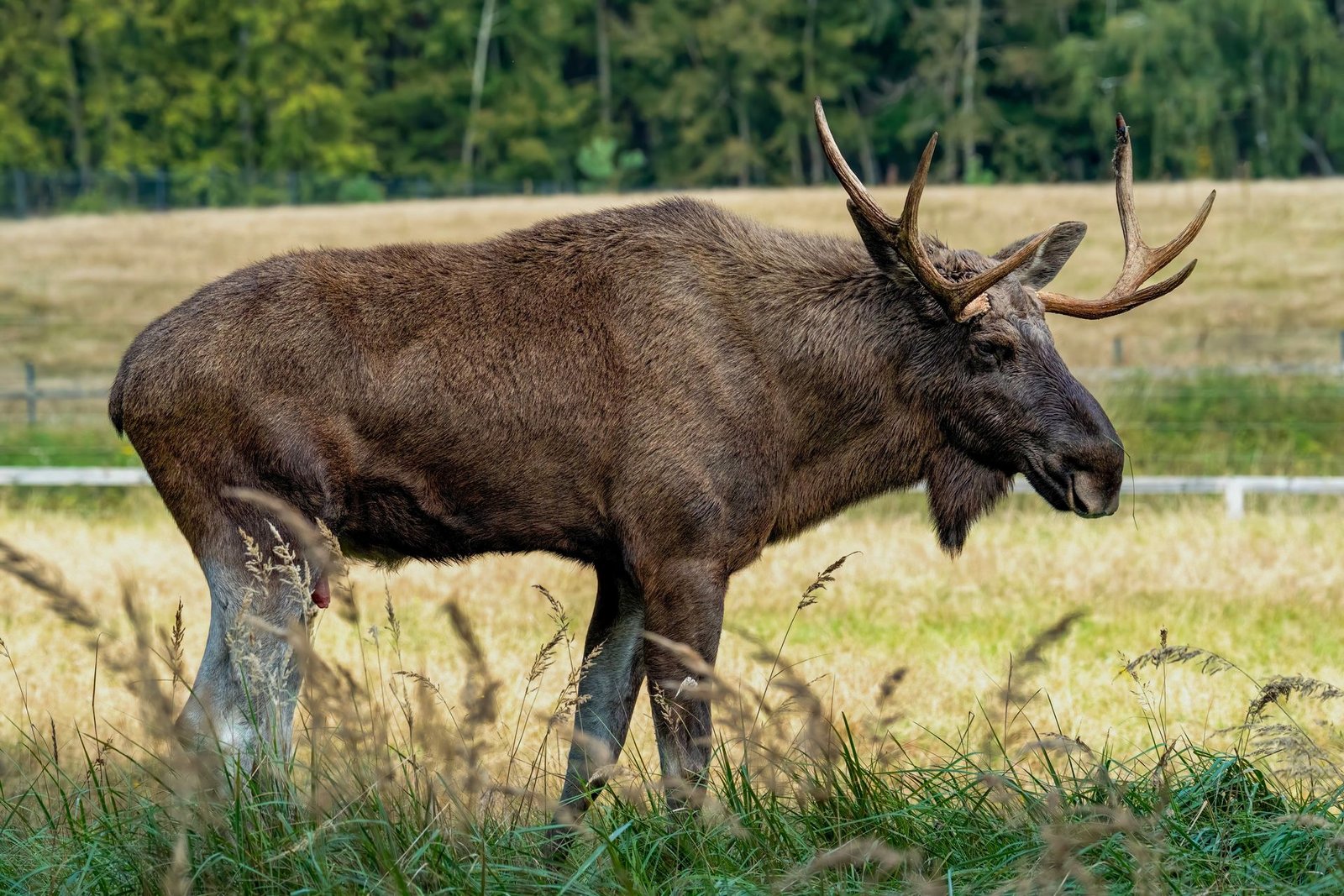
Moose are the largest members of the deer family. They occupy very different landscapes across North America: Alaska river bottoms and tundra edges, Rocky Mountain willow parks, northern conifer forests, regenerating cuts, bogs and lake country. The habitat controls visibility, travel, calling strategy and the difficulty of recovery.
The Alaska Department of Fish and Game reports that a prime Alaska bull can weigh 1,200 to 1,600 pounds and that a large animal may yield roughly 500 pounds of meat. Shiras moose in the Rocky Mountain states and eastern moose in New England are generally smaller, but no moose is a light recovery. Treat every advertised body or antler measurement as context—not a promise for a specific state, unit or permit.
The moose planning sequence
- Choose a real permit pathway. Separate general-season or harvest-ticket opportunity from limited draws, preference or bonus points, random lotteries, resident-only permits and outfitter-dependent options.
- Read the exact legal-animal rule. Bull, cow, antlerless, spike-fork, antler width and brow-tine definitions are not interchangeable. Antler-restricted hunts demand identification practice.
- Audit access and extraction together. A place that is easy to enter can become extremely difficult after a kill. Map water crossings, soft ground, private parcels, motor restrictions and every carry leg.
- Research seasonal habitat. Compare willow, wetland, burns, timber edges, elevation, snow and rut timing with the dates printed on the permit.
- Build the recovery system before scouting. Crew, packs, game bags, cutting tools, cooling, vehicle access and a no-go distance must be decided in advance.
- Verify the entire plan before travel. Recheck emergency orders, fire restrictions, closures, weather, road conditions, tag possession, reporting and carcass-transport rules.
How the major state systems differ
| State | Primary pathway | Defining planning issue |
|---|---|---|
| Alaska | General season, registration, drawing and other hunt types by game-management unit | Legal-bull identification, remote logistics, transporter/guide rules, meat-on-bone requirements in some areas |
| Maine | Annual permit lottery with resident and nonresident allocations | Wildlife Management District, assigned season and permit type, subpermittee and registration |
| Idaho | Controlled hunt | Once-in-a-lifetime rules, hunt-area detail, timbered access and mandatory reporting |
| Montana | Special limited drawing | District-specific licenses, seven-year wait after drawing, private permission and long season |
| Wyoming | Limited quota with preference and random components | Type 1 versus Type 4, extreme point demand, hunt-area quota and extraction in willow country |
| Colorado | Primary draw only | Weighted-point structure, hunt code, lifetime antlered limit and high-elevation recovery |
| Utah | Once-in-a-lifetime limited-entry drawing and CWMU pathways | Bonus points, exact hunt number, guidebook corrections and public/private access |
| Washington | Special permits | Very limited northeastern opportunity, species/sex categories, CWD and mandatory reporting |
| New Hampshire | Annual lottery | Low permit count, WMU ranking, permittee/subpermittee rules and nine-day season |
| Vermont | Annual permit allocation and lotteries when authorized | Opportunity concentrated in the Northeast Kingdom, changing permit totals and winter-tick management |
License scarcity changes the research strategy
Many Lower 48 moose licenses are rare. That makes it tempting to rank states by a single draw-odds percentage. A stronger comparison separates resident and nonresident quotas, point and random pools, antlered and antlerless categories, waiting periods, permit costs, accessible acreage and the consequences of drawing. Use at least several years of official draw information where available, but remember that quotas and applicant behavior change.
Do not build a plan around an outdated deadline. Alaska uses a regulatory year and several hunt types; Idaho’s moose application is normally earlier than its deer and pronghorn draw; Montana, Wyoming and Colorado publish species-specific deadlines; New England lotteries follow their own calendars. Open the current official application page every year.
Moose habitat demands different map work
A moose map should show more than public ownership. Add riparian corridors, willow flats, young burns or cuts, lake margins, beaver complexes, timber edges, elevation, trail restrictions, gates, private inholdings and water crossings. Then mark a realistic extraction route from each huntable pocket.
Read How to Read Hunting Maps Before You Set Foot in a Unit. Download offline layers, but verify legal roads and property boundaries with the responsible agency or landowner. A digital line does not create vehicle access or permission.
Calling, glassing and still-hunting
Rut dates, hunting pressure and habitat affect which method is realistic. Calling can be effective in suitable seasons, but it is not a substitute for learning wind, approach routes and safe identification. In open western basins, glassing can locate feeding animals at first and last light. In dense New England or northern timber, tracks, fresh browse, rubs and patient movement through edges may matter more than long-range optics.
Carry binoculars even in timber. They help inspect antlers through branches, find small pieces of an animal and confirm that the background is safe. Build an optics system with the binocular guide and tripod guide.
Recovery is the controlling constraint
Before hunting, decide the maximum distance and terrain in which the group can recover an animal without waste or injury. Count loaded trips, elevation, boggy ground, darkness, weather and the time required to cool meat. A pack frame that works for deer does not prove the crew can move a moose. Use multiple capable helpers or an appropriate legal vehicle, boat, pack animal or commercial transporter where the regulations and terrain allow it.
- Carry enough clean game bags for the expected animal—not a generic four-bag set.
- Know whether quarters must remain naturally attached to bone until a defined point.
- Preserve required evidence of sex and attach or validate the tag exactly as directed.
- Identify the check station, reporting deadline and specimen requirement before the hunt.
- Keep dirt, hair, standing water and warm vehicle compartments out of the meat-care plan.
Build the cutting and cooling kit with the big-game meat-care guide and confirm every state-specific transport rule.
Safety around a very large animal
Moose can be dangerous at close range, particularly when surprised, accompanied by calves or approached during the rut. Give animals an escape path, do not crowd a wounded moose, and plan communication before entering thick cover. Bears may be present in Alaska and parts of the Rocky Mountain West; follow current agency food-storage and bear-safety guidance for the exact area.
Start with these two resources
Read How to Plan a Moose Hunt for the full application-to-recovery workflow. Then open the state guide that matches your eligibility and use its official agency links to verify the current hunt.
Editorial standard: Big Game Ledger does not rank outfitters, promise antler size or imply firsthand experience. See the Editorial Policy and Review Methodology.
Planning a moose application? Check the Western Big-Game Application Deadlines tracker before comparing state guides, then confirm the exact permit and closing time with the wildlife agency.