How to Build a Big-Game Meat-Care Kit for Elk and Mule Deer
A big-game meat-care kit must help a hunter cool meat quickly, keep it clean and dry, and move it legally from the field. For elk and mule deer, the equipment plan should be built before the hunt because animal size, temperature, distance, terrain, party size, pack capacity, and state rules all affect the job.
This is an equipment and planning guide—not a substitute for hunter education, food-safety instruction, local regulations, or hands-on practice with an experienced person. Always verify current tagging, evidence-of-sex, edible-meat, carcass-transport, and chronic wasting disease requirements with the wildlife agency responsible for the hunt area.
Quick answer: design the kit around cooling, cleanliness, airflow, and transport
The first priorities after a legal harvest are time-sensitive. The kit should let the party:
- work safely with clean, sharp tools and adequate lighting;
- separate edible meat from sources of contamination;
- expose warm meat to moving air without allowing it to dry excessively or contact dirt;
- protect meat from insects, moisture, and direct sunlight;
- carry every required portion without overloading a pack or person; and
- reach reliable refrigeration or an ice-supported cooler plan promptly.
Idaho Fish and Game’s backcountry meat-care guide emphasizes rapid cooling, airflow, insect protection, and separating meat into enough game bags to cool effectively. Colorado Parks and Wildlife advises keeping game cool, clean, and dry and using gloves and clean tools. These are useful planning principles, but the controlling rules are always those for the specific hunt.
Start with the recovery problem
Do not begin by buying a knife or selecting a game-bag brand. First map the recovery:
- What daytime and overnight temperatures are plausible?
- How far is the likely harvest area from the trailhead or road?
- How steep, brushy, wet, or exposed is the route?
- How many capable packers are available?
- What load can each person safely carry after a long hunt?
- Where are the coolers, ice, refrigeration, processor, or cold storage?
- Does the state require particular portions, proof of sex, or carcass parts to remain attached?
The answers determine how many bags, trips, coolers, lights, and pack frames are required. Test this plan alongside the Western Big-Game Hunting Gear Checklist and the chosen load-hauling backpack.
Core meat-care equipment
Breathable game bags
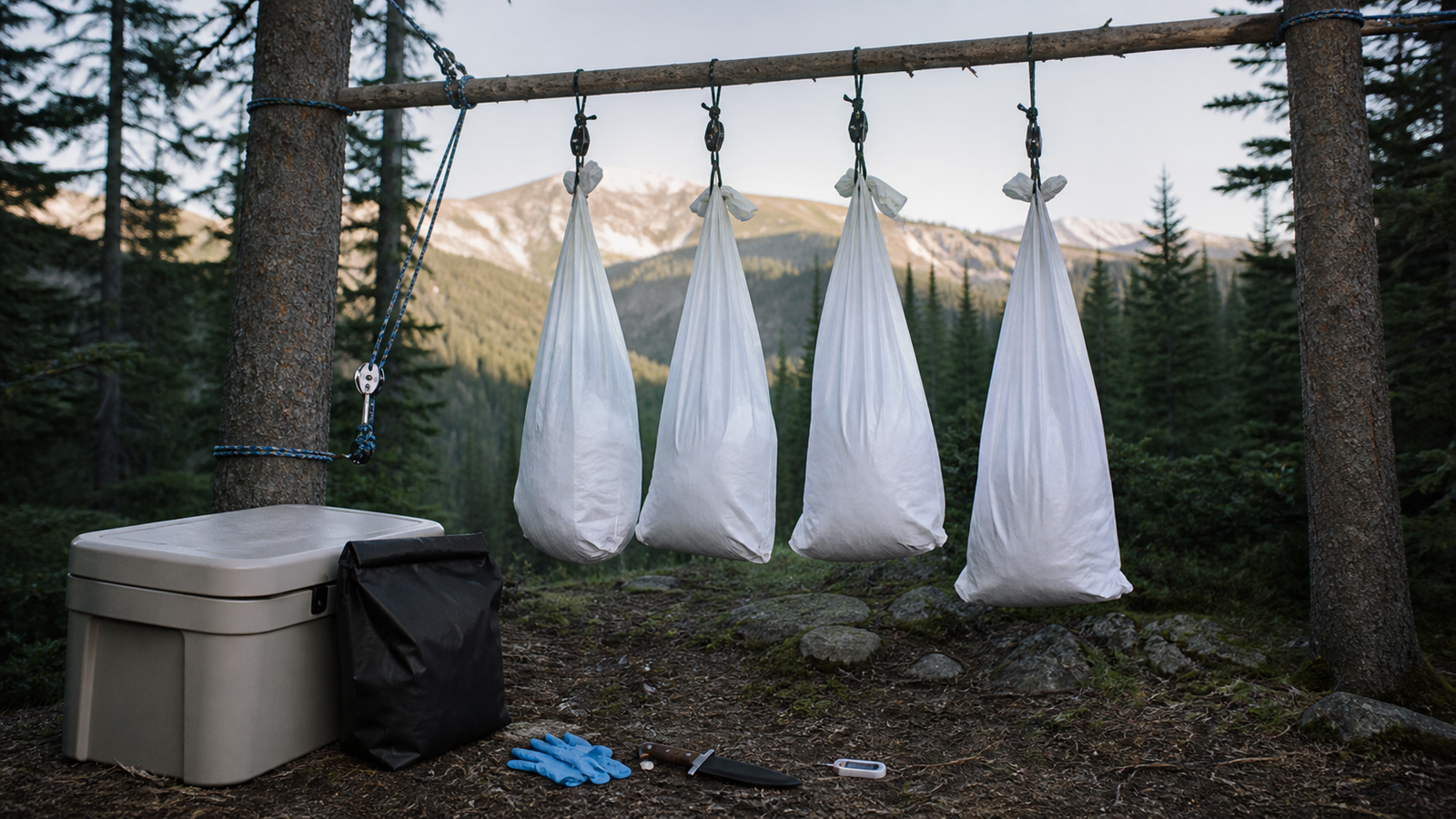
Choose bags sized for the animal and the planned breakdown method. They should be durable enough for brush and repeated handling, close securely against insects, and allow air movement. Carry enough bags to avoid packing warm meat tightly together. Inspect seams and closures before the hunt and add a repair method that will not contact the meat.
Lightweight bags can save space on a backpack hunt, while heavier bags may better tolerate stock, vehicle, or rough camp transport. The correct balance depends on the route. Plastic contractor bags can isolate clean bagged meat briefly from dirty cargo or melting ice, but Idaho Fish and Game cautions against storing warm meat in plastic because trapped heat and moisture can accelerate spoilage.
Knives and sharpening
A compact fixed-blade knife, replaceable-blade system, or a combination can work if the user can control it safely. Prioritize a secure grip when wet, an appropriate blade shape, a sheath that protects the cutting edge, and a field-serviceable sharpening plan. Pack a second cutting option so one broken, lost, or dull tool does not stop the recovery.
Protective gloves
Carry multiple pairs of correctly sized disposable nitrile or similar gloves in a puncture-resistant pouch. Change gloves when damaged or contaminated and wash or sanitize hands after handling game. Gloves do not replace clean technique.
Ground barrier and clean work surface
A lightweight tarp, durable plastic sheet, or purpose-built ground barrier can keep tools and clean bagged portions out of dirt and vegetation. Use it as a controlled work surface, not as long-term wrapping around warm meat.
Cord, pulley, and hanging hardware
Use cord and hardware rated well above the expected load, and practice knots and mechanical advantage before the hunt. A hanging plan should keep bags separated, shaded, secure from animals, and clear of the ground without damaging trees or violating campsite rules. Never stand beneath an uncertain suspended load.
Lighting and spare power
Recovery often continues after dark. A headlamp should provide useful flood light for close work and enough runtime for several hours. Add a second independent light and spare batteries or a power source compatible with the trip. Do not rely on a phone flashlight as the only backup.
Temperature monitoring
A small clean thermometer removes guesswork from cooler and storage decisions. Penn State Extension recommends cooling a field-dressed deer carcass quickly to roughly 35–40°F. An elk recovery may require quartering and more aggressive airflow because of the animal’s size. Treat any temperature target as food-safety guidance, not permission to ignore appearance, odor, contamination, time, or local advice.
Cleaning and sanitation supplies
Pack clean drinking water, paper towels or clean cloths, sealable waste bags, and hand-cleaning supplies. Separate the tool-cleaning kit from drinking gear. Penn State Extension’s venison-handling guidance recommends frequent knife cleaning and rapid cooling while avoiding contamination from hair, dirt, and digestive material.
Coolers, ice, and vehicle staging
Size the cooler plan for the animal, not for the food carried to camp. Pre-chill coolers when practical, keep them shaded, and organize drain plugs, clean dividers, frozen jugs, or bagged ice before leaving home. Direct contact with dirty meltwater can compromise otherwise clean meat, so manage drainage and containment deliberately.
Pack-out equipment is part of meat care
A recovery can fail even when the cutting kit is excellent if the pack cannot control a dense load. Evaluate frame strength, load-shelf design, compression, belt fit, and how the bag separates meat from other equipment. Keep bagged meat stable and close to the frame while following the pack manufacturer’s load guidance.
Plan conservative loads and multiple trips. Fatigue, darkness, heat, deadfall, and unstable footing increase the consequence of overloading. Use trekking poles when they improve balance, communicate the route and schedule, and preserve enough water, food, layers, and navigation gear for every trip.
Warm-weather and cold-weather adjustments
Warm conditions
Warm-weather plans need faster separation, more airflow, more bag capacity, shade, and a shorter path to dependable cooling. Start with a realistic time estimate from the harvest area to the cooler, then add time for darkness, repeated trips, and unexpected terrain. If the plan cannot protect the meat in plausible conditions, change the hunt location, party support, or recovery resources.
Cold conditions
Freezing weather reduces some cooling pressure but creates other problems. Meat can freeze into difficult shapes, bags may collect snow, and wet gear may compromise insulation and safety. Keep the meat clean and ventilated; do not assume cold air alone resolves contamination or transport requirements.
CWD and carcass-transport requirements
Chronic wasting disease rules and recommendations can affect which tissues are handled, whether testing is recommended or required, and what carcass parts may cross a county or state boundary. Current rules can change. Before the hunt, save the official wildlife-agency pages for the hunt state and every state through which the animal will travel.
Colorado’s current guidance advises hunters to minimize contact with brain and spinal tissues and to follow state testing and transport instructions. Similar considerations exist in other CWD jurisdictions. Big Game Ledger does not summarize a regulation as permanent law; verify it directly for the season and unit.
Field rehearsal checklist
- Lay out every item and assign it to a specific pack and person.
- Confirm game-bag count, size, closures, and repair supplies.
- Sharpen knives and safely practice changing any replaceable blade.
- Practice the chosen knots, pulley system, and safe lifting method.
- Test lights for the duration of a realistic nighttime recovery.
- Load the pack with comparable training weight and walk the actual distance profile.
- Stage coolers, ice, drainage, vehicle protection, and refrigeration contacts.
- Save offline wildlife-agency rules and processor information.
- Make a communication and emergency plan for multiple pack-out trips.
- Replace used gloves, damaged bags, expired supplies, and weak batteries immediately after practice.
Practical kit checklist
- Enough breathable game bags for the animal and breakdown plan
- Primary and backup cutting tools
- Sharpener or replacement blades in a secure container
- Multiple pairs of disposable gloves
- Ground barrier
- Cord, rated pulley or hardware, and repair supplies
- Primary headlamp, backup light, and spare power
- Clean thermometer
- Clean water, towels, hand-cleaning supplies, and waste bags
- Pack frame or load-hauling pack tested at realistic weight
- Pre-staged coolers and a dependable cooling plan
- Current tags, offline regulations, evidence-of-sex instructions, and CWD information
Bottom line
The best big-game meat-care kit is a complete recovery system. Build it around rapid cooling, clean handling, airflow, insect protection, safe pack loads, dependable lighting, and a verified route to refrigeration. Then rehearse the entire process under realistic weight and time pressure before relying on it in elk or mule deer country.
Research note: This guide synthesizes official wildlife-agency and university-extension guidance. It does not replace hunter education, food-safety advice, product instructions, or current state regulations. No equipment is described as hands-on tested unless Big Game Ledger has documented that testing.