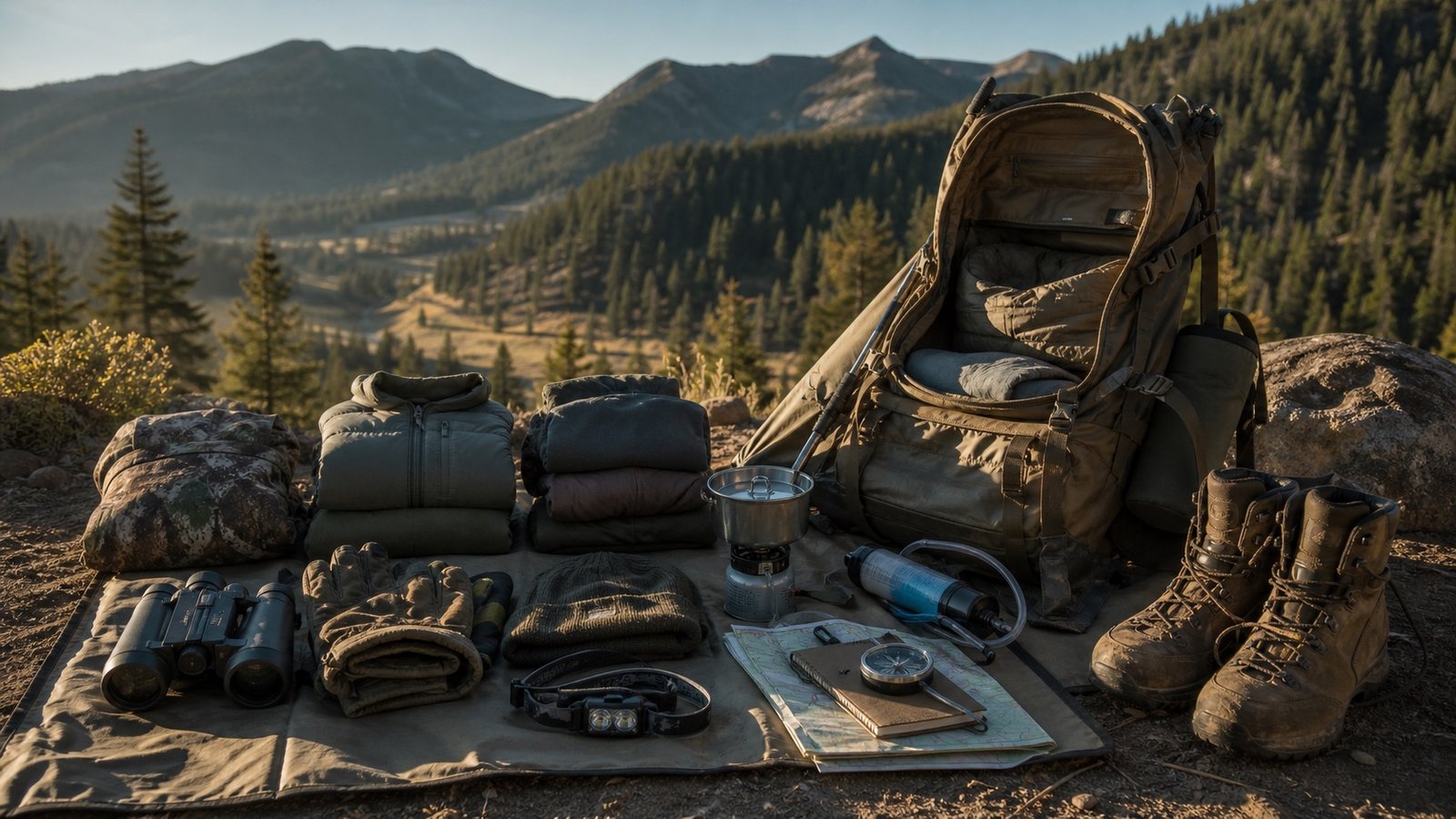
Equipment, explained
Start with the job. Then evaluate the gear.
Research-led frameworks for building complete hunting systems, comparing equipment, understanding tradeoffs, and preparing meaningful field tests.
What this section covers
Systems
Pack, clothing, shelter, sleep, water, navigation, optics, safety, and meat-care decisions built around a specific hunt.
Comparisons
Published specifications, measurable differences, cost, weight, failure consequence, and the limits of available evidence.
Testing
Clear test methods and conditions. A product will not be called field-tested until qualified use has actually occurred.
The evidence comes first
Research, expert review, first looks, buyer guides, and field tests are different kinds of evidence. Read how Big Game Ledger labels them in our Editorial Policy.
Commercial relationships never replace disclosure. See the Affiliate Disclosure.
Start here
Start with the hunt
Build Your Hunt-Specific Gear System
Use this framework to define the hunt, organize equipment by function, rate failure consequences, manage carried weight and test the complete system before opening morning.
Use the Western Gear Checklist
Work category by category through packs, boots, clothing, navigation, optics, shelter, water, safety and meat care after the hunt-specific system is defined.
Buying guides and comparisons
Start with the category guide to define the job, compare tradeoffs and narrow the field before opening an individual product profile.
Hunting Backpacks
Compare fit, suspension, capacity, load-hauling design and field access before choosing a western hunting pack.
Hunting Boots
Choose boots by foot shape, terrain, load, stiffness, insulation, waterproofing and a progressive test plan.
Hunting Binoculars
Compare magnification, objective size, field of view, eye relief, low-light use and tripod compatibility.
Hunting Rangefinders
Compare usable animal range, angle compensation, display quality, target modes, batteries and ballistic features.
Spotting Scopes
Compare magnification, objective size, eyepiece design, optical quality, weather protection and total system weight.
Hunting Tripods
Compare usable height, stability, complete-system weight, head type, mounting standards and packability.
Product research profiles
These profiles organize manufacturer specifications, attributed independent reporting and documented public discussion into practical decision paths. They are not hands-on field tests unless clearly labeled as such, and product configurations can change. Review the Review Methodology and Affiliate Disclosure before using a profile to make a purchase decision.
Hunting Backpacks
- Stone Glacier Sky 5900 — premium multiday load-hauling path.
- Mystery Ranch Metcalf 75 — minimalist multiday system.
- ALPS OutdoorZ Commander + Pack Bag — value-oriented external-frame system.
- ALPS OutdoorZ Elite Frame + 3800 Pack — research comparison within the backpack buying guide; a different system from the Commander.
Hunting Boots
- Irish Setter VaprTrek — lightweight mild-terrain path.
- Danner Recurve 7 — flexible general-use path.
- Kenetrek Mountain Extreme 400 — insulated steep-terrain and heavy-load path.
Hunting Binoculars
- Leupold BX-2 Alpine HD 10×42 — conventional all-around format.
- Nikon Monarch M5 10×50 — lighter published-weight 50mm format.
- Vortex Razor UHD 10×50 — premium stationary-glassing candidate.
Hunting Rangefinders
- Leupold RX-1400i TBR/W Gen 2 — value-oriented standalone path.
- Vortex Razor HD 4000 GB — premium long-range path.
- SIG SAUER KILO3K — connected-ballistics path.
Spotting Scopes
- Vortex Razor HD 13–39×56 — compact backcountry path.
- Leupold SX-4 Pro Guide HD Gen 2 15–45×65 — mid-size general-purpose path.
- Athlon Cronus G2 UHD 20–60×86 — full-size value-oriented path.
Hunting Tripods
- Leupold Alpine CF-425 — lightweight backcountry path.
- Vortex Ridgeview Carbon — tall full-size-optics path.
- Meopta Carbon Tripod Kit — complete optics-support kit path.
Clothing and layering guides
How to Build a Western Hunting Layering System
Build a clothing system around moisture control, active warmth, static insulation, wind and rain protection, then test every layer together before the hunt.
Backcountry shelter and sleep guides
How to Build a Backcountry Hunting Sleep System
Match the shelter, campsite, pad R-value, sleeping-bag rating, dry clothing and repair plan to the hunt, then test the complete system before relying on it remotely.
Water and hydration guides
How to Choose a Backcountry Water Treatment System for Hunting
Compare filters, purifiers, chemical treatments, UV, capacity, cold-weather limits, source hazards, clean-side control and backup plans before relying on a backcountry water system.
Meat-care and recovery guides
How to Build a Big-Game Meat-Care Kit for Elk and Mule Deer
Build a complete recovery system around game bags, cutting tools, gloves, lighting, airflow, temperature monitoring, coolers, pack-out equipment and current state requirements.