Pronghorn hunting rewards precise planning. The country may look open and simple from a highway, but a useful hunt plan must connect the correct license, legal hunt area, land ownership, private-land permission, water, road access, optics, wind and warm-weather recovery.
New to pronghorn hunting? Start with What a Pronghorn Hunt Actually Involves: A Beginner’s Planning Guide before comparing state draw systems and hunt areas.
Research disclosure: Big Game Ledger does not present this hub as firsthand pronghorn-hunting experience. It synthesizes current wildlife-agency information, public-land resources and practical planning principles. Seasons, quotas, application rules, access and legal methods can change. Verify every decision in the current state regulations and the exact hunt description.
Start with the animal and the landscape
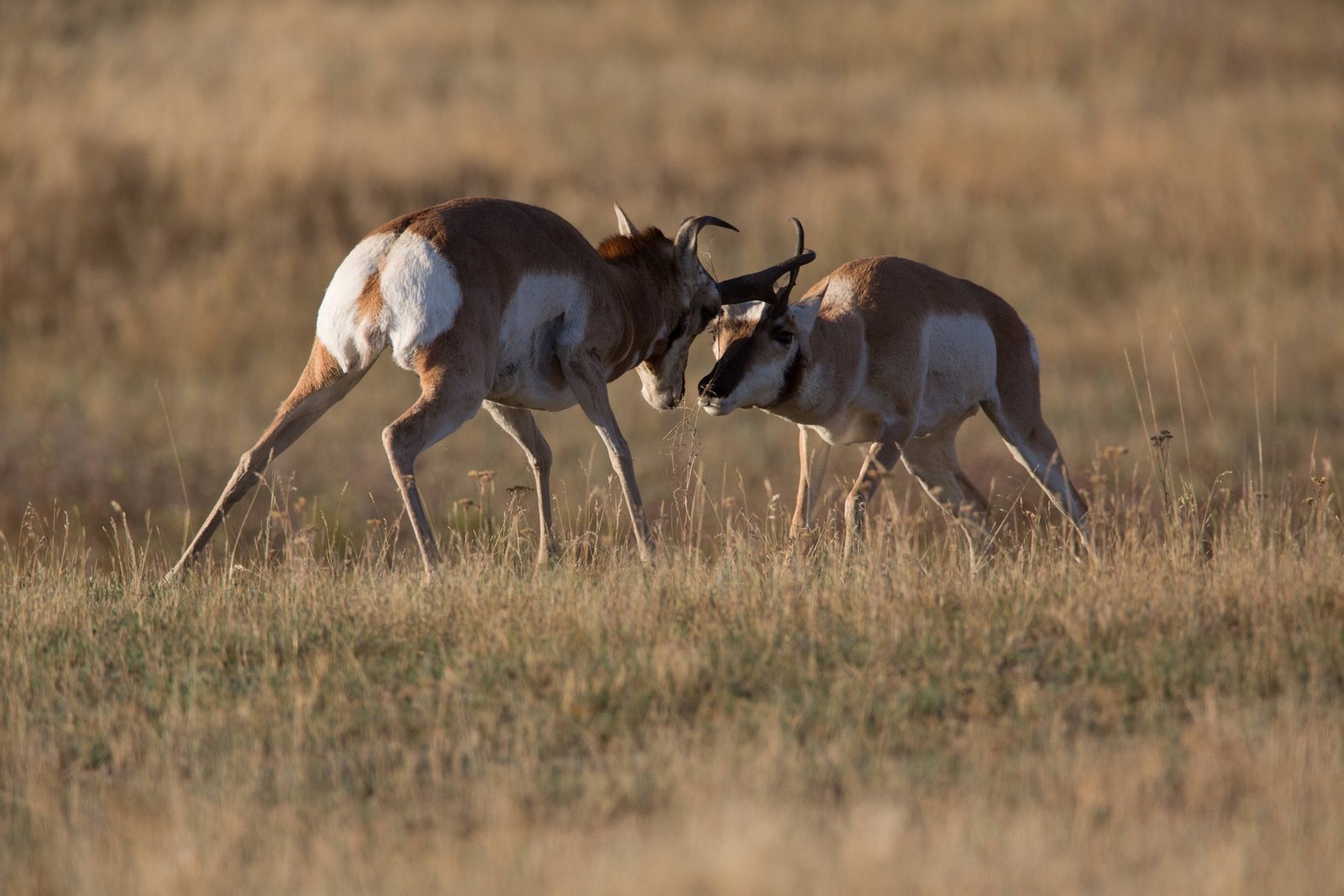
Pronghorn are native to North America and are not true antelope. They are built for open country, with exceptional vision and sustained speed. The National Park Service describes pronghorn as the sole surviving member of an ancient family, adapted to grasslands, sagebrush, basins and other open terrain. Those traits shape the hunt: concealment is limited, careless movement is visible, and terrain that appears flat often hides shallow folds, dry drainages and low ridges that can make or break a stalk.
Use the National Park Service pronghorn profile for species background and the USGS Western Migrations tool to understand how agencies map seasonal ranges, migration routes and stopovers. These are biological and planning references—not substitutes for hunting regulations.
The pronghorn planning sequence
- Choose the state and applicant pathway. Determine whether the opportunity is a limited draw, preference- or bonus-point system, random component, leftover list, archery option, private-land license or resident-only opportunity.
- Identify the exact legal hunt. Record the species description, hunt number or area, season, weapon, applicant restrictions and valid land type.
- Audit access before judging draw odds. A license can be attainable because much of the habitat is private, isolated or difficult to reach legally.
- Map the open country. Mark ownership boundaries, legal roads, walk-in access, water, low terrain folds, glassing positions and recovery routes.
- Build a field system for visibility and heat. Optics, shade, hydration, sun protection, wind management and rapid meat cooling deserve more attention than a generic equipment list suggests.
- Verify the plan again before travel. Recheck regulations, closures, fire restrictions, road conditions, weather and private-land permission.
How to choose a pronghorn state
There is no single “best” state for every hunter. A useful comparison starts with the kind of opportunity you can realistically access. Separate the decision into six columns: applicant eligibility, draw structure, public-land availability, private-land dependence, season and weapon, and total travel burden. Then compare official draw or harvest data within that framework.
Do not treat statewide reputation, a record-book animal, a social-media photograph or a high reported success rate as proof that a specific hunt is appropriate. Harvest statistics can reflect access, season structure, tag allocation, private ranch participation and hunter selection. The exact hunt code and access map matter more than a broad state ranking.
Priority state research library
The following states create a strong western pronghorn research framework because their systems expose different combinations of draw rules, public access, private land and terrain. Each state now has a dedicated Big Game Ledger guide, supported by the wildlife-agency resources linked throughout this hub.
Wyoming
Wyoming organizes antelope opportunity by limited-quota hunt area and license type. The official planner warns that some available licenses may be associated with difficult public access, so access analysis belongs beside draw odds from the beginning. Start with the Wyoming antelope Hunt Planner, then check official draw results and odds.
Montana
Montana combines hunting districts, licenses, special permits, access programs and annual regulations. Use the Montana Hunt portal, the current Deer, Elk and Antelope regulations and the state Hunt Planner rather than relying on an older district summary.
Colorado
Colorado provides limited pronghorn licenses through draws and may offer specific over-the-counter archery opportunities, but the valid hunt codes and units must be confirmed in the current brochure. Begin with Colorado Parks and Wildlife’s pronghorn page and follow its current brochure, draw, statistics and atlas links.
New Mexico
New Mexico makes the public-versus-private distinction especially important. Public-land pronghorn opportunities use the draw, while private-land pathways require the correct license and written landowner permission. Read the New Mexico pronghorn private-lands guidance and the state hunting portal before comparing hunt codes.
Idaho
Idaho directs pronghorn hunters through controlled-hunt opportunities with hunt-specific areas, methods and restrictions. Use the Idaho Fish and Game pronghorn page and open each selected hunt in the official Hunt Planner before committing to an application.
Oregon
Oregon manages pronghorn through limited-entry hunts. Dry conditions, fire restrictions, heat and access can be as important as points. Start with the Oregon pronghorn species page, then open the current regulations and official hunting statistics.
Nevada
Nevada requires a big-game tag and distributes pronghorn opportunities through its draw system. Compare unit groups, legal access, water and road conditions with the Nevada Hunt Planner, official application guidance and current state publications.
Utah
Utah pronghorn permits and hunt numbers must be checked in the current big-game guidebooks, including any posted corrections. Use the Utah big-game portal as the starting point rather than carrying an old hunt number into a new application year.
Arizona
Arizona pronghorn planning begins with the state draw, hunt numbers, bonus-point rules and limited opportunity. Use the Arizona big-game draw portal and the current pronghorn regulations before evaluating any unit or private access.
South Dakota and Nebraska
The western Plains add a different mix of grassland habitat, private property and permit restrictions. Use South Dakota Game, Fish and Parks licensing with the current antelope application material. Nebraska’s official antelope page explains its permit pathways, unit maps, reporting and limits on nonresident opportunity.
Access is part of the license decision
Open pronghorn country often contains a patchwork of federal, state and private parcels. A visible herd does not create legal access. Before applying, verify the hunt boundary, land ownership, legal road status, public entry point, vehicle restrictions and whether a parcel is isolated by private land. Confirm permission terms directly with the landowner when a plan depends on private property.
Read How to Read Hunting Maps Before You Set Foot in a Unit and cross-check agency maps with the underlying land-management source. Download offline layers, but carry enough context to recognize when a road, fence or signed closure contradicts an old digital layer.
Glassing and stalk planning
Pronghorn country makes small planning mistakes visible. A practical glassing plan starts outside the herd’s immediate view, uses terrain rather than brush alone, and includes the sun and wind. Mark low ridges, shallow drainages and broken ground that can conceal movement. Avoid assuming the straight-line distance on a map describes the actual route.
- Binoculars: primary search tool for covering large open areas.
- Tripod: reduces movement and helps dissect distant terrain.
- Spotting scope: useful when identification or horn evaluation must happen at long range, but only when the weight and stability make sense.
- Rangefinder: confirms distance and angle; practice on small objects across flat and broken terrain.
- Map: keeps a visible animal connected to a legal route and ownership boundary.
Build the optics system with the binocular guide, tripod guide, spotting-scope guide and rangefinder guide.
Heat, water and recovery
Many pronghorn opportunities occur in exposed country where shade is limited and early-season temperatures can be significant. Build a water plan around the actual route, not the presence of a distant stock tank or seasonal drainage. Separate drinking water from emergency reserve, know the treatment limitations, and plan where additional water can be obtained legally.
A successful hunt immediately becomes a recovery and cooling problem. Before leaving the vehicle, know who will help, what route avoids unnecessary dragging, where clean bags and cutting tools are carried, and how the meat will move into shade and active cooling. Use the backcountry water-treatment guide and big-game meat-care kit to build and test those systems.
Pronghorn gear priorities
Do not build the kit by copying an elk list and removing weight. A pronghorn system often shifts emphasis toward optics stability, sun and wind protection, hydration, quiet crawling layers, kneeling comfort, dust management and vehicle-based recovery logistics. The final list still depends on the legal method, season, terrain and distance from the vehicle.
Start with the big-game hunting gear list, then use the Gear hub to compare packs, boots, layering, sleep systems, optics and recovery equipment by function rather than brand promises.
Questions every state guide must answer
- Who may apply, and which license or prerequisite is required?
- Is the opportunity limited draw, points-based, random, leftover, over the counter, private-land only or resident restricted?
- What exact hunt number, area, legal animal, season and weapon apply?
- How much of the occupied habitat is legally accessible?
- What permissions, access programs or vehicle rules change the map?
- Which current agency statistics help—and what do they not prove?
- What travel, heat, water, fire and recovery risks are specific to the hunt?
- Which reporting, evidence-of-sex, transport and carcass rules must be verified?
State-specific pronghorn guides
- Wyoming Pronghorn Hunt Guide — hunt areas, license types, preference points, Access Yes, public-land checks, optics and recovery planning.
- Montana Pronghorn Hunt Guide — district research, 2026 draw timing, Block Management and public/state-trust access.
- Colorado Pronghorn Hunt Guide — hunt codes, preference points, Walk-In Access and public/private-land checks.
- New Mexico Pronghorn Hunt Guide — random-draw rules, public-versus-private pathways, written permission and Open Gate.
- Idaho Pronghorn Hunt Guide — controlled hunts, four-digit hunt numbers, Access Yes and the Idaho Hunt Planner.
- Oregon Pronghorn Hunt Guide — 400-series controlled hunts, preference points, High Desert access and fire planning.
- Nevada Pronghorn Hunt Guide — squared bonus points, hunt groups, basin access and heat logistics.
- Utah Pronghorn Hunt Guide — limited-entry bonus points, Hunt Planner, CWMU questions and separate antlerless rules.
- Arizona Pronghorn Hunt Guide — bonus-point draw passes, unit profiles, access programs and protected Sonoran pronghorn safeguards.
- South Dakota Pronghorn Hunt Guide — firearm and archery pathways, private-land licenses and the Public Hunting Atlas.
- Nebraska Pronghorn Hunt Guide — resident/nonresident differences, draw dates, unit restrictions and the Public Access Atlas.
The core state cluster is now complete. Every guide uses official agency sources, documents the state draw and access structure, links back to this hub, and carries a unique licensed photograph with alt text and attribution.
Continue planning
Use the big-game hunt planning checklist to organize the project, the official-source research library to verify changing information, and Hunt Planning for the broader trip system. Big Game Ledger’s Editorial Policy explains our evidence labels, source hierarchy and experience disclosures.
Last reviewed: August 21, 2026. Regulations and access change. Confirm current information with the responsible wildlife and land-management agencies before applying, purchasing, scouting or traveling.
Planning a pronghorn application? Check the Western Big-Game Application Deadlines tracker before comparing state guides, then verify the exact pronghorn draw and closing time with the wildlife agency.